Commercial Security Fence Basics: 8 Things Business Owners Should Know
A commercial security fence does two jobs at once. It keeps people and vehicles out of places they should not be, and it holds up to weather, traffic, and time without constant repair. If you own a business or rental property in Chattanooga, the fence around it is either doing those jobs or quietly failing at them. Most owners do not think about it until a gate sticks, a panel sags, or a tenant inspection flags a gap a dog could walk through.
The problem is that "security fencing" gets sold as one product when it is really a set of decisions. Material, height, gate hardware, post footing, and soil all change what you end up with and how long it lasts. Here are eight things worth knowing before you call anyone, written the way a fence contractor would explain it over the phone.
1. Security starts with the gate, not the fence line
Most security failures happen at the gate, because the gate is the only part of the fence that moves. Hinges wear, latches drift out of alignment, and automatic gate openers fail long before fence panels do. A tall, solid fence with a gate that will not latch is not a security fence; it is a wall with a hole in it.
Suppose a landlord with four rental units in East Chattanooga gets a tenant call: the back gate will not close, and the lease requires a secure yard for the tenant's dog. That is a gate repair, not a fence project. Checking hinge wear, latch alignment, and post movement first often solves the problem for a fraction of what a new fence section costs.
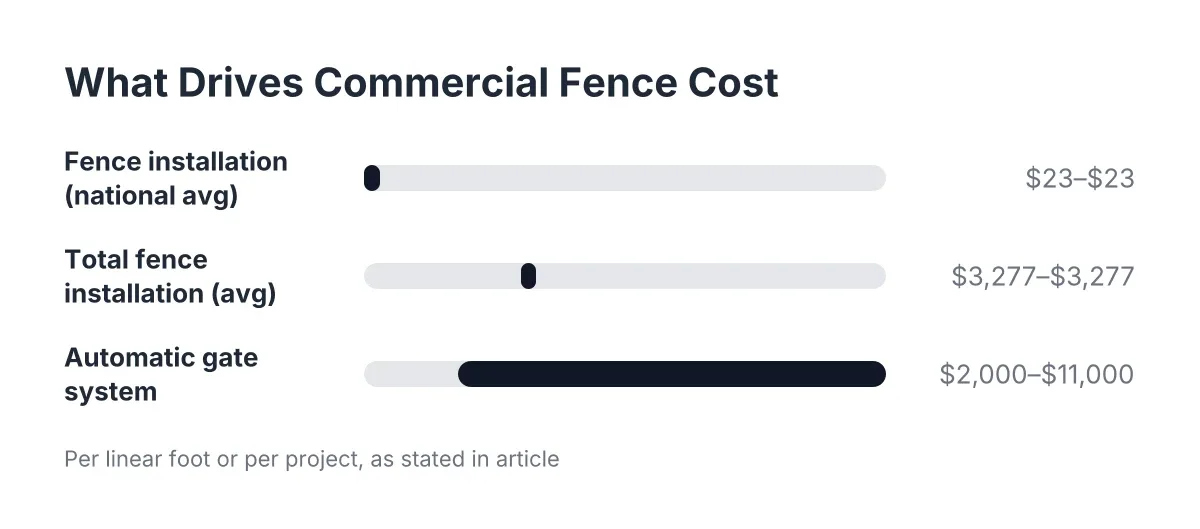
For automatic gates, the same logic applies with electronics added. According to Angi, if automatic gate repair costs run past half the price of a new system, replacement becomes the better investment, with full systems running from about $2,000 to $11,000 or more. Below that line, repair usually wins.
2. Chain link is still the workhorse of business security fencing
For most commercial and rental properties, a chain link fence gives the most security per dollar. It is hard to climb when built tall, it does not hide intruders the way a solid fence can, and it shrugs off weather that would rot wood. That visibility matters more than people expect; a fence you can see through lets neighbors, tenants, and cameras spot trouble.
Chain link also takes damage well. A bent section can be repaired without tearing out a whole run, which keeps repair costs low over the life of the fence. For a small landlord managing several units, that repairability is the difference between a quick fence repair and a budget-breaking fence replacement.
The trade-off is appearance. Chain link reads as industrial, so some owners add slats or pair it with landscaping where the property faces the street.
3. Solid fences trade visibility for privacy, and that is a real choice
A privacy fence, whether wood fence or vinyl fence, blocks sight lines in both directions. That protects equipment and inventory from being scouted, but it also gives anyone who gets inside a place to work unseen. Neither answer is wrong; it depends on what you are protecting and who is around.
A contractor's yard full of tools often does better behind solid fencing so the inventory is not advertised. A rental property's shared parking area often does better with open fencing so tenants can see their cars. Think about what a person standing outside the fence can learn, and what a person inside it can hide.
Vinyl adds a durability angle here. The posts act as the foundation of the whole system, carrying the panels for the long term, and vinyl itself never needs staining or sealing. For landlords who want low-maintenance materials across a portfolio, that matters more than looks.
4. What a commercial security fence costs depends on five things
The cost of a commercial security fence comes down to length, material, height, gates, and site conditions. National figures give a rough floor: fence installation averages about $23 per linear foot across all materials, according to HomeAdvisor, and Angi puts the average total installation around $3,277 depending on length and material. Commercial security work typically runs above residential averages because of taller heights and heavier gate hardware.
Here is what moves the number most:
- Linear footage. Fencing is priced by the foot, so property perimeter drives cost more than any single upgrade.
- Material. Chain link usually costs the least per foot; solid wood and vinyl privacy fencing cost more.
- Height. Taller fences need longer posts, deeper footings, and more material per foot.
- Gates. Every gate adds hardware, and every automatic gate adds an operator, power, and access controls.
- Site conditions. Slopes, tree roots, old fence removal, and Chattanooga's clay-heavy soil all add labor.
Be careful comparing quotes by the bottom line alone. Pricing reflects construction practices, materials, and how long the fence is built to last, not just raw material cost. Two quotes for "the same fence" are often not the same fence.
5. Chattanooga soil and weather work against your commercial fence security
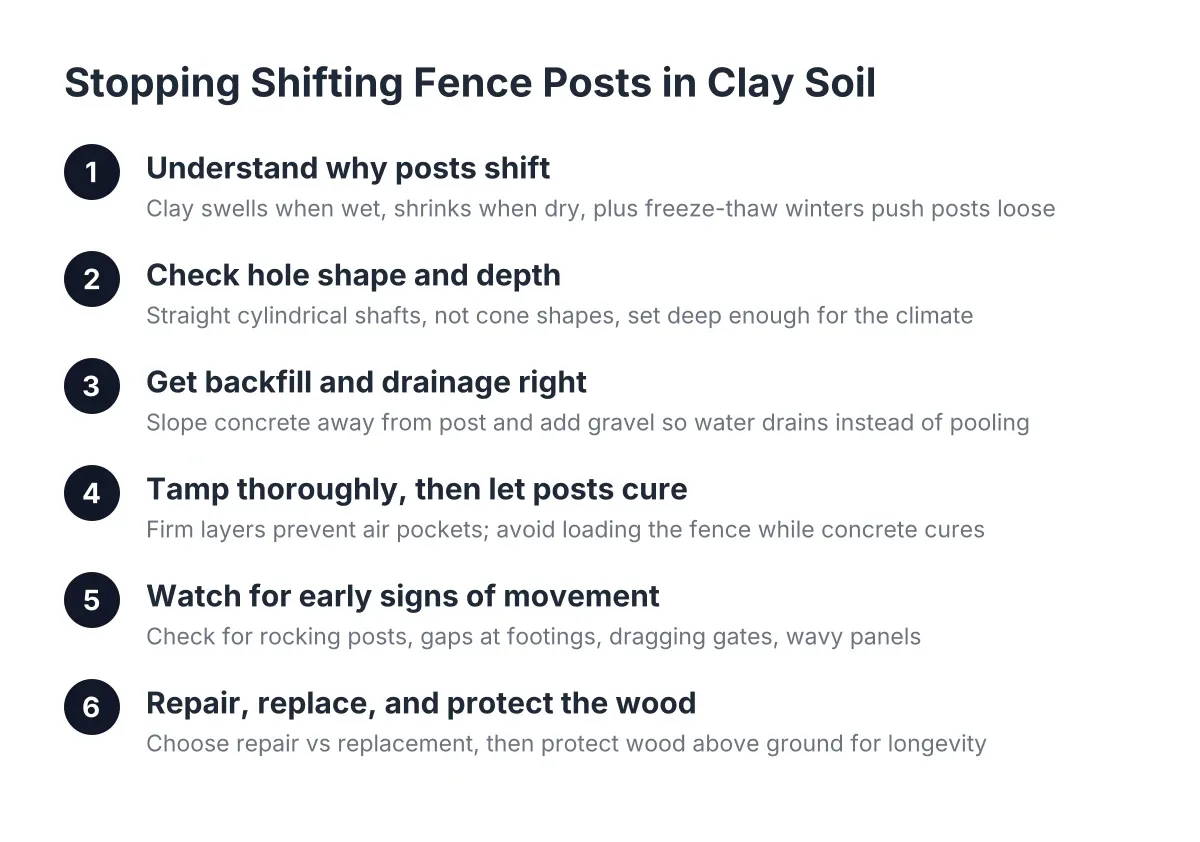
Posts are where security fences fail in this region. Chattanooga's clay-heavy soil holds water, and freeze-thaw winters push and shift footings over the years. A post that was plumb at installation can lean enough within a few seasons to throw a gate out of alignment or open a gap at a corner.
The fix is in the footing. A post needs a generous amount of concrete surrounding it on all sides to resist movement, not a splash of mix poured in a tight hole. In tough spots, such as butting against an existing fence or working around a tree, a reinforced post using a metal pipe with a vinyl sleeve over it adds strength where a standard post would struggle.
Humidity and seasonal rain matter too, especially for wood. Treated lumber needs time to cure in this climate before staining or sealing, so a wood fence installed in a wet month should not be finished the same week.
6. Automatic gates are the weakest link if nobody maintains them
An automatic gate is the most convenient part of commercial security fencing and gates, and the most failure-prone. Openers click and do nothing, sensors drift out of alignment, and remotes stop pairing. When that happens at a gated rental property, a tenant cannot get a car out, and the owner is scrambling for someone who fixes gates that day.
Most of these failures are small. A dead battery, a blocked photo eye, a worn hinge dragging the gate off its track; these are gate repair calls, not replacement projects. The 50 percent rule from item one applies here: repair until the repair bill approaches half the cost of a new system, then replace.
The practical move for business owners and landlords is a walk-through twice a year. Open and close every gate, listen for grinding, check that latches catch without lifting or shoving, and test the auto-reverse on any powered gate.
7. Repair-first thinking saves money, but only up to a point
Not every sagging commercial fence needs replacement. A leaning section often traces back to one or two failed posts, and resetting those posts in proper concrete footings restores the whole run. Stretched chain link fabric can be re-tensioned. A dragging gate can be rehung.
However, repair has limits. If more than a few posts have shifted, if wood rails are rotting from the inside, or if the fence was undersized for its job from the start, piecemeal fixes become a treadmill. Each repair buys a season instead of a decade. That is the point where fence replacement costs less over five years than continued patching.
This is where choosing a contractor on price alone backfires. The cheapest installation often has to be rebuilt much sooner than a quality one, which costs more in total than paying extra upfront. When you compare a fence company on a security job, ask how deep the posts go, how much concrete each footing gets, and what the gate hardware is rated for. The answers tell you more than the price does.
8. Match the fence to the property, not to a catalog photo
The right business security fence for a downtown Chattanooga shop is not the right fence for a duplex in Cleveland, TN or a storage lot off the highway. Security needs, tenant expectations, and budget all differ, and the fence should follow them.
A few honest matches, as illustrative examples rather than rules:
- Rental property perimeter: Chain link fence at standard height, with sturdy manual gates. Durable, repairable, and rental-grade on cost.
- Equipment or inventory yard: Taller chain link or solid fencing, with a wide vehicle gate and a keyed or coded pedestrian gate.
- Office or retail frontage: Vinyl or decorative fencing that secures without looking like a compound, since appearance affects customers.
- Mixed-use property: Privacy fence where the lot faces neighbors, open fencing where sight lines help, with full panels placed in the most visible stretches and any cut sections tucked into less visible corners.
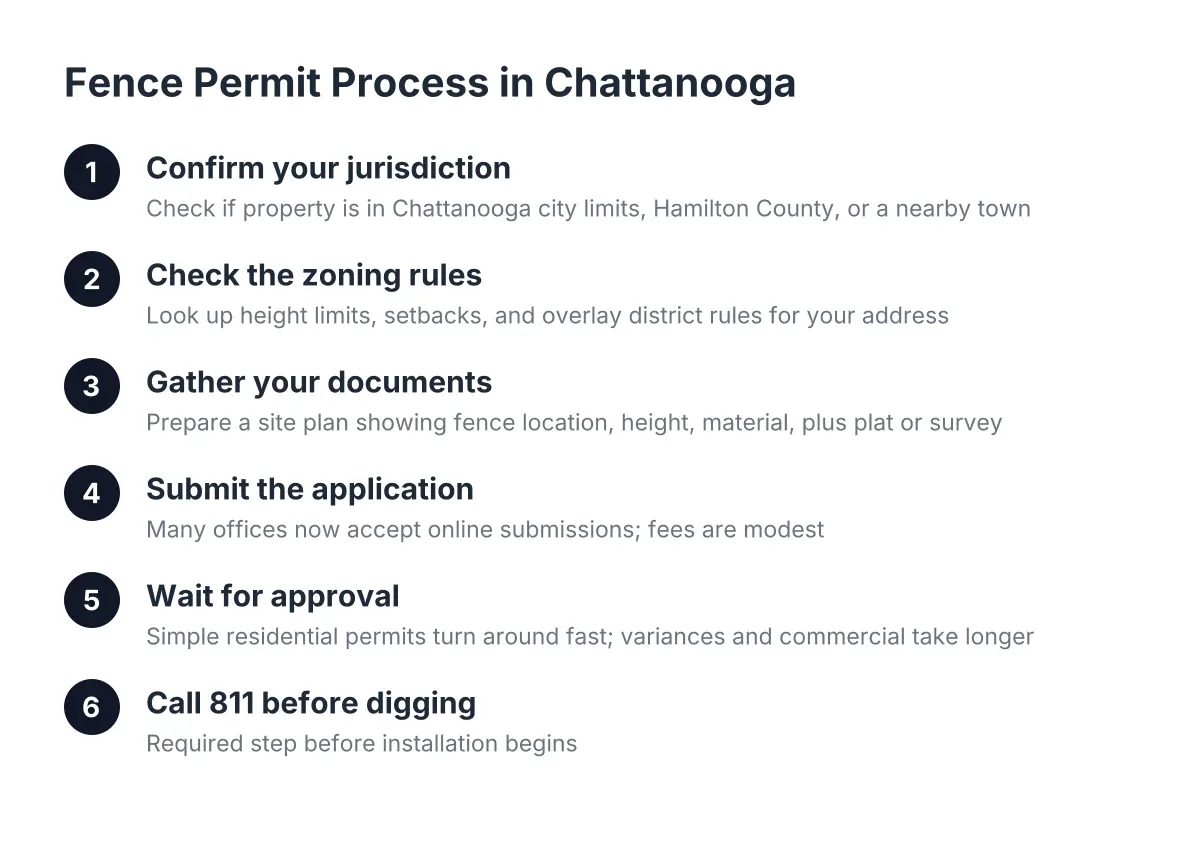
One limitation worth naming: no article can account for your exact site. Slopes, easements, utility lines, and local permit rules all change the right answer, so have a contractor walk the property before you commit to a design. An on-site look costs you a conversation and saves you from building the wrong fence.
The short version
Security fencing is not one product; it is a set of decisions about gates, materials, posts, and the ground they sit in. Gates fail first, so maintain them. Chain link earns its place on cost and repairability, while privacy fencing trades visibility for concealment. Posts and footings decide how long any of it lasts in Chattanooga's clay and freeze-thaw cycles.
As of 2026, fencing remains a big, steady industry; IBISWorld estimates U.S. fence construction at $20.0 billion in revenue this year. That scale means plenty of contractors will quote your job. The owners who come out ahead are the ones who know what the quote should include before they ask for it.
If you need fence installation, Chattanooga Fence Builders can help.
Prefer to talk it through? Call (423) 615-8548 — a quick call is usually the fastest way to get a straight answer for your situation.