Fence Installation Permit Requirements in Chattanooga, TN: A Practical Guide
If you are getting ready to put up a fence in Chattanooga, sorting out the fence permit requirements before anyone digs a post hole will save you time, money, and headaches. Permit rules decide how tall your fence can be, how close it can sit to the property line, and whether the city needs to review your plans at all. This guide walks through how the process works in the Chattanooga area, what the rules typically cover, and how to handle permits when you are watching every dollar or managing a rental property on a tight budget.
One note before we start. Permit rules change, and they differ by city and county. What follows is a practical overview, not legal advice. Always confirm current 2026 requirements with your local codes or zoning office before you build, or let your fence contractor confirm them for you.
Do You Need a Permit to Install a Fence in Chattanooga?
In many cases, yes, a residential fence in Chattanooga needs some form of city review before installation, especially if the fence exceeds standard height limits, sits on a corner lot, or is on a commercial property. Some simple residential fences fall under exemptions, but you should never assume yours does without checking with the city first.
Here is why the answer is rarely a flat yes or no. Permit requirements depend on where the property sits. Chattanooga city limits, unincorporated Hamilton County, and nearby towns like East Ridge, Red Bank, and Signal Mountain each have their own rules. A fence that needs no permit on one side of a boundary line might need one a block away.
The factors that usually trigger a permit or zoning review include:
- Fence height. Most jurisdictions set a standard maximum, often lower in the front yard than in the back. Go above it and you need a permit, a variance, or both.
- Corner lots and sight triangles. Fences near intersections cannot block a driver's view. Corner lots almost always get extra scrutiny.
- Location on the lot. Front yard fences face tighter rules than backyard fences in most codes.
- Material and construction. Some codes restrict barbed wire, electric fencing, or solid walls in residential zones.
- Commercial property. Commercial fence installation nearly always involves a permit and a site plan review.
- Historic districts and overlay zones. Properties in designated districts may need design approval on top of the standard permit.
The safest move is a short phone call to the Chattanooga Land Development Office or your county building department. Describe the fence, the height, and the location on the lot. They will tell you in minutes whether you need to file anything. A good local fence contractor will know these answers before you ask, because they deal with the same offices every week.
What Fence Installation Permit Requirements Usually Cover in Chattanooga
Fence installation permit requirements in the Chattanooga area generally address four things: height limits, setbacks from property lines, sight visibility near streets and driveways, and material restrictions. The permit process exists to confirm your fence meets those standards before it goes up, not to make your life difficult.
Height limits
Height is the rule people trip over most. Codes typically allow taller fences in back and side yards than in front yards. A privacy fence at full height is usually fine behind the house. The same fence along the front sidewalk often is not. If you want extra height for a dog that jumps or a pool enclosure, expect the permit review to look closely at placement.
Setbacks and property lines
Your fence needs to sit on your property, full stop. Some jurisdictions let you build right up to the line; others require a small setback. Before you commit to a layout, know exactly where your line runs. A plat map or survey settles it. Guessing based on where the old fence stood is how neighbors end up in disputes, because old fences were often built in the wrong spot to begin with.
Sight triangles
Near intersections and driveways, codes keep fences low or set back so drivers can see oncoming traffic. This matters on Chattanooga's older neighborhood streets, where lots are small and corners are tight. If your property touches a corner, raise this question early. It can change your fence layout.
Materials and construction standards
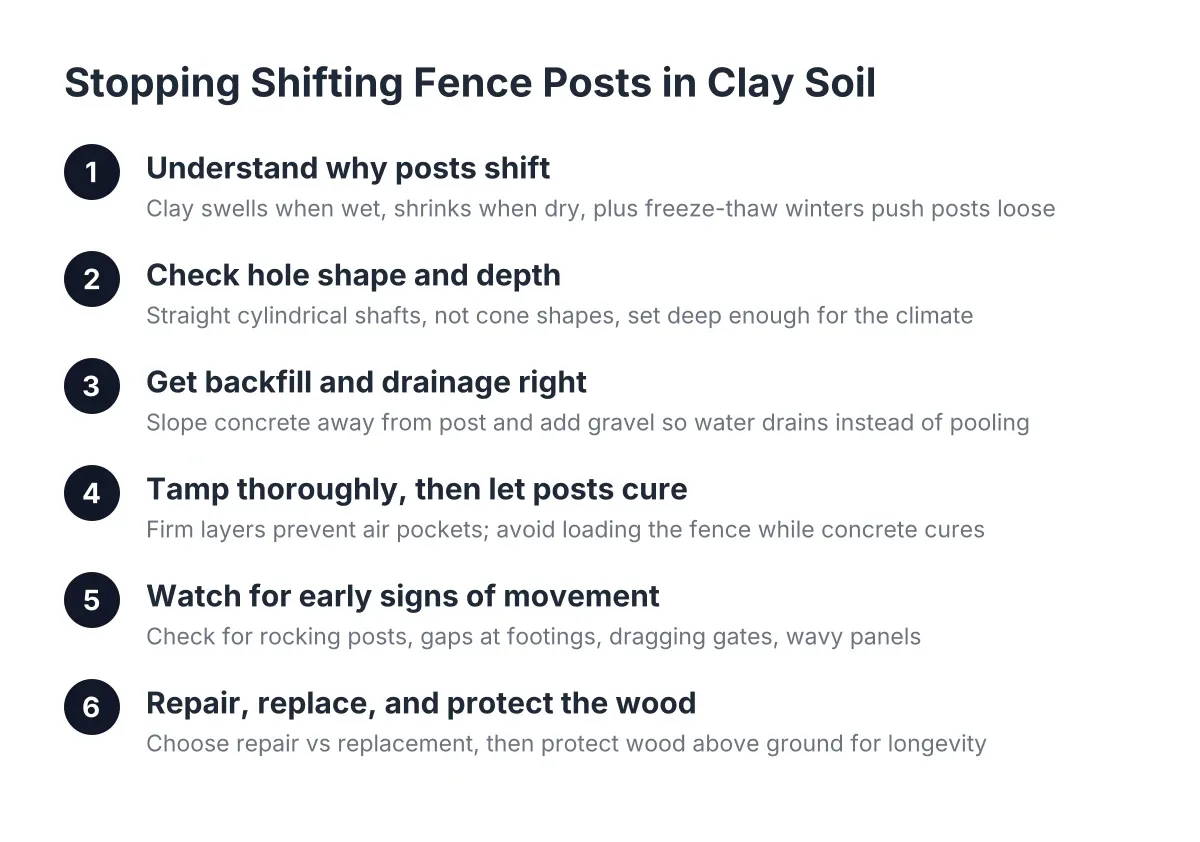
Most residential wood fence, vinyl fence, and chain link fence projects use materials the code already accepts. Restrictions usually target barred wire, razor wire, and electric fencing in residential zones. Construction quality matters too. A post set by tamping dirt back into the hole with no concrete footing is poor practice anywhere, and in Chattanooga's clay-heavy soil with freeze-thaw winters, it is a fence that leans within a few seasons. Permits do not inspect for that level of detail, but your contractor should build to it anyway.
How Fence Permit Requirements in Chattanooga Work, Step by Step
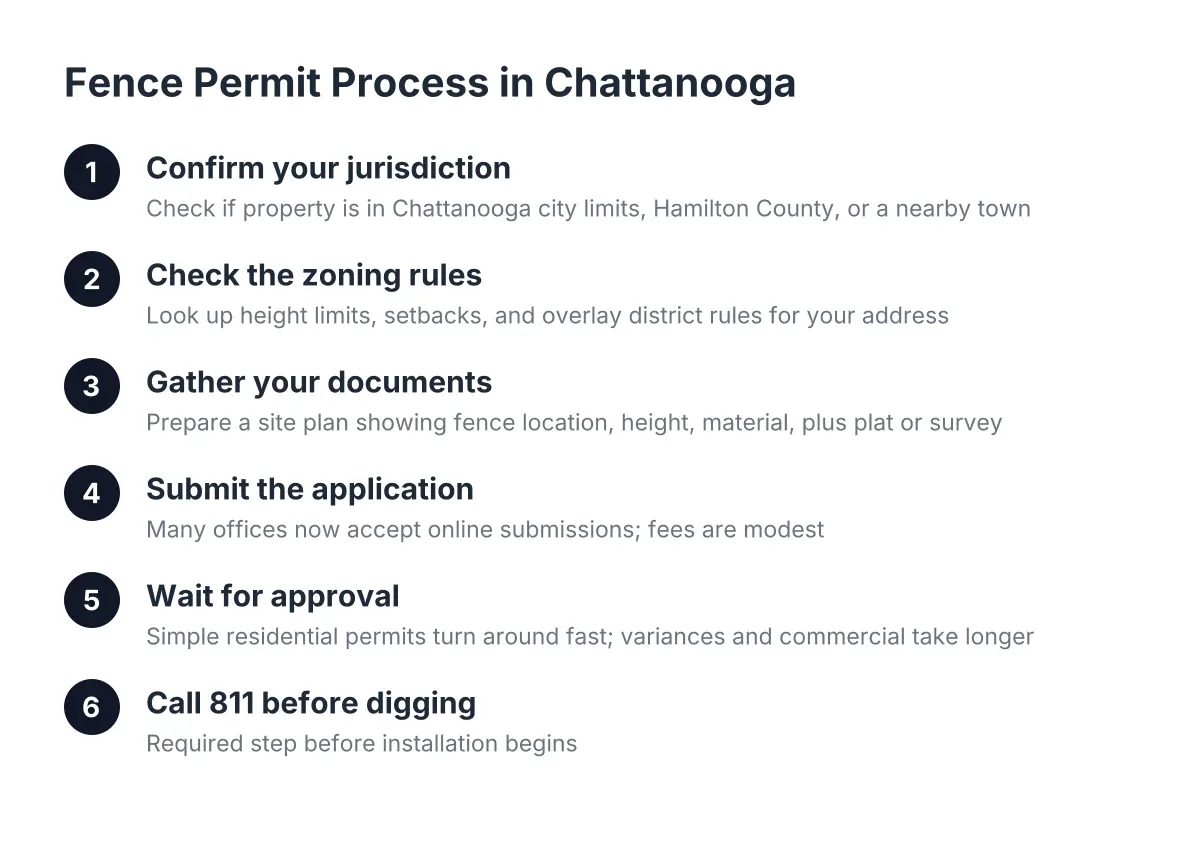
The permit process for a fence is one of the simpler ones a property owner will face. For a standard residential project, it usually runs like this:
- Confirm your jurisdiction. Find out whether the property sits inside Chattanooga city limits, in unincorporated Hamilton County, or in a nearby municipality. Your property tax bill or the county GIS map will tell you.
- Check the zoning rules. Look up or call about height limits, setbacks, and any overlay district rules for your address.
- Gather your documents. Most applications ask for a simple site plan: a sketch of the lot showing the fence location, height, and material. A copy of your plat or survey helps.
- Submit the application. Many offices accept online submissions now. Fees for fence permits are modest compared to the cost of the fence itself.
- Wait for approval. Simple residential fence permits often turn around fast. Variances, historic district reviews, and commercial projects take longer.
- Call 811 before digging. This is separate from the permit and it is free. Utility lines get marked before post holes go in. Skipping this step risks a cut gas or fiber line, which costs far more than any permit.
- Build to the approved plan. If the plan says a certain height and location, the finished fence has to match. Changing it mid-build can void the approval.
Steps one and two are where most people stall. Therefore, if the back-and-forth with the zoning office is not something you want to handle, ask whether your installer pulls permits as part of the job. An established fence company in Chattanooga handles this paperwork routinely and knows which addresses fall under which office, which alone can save you a week of phone tag.
Who Pulls the Permit, You or the Contractor?
Either the property owner or the fence contractor can typically pull a residential fence permit, and for most installations the contractor handles it as part of the job. Ask every installer you get a quote from one direct question: is the permit included, who files it, and is the fee in the price?
This matters for the budget-conscious shopper. A quote that looks lower might leave the permit, the site plan, and the 811 coordination on your plate. That is not necessarily a problem if you have the time, but it is not free either. Compare quotes on the full scope, not just the headline number. When people search for a fence company near me and prices, the numbers they see rarely spell out who carries the permit work, so you have to ask.
For landlords, there is a second reason to let the contractor handle it. Suppose you own three rental houses, one inside Chattanooga city limits, one in East Ridge, and one in unincorporated Hamilton County. Say a turnover inspection finds a collapsed chain link fence at one and a leaning gate at another. In that scenario, each property may answer to a different permitting office with different rules, and a repair may not need a permit at all while a full fence replacement might. A contractor who works across the area daily sorts that out in one conversation instead of you making three sets of calls between showings.
One more distinction worth knowing. Fence repair, like resetting a few posts or replacing damaged pickets and rails, generally does not require a permit because you are maintaining an existing structure. Full fence replacement or a new fence line is where the fence permit requirements for Chattanooga come into play. If you are unsure which side of the line your project falls on, describe it to the permitting office and let them classify it.
Permit Rules Beyond Chattanooga City Limits
Fence permit rules in the communities around Chattanooga, including Hixson, Ooltewah, East Ridge, Red Bank, Signal Mountain, and across the state line in North Georgia, follow the same general pattern but differ in the details. Each jurisdiction sets its own height limits, setback rules, and application process, so the specific office you call depends on the property address.
Hixson and Ooltewah addresses may fall inside Chattanooga city limits or in unincorporated Hamilton County, and the two follow different processes. Incorporated towns like Red Bank, East Ridge, and Signal Mountain run their own codes offices. South of the state line, Ringgold, Fort Oglethorpe, and the rest of Catoosa and Walker County operate under Georgia rules, which have their own structure for residential fence review.
The practical takeaway: the permit question is answered by the property's exact address, not the general area. For a landlord with units scattered across Hamilton County and North Georgia, that means the same fence project could face different paperwork at each property. Build that into your timeline when scheduling work around a tenant turnover.
What Happens If You Skip the Permit
Building a fence without a required permit can lead to fines, a stop-work order, or an order to tear down and rebuild the fence to code at your own cost. The violation often surfaces later, when a neighbor complains, when you sell the property, or when an inspector visits for an unrelated reason.
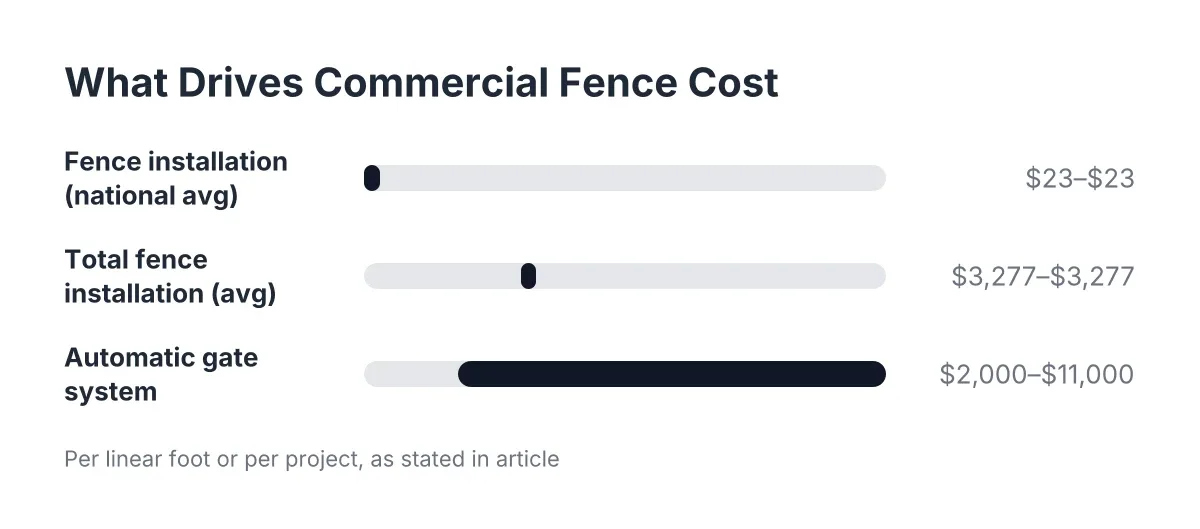
For homeowners financing a fence and paying it off monthly, this risk deserves real weight. The worst financial outcome is not a permit fee; it is paying for the same fence twice. A privacy fence built a foot over the height limit, or a few feet onto a neighbor's land, can turn into a removal order while you are still making payments on the original installation. For context on the money at stake, according to Angi, the average cost to install a fence nationally is $3,277, ranging from $1,860 to $4,843 depending on length and material, and according to HomeAdvisor, fence installation costs between $6 and $50 per linear foot depending on material, averaging $23 per linear foot nationally. Nobody wants to spend that twice because of a skipped form.
Landlords face an extra layer. An unpermitted fence can complicate a sale, show up in a buyer's due diligence, or create liability questions if a tenant's pet escapes through a fence that was never approved. The permit is cheap insurance against all of that.
There is also a quality angle hiding inside the permit question. However, a contractor who shrugs off permits is often cutting corners you cannot see, like skipping concrete footings or ignoring the property line. Choosing the lowest bid from an installer like that frequently costs more over time, because the fence has to be rebuilt years before a properly built one would. In Chattanooga's climate, where clay soil and freeze-thaw cycles already work against fence posts, construction shortcuts show up fast.
Questions to Settle Before You Apply or Hire
Before you file a permit application or sign with an installer, nail down these items. Each one affects what gets approved and what the job costs.
- Exact property lines. Pull your plat or survey. Do not rely on the old fence line or a neighbor's memory.
- Fence type and height. Privacy fence, chain link fence, vinyl fence, or wood fence; the permit application will ask, and height drives most of the review.
- Gate locations. Gates, including an automatic gate on a driveway, belong on the site plan. Driveway gates near the street raise the same sight-line questions as corner fences.
- HOA rules. A homeowners association can be stricter than the city. HOA approval is separate from the permit and you may need both.
- Utility locations. Schedule the 811 locate before any post holes are planned, not after.
- Who files and who pays. Confirm in writing whether the permit fee and filing work are in your quote.
Work through that list once and the permit itself becomes the easy part. Most of the frustration people associate with fence installation permit requirements comes from discovering one of these items late, after the layout is set or the crew is scheduled.
The Bottom Line for Chattanooga Property Owners
Permits are not the hard part of a fence project; surprises are. Confirm your jurisdiction, learn the height and setback rules for your address, get your property lines settled, and decide up front who handles the paperwork. For a standard backyard privacy fence, the whole permit question often resolves in a day or two of checking.
If you are stretching a budget to get a fence up for a new dog or a tenant lease requirement, the permit step protects the money you are spending. In addition, it protects the schedule, because a stop-work order in the middle of an installation delays everything. Handle the requirements first, and the only thing left to think about is the fence itself.
If you need fence installation in Chattanooga, TN, Chattanooga Fence Builders can help.
Prefer to talk it through? Call (423) 615-8548 — a quick call is usually the fastest way to get a straight answer for your situation.