Why Fence Posts Shift in Chattanooga Clay Soil and How to Stop It
Your new wood fence looks great today. Whether it still looks great in five years comes down to what happened below the ground. When fence posts shift in Chattanooga, the cause is usually the same combination: clay-heavy soil that swells when wet and shrinks when dry, plus freeze-thaw winters that work loose anything that was not set right. Shifting fence posts on clay soil is a persistent challenge in this region, and this guide walks through how to prevent it, step by step, whether you just had a fence installed, you are checking a rental property fence before a new tenant moves in, or you are planning a new fence installation and want it done right the first time.
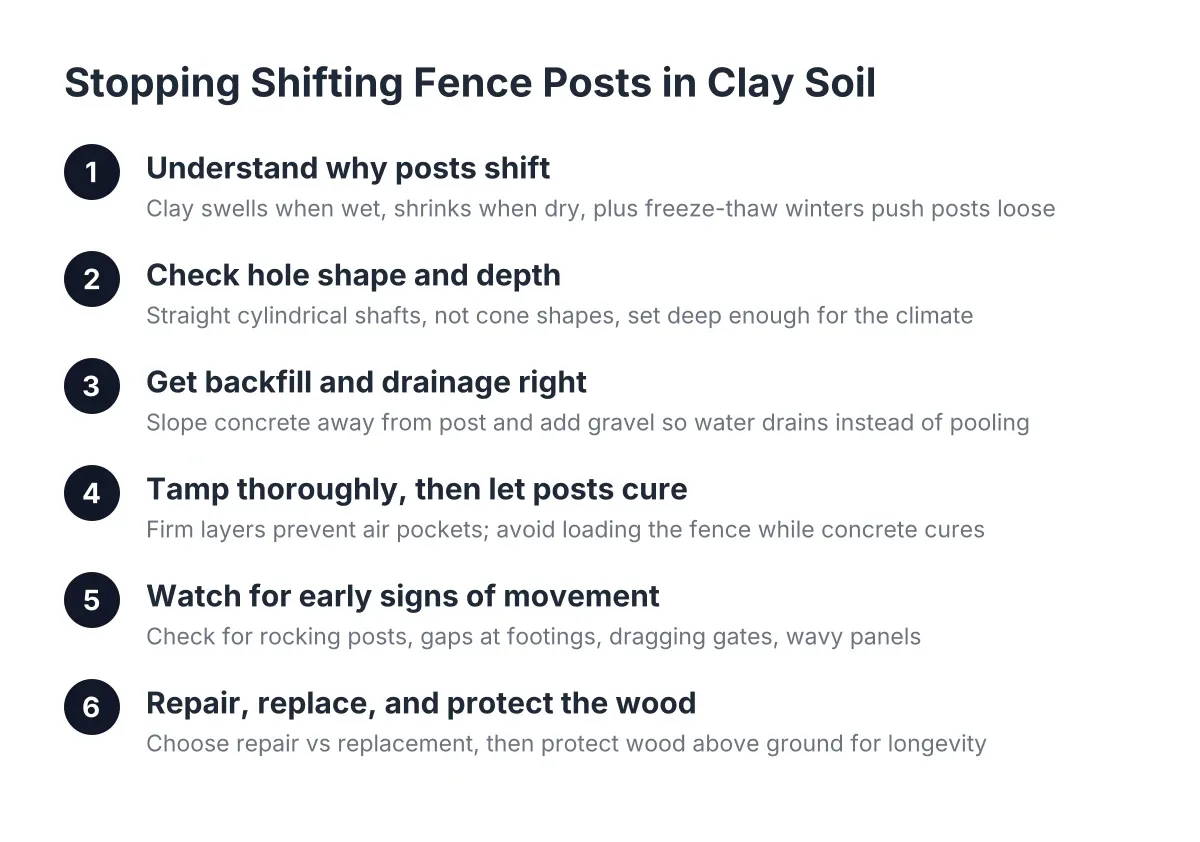
Step 1: Understand Why Fence Posts Shift in Chattanooga Soil
Fence posts shift in Chattanooga because the region's clay soil expands when it soaks up rain and contracts when it dries out. That constant swelling and shrinking puts pressure on footings from the sides. Add winter freeze-thaw cycles, and the ground literally pushes posts upward a little at a time until the fence leans.
Clay also drains poorly. Water sits around the footing instead of moving through, which keeps the soil soft and gives the post room to rock in wind. A post that rocks even slightly loosens its hole, and the problem compounds every storm season.
Here is the part most homeowners miss: more concrete is not automatically the fix. A post needs consistent concrete thickness on all sides, in a properly shaped hole, with the right depth and compaction. Dumping extra bags into a sloppy hole does not buy stability. The shape, depth, and backfill technique matter more than the volume.
Step 2: Check the Hole Shape and Depth Before Concrete Goes In
If your fence installation has not happened yet, this is the step where you can ask the right questions. Post holes should be dug as straight cylindrical shafts, not cone shapes that are wide at the top and narrow at the bottom. A cone-shaped hole leaves thin concrete at the base, exactly where the leverage from wind load is strongest.
Depth matters too. In Chattanooga's climate, a post set too shallow sits in the zone where freeze-thaw movement is worst. Deeper footings get below the most active soil layer and give the post a longer lever to resist tipping.
Ask your installer these questions before the crew digs:
- How deep do you set posts for this fence height, and does that change on slopes?
- Do you dig straight-walled holes or rely on an auger flare at the top?
- What do you backfill with, and how do you handle drainage around wood posts?
- On sloped sections, how do you keep the top rail level while the grade changes?
A good fence company will answer all four without hesitation. Vague answers on any of them are a sign to keep looking. If you are comparing fence companies in Chattanooga TN right now, these questions separate crews that understand local clay from crews that set posts the same way everywhere.
Step 3: Get the Backfill and Drainage Right
Concrete around a wood post is standard practice, but it has a trade-off worth knowing. Concrete can trap moisture against the wood where the post meets the footing, and trapped moisture speeds up rot at the ground line. Rot at the ground line is the other big reason posts fail, separate from soil movement.
The fix is drainage detail, not skipping concrete. Crews that do this well slope the top of the concrete away from the post so water sheds instead of pooling. Some add gravel at the base of the hole so water that reaches the bottom can drain rather than sit. After the concrete sets, a thin layer of soil on top lets grass grow flush along the fence line without burying the post collar in wet dirt.
On sloped yards, which are common around Chattanooga, backfill height also changes side to side. A post on a grade may need backfill brought slightly higher on the downhill side so the rails run level while the ground rises and falls. This is detail work, and it is one reason a fence on a hillside costs more per foot than the same fence on flat ground.
Step 4: Tamp Thoroughly, Then Leave the Posts Alone to Cure
Inadequate compaction is the main reason posts loosen over time. Soil or gravel backfill that is not tamped in firm layers leaves air pockets. Wind and water find those pockets, the post starts to rock, and the hole opens up. Thorough tamping as the hole fills is tedious, and it is exactly the step a rushed crew skips.
Once posts are set, give the concrete time to cure before the fence takes load. Do not hang on the fence, push gates hard, or let kids climb it during the first days after installation. A freshly set post that gets worked before the footing cures can end up loose from day one.
One encouraging fact for anyone worried about a recent install: posts concreted within the past year hold far tighter than old ones. Fresh footings grip hard. It is the decades-old posts with rotted bases and cracked footings that pop out with little effort.
Step 5: Watch for Early Signs That Shifting Fence Posts on Clay Are Moving
Catch movement early and the repair is small. Wait until a section leans hard and you are pricing fence replacement instead of fence repair. Walk the fence line twice a year, ideally after a wet winter and again in late summer when clay has shrunk back.
Look for these warning signs:
- A post that moves when you push it firmly at shoulder height
- Gaps opening between the post and the concrete footing
- A gate that dragged fine last year and now scrapes or will not latch
- Rails pulling away from posts, or panels that look wavy down the line
- Soil heaved up or sunken around any footing
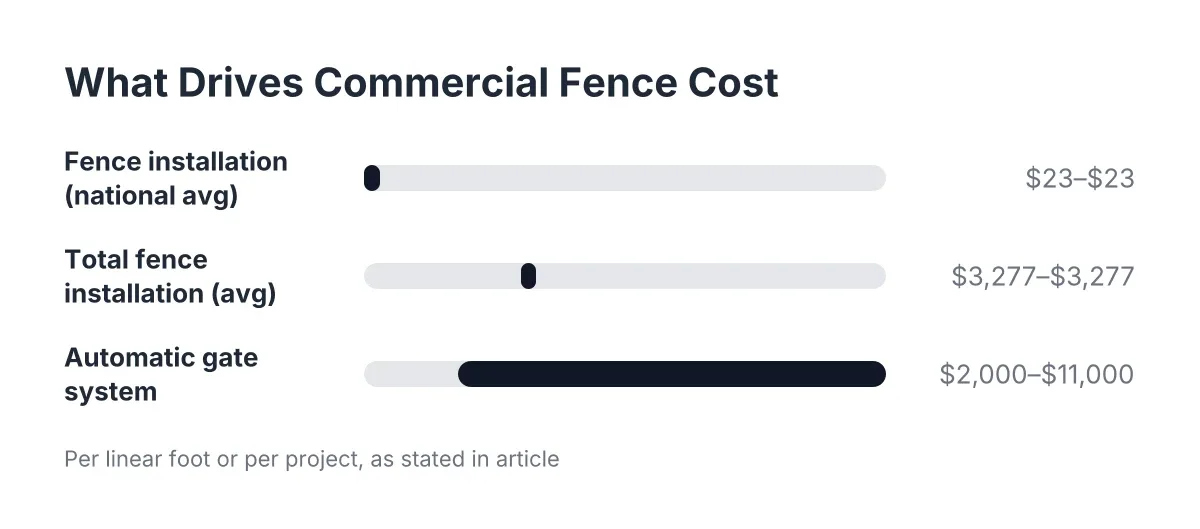
A sagging gate is often the first symptom, because the gate post carries the most load. Small landlords should put this walk-through on the tenant turnover checklist. Suppose you own a rental in East Brainerd and the turnover inspection shows the back gate dragging and two line posts rocking. Caught at that stage, the fix might run in the hundreds, an interim post repair plus gate repair. Ignored for two more rainy seasons, the same fence can lean into a replacement decision in the low thousands. For context, Angi puts the national average cost of installing a fence at $3,277, so keeping existing posts solid protects real money.
Step 6: Choose Repair or Replacement When Posts Have Already Moved
When fence posts shift, Chattanooga homeowners usually face three options, and the right one depends on what failed. If the post is solid but the footing has loosened, re-setting or bracing the post can work. If the wood post rotted at the ground line but the concrete footing is still sound, an interim repair that keeps the footing in place is often the budget-smart move.
That interim approach matters more than people realize. Preserving good footings means the money spent now is not wasted later; the stabilized line holds up until you are ready for a full replacement, often with steel posts that resist Chattanooga clay far better than wood. Old concrete footings left along the fence line also help stabilize the surrounding soil, so ripping everything out is not always the stronger rebuild.
However, there is a limit. If most posts along a run have moved, or rot runs through the line, patching one post at a time costs more over a few years than replacing the section once. A fence repair pro can assess the whole line in one visit and tell you where that break-even sits for your fence. This is a judgment call worth getting from someone who sets posts in this soil every week, not from a forum thread.
Step 7: Protect the Wood Above Ground So the Whole Fence Lasts
Posts anchor the fence, but the boards and rails take the weather. If you just had a wood fence installed, the single most common question is when to stain it, and the honest answer is that treated wood needs to dry out first. Chattanooga humidity and seasonal rain stretch that drying time compared to drier climates. Stain applied to wood that is still saturated with treatment moisture will not absorb, and it can peel or blotch.
The simple test: sprinkle water on a board. If it beads up, the wood is still too wet and needs more time. If it soaks in within a minute or so, the wood is ready to accept stain. Depending on the season it was installed, that readiness can take from a couple of months to the better part of a year, so test rather than guess.
Staining and sealing matter for post stability too, indirectly. Boards that gray, cup, and warp put uneven stress on rails and posts, and a fence under twisting load works its footings harder in every windstorm. A sealed fence sheds water instead of soaking it up, which keeps weight and movement down across the whole structure.
Step 8: Know What a Proper Quote Should Cover in 2026
Whether you need new fence installation or repair of shifted posts, a fair quote in 2026 should spell out the below-ground details, not just the linear footage. For reference, HomeAdvisor puts fence installation at an average of $23 per linear foot nationally, with material driving most of the spread. Your price will vary with slope, soil, access, and fence type, so treat national numbers as a starting point only.
Before you sign, confirm the quote states post depth and spacing, hole and footing method, backfill material, how slopes are handled, and whether old posts and footings are removed or reused. A written free estimate that covers those points tells you the contractor has thought about why fence posts shift in this area, not just how fast panels go up. If the line items only mention boards and labor, ask where the footing work lives in the price.
If your fence is already leaning, a gate is dragging, or you want a new privacy fence, wood fence, chain link fence, or vinyl fence set to survive Chattanooga clay, Chattanooga Fence Builders can walk the line with you and give you a clear free estimate on repair or installation before any work starts.
If you need fence installation, Chattanooga Fence Builders can help.
Prefer to talk it through? Call (423) 615-8548 — a quick call is usually the fastest way to get a straight answer for your situation.