Fence Company Terms Explained: A Plain-English Glossary
If you are getting quotes for a new fence or a gate repair in Chattanooga, you will run into words that sound like a foreign language. This fence company glossary turns that jargon into plain English so you can read a quote line by line, ask better questions, and spot a thin bid before you sign anything. Each entry starts with a short, standalone definition, then tells you why the term matters to your project and your wallet. Nothing here requires a background in construction.
- Post: the vertical backbone of your fence
- Footing: the concrete that anchors each post
- Frost line: how deep the ground freezes
- Rail: the horizontal piece between posts
- Picket: the vertical board you actually see
- Privacy fence: a solid fence with no gaps
- Gate hardware: hinges, latches, and locks
- Automatic gate: a gate that opens with a motor
- Linear foot: how fence length is measured and priced
- Grade: the slope of your yard
- Racking vs. stepping: two ways to fence a slope
- Setback: how far the fence must sit from a line
- Utility locate: marking buried lines before digging
- Property survey: the legal map of your lot lines
- Pressure-treated wood: lumber treated to resist rot
- Curing: the wait before staining new wood
Fence Company Glossary: Parts of a Fence
These are the pieces your installer will name when walking your yard, and the first terms most people look up in a fence company glossary.
Post
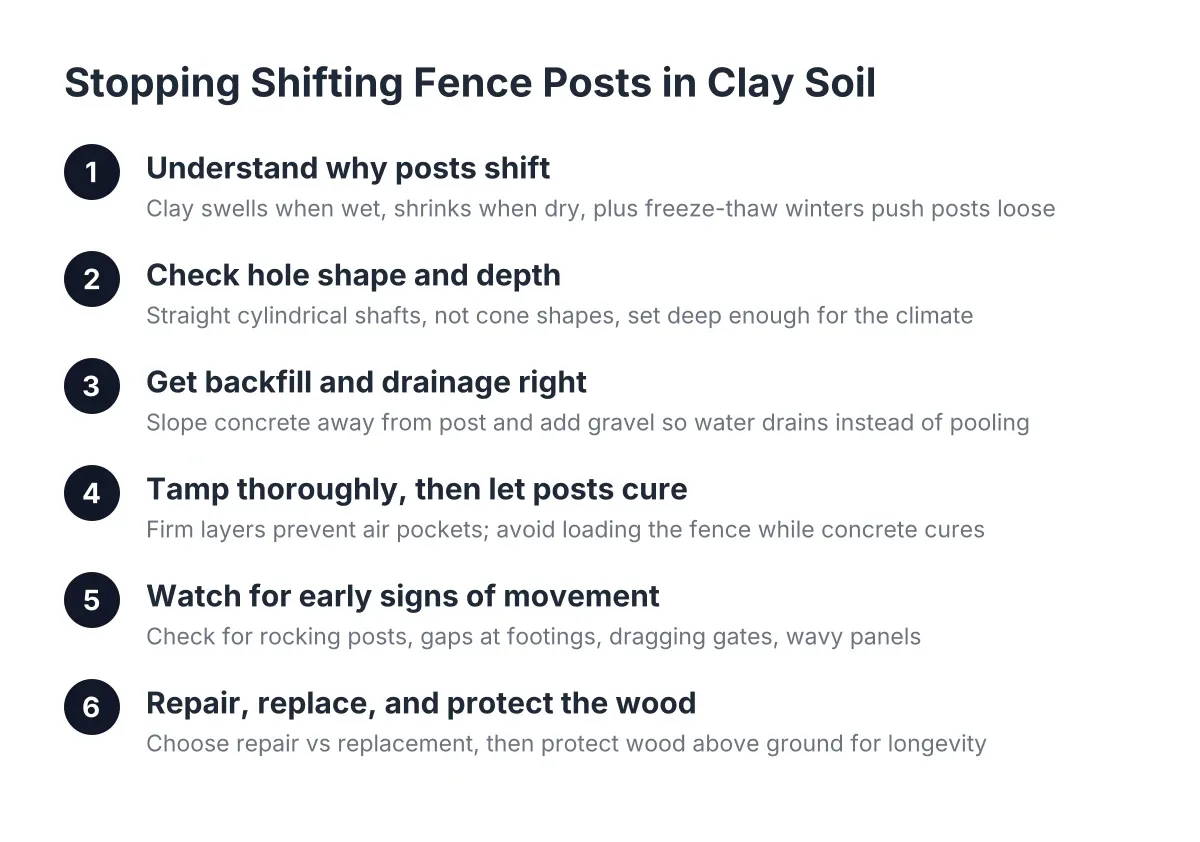
A post is the vertical support that holds up the entire fence. Posts carry the weight of the panels and take the force of wind, leaning kids, and slamming gates. Most fence failures start at the posts, not the boards, which is why a repair quote often focuses there. In Chattanooga, clay-heavy soil and freeze-thaw winters can shift posts over time, so how deep and how well they are set matters more here than in milder climates.
Footing
A footing is the concrete base poured around a post to hold it in place underground. A good footing keeps the post plumb (straight up and down) through seasons of rain, freeze, and thaw. If a quote says "set in concrete," this is what it means. Skipping or skimping on footings is a common reason a cheap fence leans within a few years.
Frost line
The frost line is the depth to which the ground freezes in winter. Posts set above the frost line can get pushed up when water in the soil freezes and expands, a problem called frost heave. Chattanooga winters bring enough freeze-thaw cycles that post depth is worth asking about. A contractor who mentions the frost line unprompted is thinking about how your fence holds up in year five, not just on install day.
Rail
A rail is the horizontal board or tube that runs between posts and supports the pickets. Wood fences usually have two or three rails per section; more rails mean a stiffer fence. Sagging rails are a frequent fence repair call, and they can often be replaced without rebuilding the whole section.
Picket
A picket is the vertical board attached to the rails, the part of the fence you actually see. Picket width, spacing, and thickness drive both the look and part of the cost of a wood fence. Replacing a handful of cracked pickets is a small repair job, not a replacement, so do not let anyone talk you into a new fence over a few bad boards.
Privacy fence
A privacy fence is a solid fence, usually six feet or taller, built with no gaps between the boards or panels. People choose privacy fence installation to block sightlines into a yard, quiet a busy street, or contain pets and kids. Privacy fences use more material than picket-style fences, so expect them to cost more per section. Wood and vinyl are the two most common privacy fence materials.
Gate hardware
Gate hardware means the hinges, latches, springs, and locks that let a gate swing and stay shut. Gates take more abuse than any other part of a fence because they move, so hardware quality matters. A dragging or sagging gate is usually a hardware or hinge-post problem, and gate repair is often far cheaper than people expect. If a quote itemizes hardware, that is a good sign the installer is not planning to use the lightest parts available.
Automatic gate
An automatic gate is a driveway or entry gate that opens and closes with a motorized operator instead of by hand. Homeowners and businesses use them for convenience and security. An automatic gate quote should cover the gate itself, the operator, safety sensors, and a power source. When one stops working, the fix is often the operator or a sensor, not the gate, so a diagnosis visit beats a replacement quote.
Measuring, Pricing, and Your Property in Fence Company Glossary
These terms show up on the quote itself and in the paperwork before digging starts. Understanding your fence company's glossary of measurement terms helps you compare estimates and spot missing details.
Linear foot
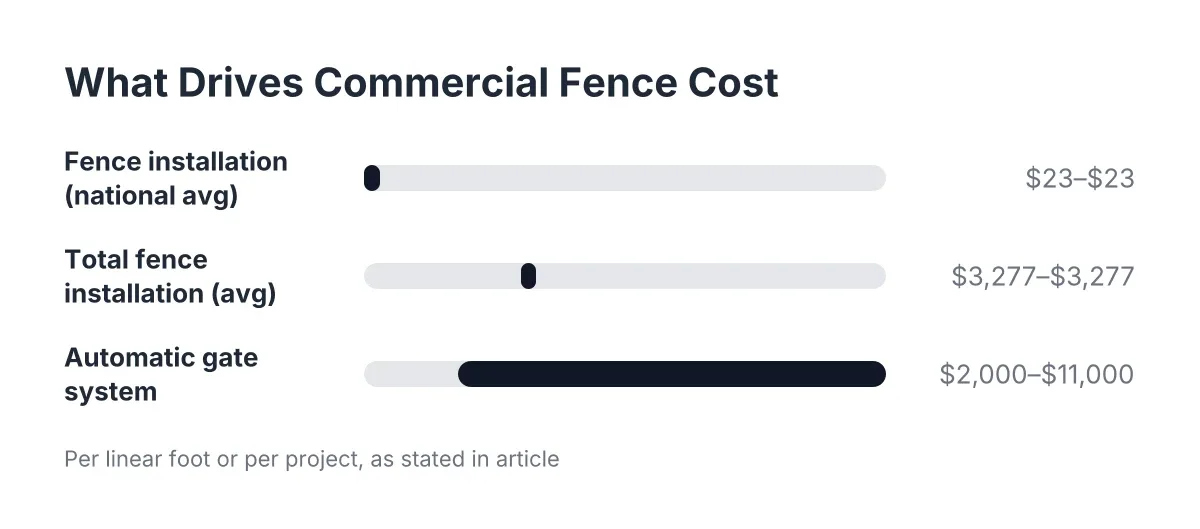
A linear foot is a straight-line measurement of fence length, one foot at a time along the ground. Fence quotes are usually priced per linear foot, with the rate depending on material, height, and site conditions. Two bids can only be compared fairly if they cover the same linear footage and the same spec. For a fuller breakdown of what drives the per-foot number, see our guide on fence installation cost.
Grade
Grade means the slope or unevenness of the ground where the fence will run. A flat yard installs faster than a hillside, so steep grade can raise labor cost. Grade also forces a design choice between racking and stepping, covered next. If an estimator walks your property line instead of quoting from a satellite photo, grade is one of the things they are checking.
Racking vs. stepping
Racking and stepping are the two ways to build a fence on sloped ground. A racked fence angles each section to follow the slope, keeping the bottom close to the ground. A stepped fence keeps every section level and drops down the hill in stair-like steps, which leaves triangular gaps at the bottom. If you have pets that dig or squeeze under fences, ask for racking; if you want a formal look with level panel tops, stepping may suit you. Chattanooga's hilly lots in areas like Red Bank make this a common conversation.
Setback
A setback is the minimum distance a fence must sit from a property line, street, or sidewalk under local rules. Setbacks vary by city and neighborhood, so check your local code or HOA rules before finalizing the fence line. A fence built over a setback line may have to be moved at the owner's expense. A careful installer asks about setbacks before quoting, not after digging.
Utility locate
A utility locate is the free service that marks buried gas, water, and electric lines with paint or flags before anyone digs. In the United States, calling 811 before digging triggers this service. Post holes go two to three feet down, deep enough to hit buried lines, so no responsible crew digs without a locate. If an installer does not mention it, ask.
Property survey
A property survey is a legal document showing the exact boundaries of your lot, prepared by a licensed surveyor. Fences built on a neighbor's land can trigger disputes and forced removal, so knowing your true line matters. Many homeowners have a survey from their home purchase paperwork. An installer can build to your pins or your survey, but confirming the line is the owner's responsibility.
Materials and Finishing
Pressure-treated wood
Pressure-treated wood is lumber infused with preservatives under pressure to resist rot and insects. It is the standard choice for wood fence posts and framing because untreated wood fails fast in ground contact. Treated wood arrives wet from the treatment process and needs time to dry before it takes stain well. In a humid climate like Chattanooga's, that drying time runs longer than most people expect.
Curing
Curing means letting new materials dry and stabilize before the next step, whether that is concrete hardening around a post or treated wood drying before stain. Staining a wood fence too early traps moisture and leads to peeling. A contractor who tells you to wait before staining is protecting your finish, not dodging work. Ask your installer for a staining timeline based on the season your fence goes in, since Chattanooga's seasonal rain and humidity stretch the wait.
Using These Terms
You now have what this fence company glossary set out to give you: enough plain-English vocabulary to read a fence or gate quote line by line and know what each charge covers. When an estimator mentions footings, frost depth, or racking, you can follow the conversation and ask what it means for your yard and your price. If you are in the Chattanooga area and want a free estimate, you will walk into that conversation knowing exactly what to ask.
If you need fence installation, Chattanooga Fence Builders can help.
Prefer to talk it through? Call (423) 615-8548 — a quick call is usually the fastest way to get a straight answer for your situation.