Wood vs Vinyl vs Chain Link Fence: Cost and Durability Compared for Chattanooga Homes
If you are pricing a new fence, the choice usually comes down to wood, vinyl, or chain link. Each material solves a different problem at a different price. When weighing a fence material comparison, this guide examines wood, vinyl, and chain link on upfront cost, long-term durability, maintenance, and how each one holds up in Chattanooga's clay soil and wet, freeze-thaw winters. By the end, you should know which material fits your yard, your budget, and how long you plan to stay in the house.
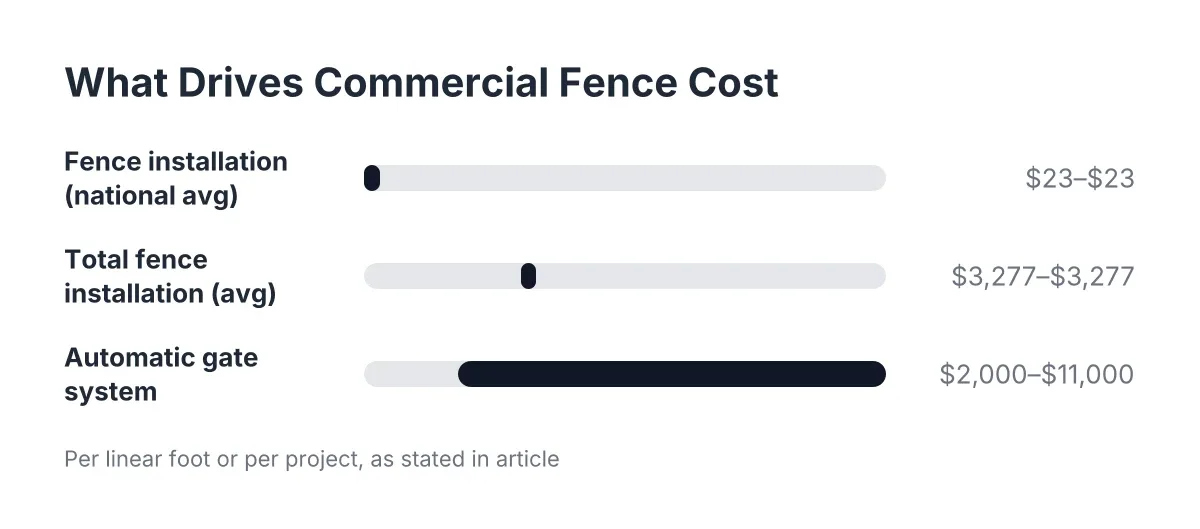
For context on budget, according to HomeAdvisor, fence installation runs between $6 and $50 per linear foot depending on material, with a national average of $23 per linear foot. Angi puts the national average project at $3,277, with most jobs landing between $1,860 and $4,843. Your project will vary with length, terrain, and style, but those numbers frame the conversation. Here are seven comparisons that matter when you weigh wood against vinyl against chain link.
Upfront Cost: Chain Link Is Lowest, Vinyl Is Highest
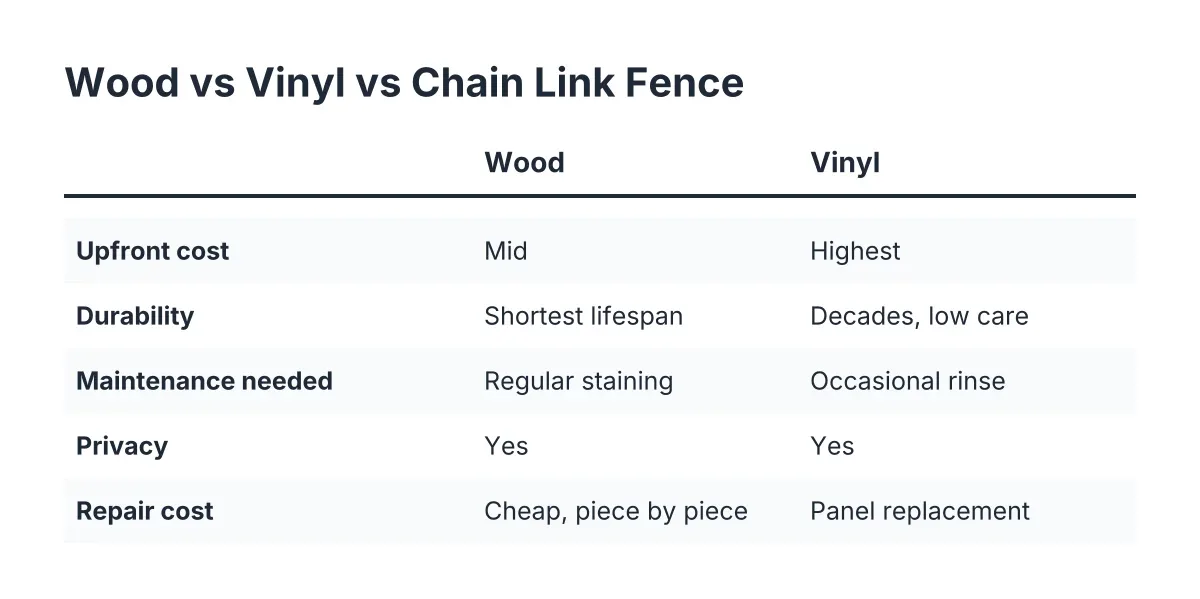
Chain link costs the least to install, wood sits in the middle, and vinyl costs the most upfront. That order holds in almost every yard because it tracks the material and labor each fence needs. Chain link uses posts, rails, and fabric; a wood privacy fence adds pickets and more build time; vinyl adds manufactured panels and heavy-duty posts at corners and ends.
However, upfront cost is only half the math. Vinyl's higher price buys decades of low maintenance, while chain link's low price buys function without privacy. Wood lands in between on both counts, which is why it stays the most common choice for residential privacy fences in the Chattanooga area.
Material Durability: Comparing Wood, Vinyl, and Chain Link Over Time
Galvanized chain link typically outlasts both wood and vinyl because steel does not rot, warp, or crack. Vinyl comes next; it resists rot and fading and can last decades with little care, though it is still PVC and can burn in extreme conditions. Wood has the shortest natural lifespan of the three, and how long it lasts depends heavily on how it is maintained. A fence material comparison shows that vinyl and chain link both outperform wood in raw longevity, but maintenance changes the picture significantly.
In practice, the posts decide the fence's fate. A wood fence with rotted posts leans long before the pickets fail. Vinyl posts act as the foundation of the whole system; if they are set deep and plumb, the panels above them stay straight for years. Chain link ages quietly; the fabric may sag before the framework gives out, and sagging fabric is a repair, not a replacement.
Maintenance: Where Wood Demands Work and Vinyl Does Not
Wood asks the most of you. In Chattanooga's humidity and seasonal rain, treated lumber needs time to cure before staining, and then it needs stain or sealant on a regular cycle to fight rot and moisture. Staining both sides of a wood fence, not just the side facing your yard, meaningfully extends its life and protects the money you spent on it.
By contrast, vinyl needs an occasional rinse and little else. Chain link needs almost nothing; vinyl-coated chain link adds a color layer that also slows rust. If you know you will never stain a fence, be honest about that now. An unmaintained wood fence can fail years earlier than a maintained one, which changes the whole cost comparison when evaluating fence material performance.
Privacy and Looks: The Trade-Off Chain Link Cannot Win
If privacy is the goal, chain link is out of the running on its own. You can add slats or let plants grow through it, but it will never match a solid wood or vinyl privacy fence. Wood gives you the classic look, natural texture, and the option to stain it any shade you want. Vinyl gives you a clean, uniform face that never needs paint.
Style also drives cost within each material. A standard flat-face wood privacy fence is the baseline. Board-on-board, shadow box, horizontal designs, and added trim genuinely use more pickets and more labor for the same fence line, so they cost more for real reasons, not markup. Keep that in mind when you compare quotes; two wood fence bids can describe two different fences.
How Chattanooga Soil and Weather Treat Each Material
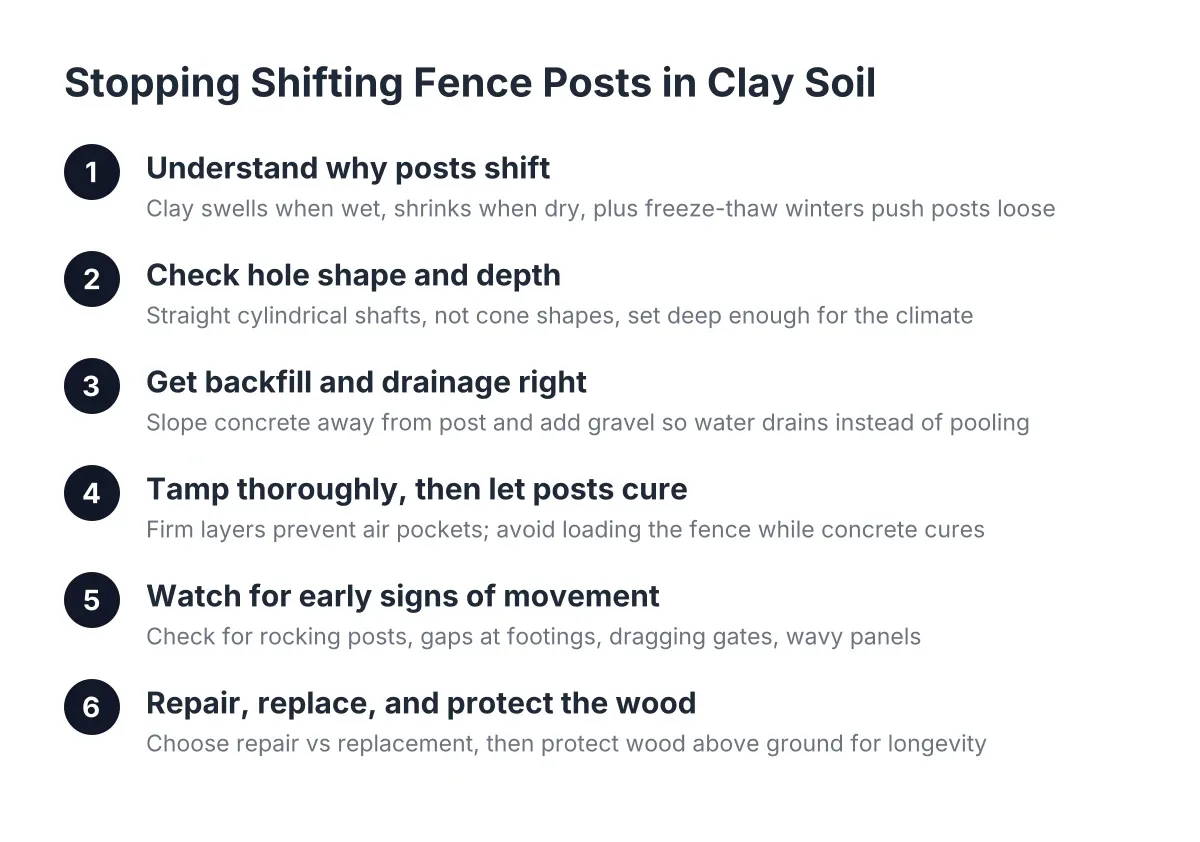
Chattanooga's clay-heavy soil and freeze-thaw winters shift posts and footings, and that stress hits every fence at its base regardless of material. Wet clay swells, dry clay shrinks, and winter freeze cycles can heave a shallow post out of plumb. A fence is only as durable as the posts holding it, so post depth and footing quality matter more here than in sandy, stable ground.
Material still changes the risk. Wood posts face rot where they meet damp soil. Vinyl posts shrug off moisture but depend on solid footings to stay rigid; in tough spots, such as butting against an existing fence or working around a tree, a reinforced metal pipe inside the vinyl post adds strength. Steel chain link posts handle soil movement well, which is part of why chain link lasts so long with so little attention.
Repair Costs: Which Fence Is Cheapest to Fix
Wood is the easiest and cheapest fence to repair piece by piece. A cracked picket, a rotted post, or a sagging gate can be fixed without touching the rest of the line. Chain link repairs are also simple; fabric can be re-stretched or patched, and ties come in different lengths to match the pipe, so reattaching fabric to the framework is routine work. When evaluating material repair costs, wood and chain link both offer straightforward fixes that are economical compared to vinyl panel replacement.
Vinyl is the outlier. Panels are manufactured, so a damaged section usually means replacing the panel rather than patching it, and matching an older color or profile can take time. Gates complicate the picture for every material. Say a homeowner in Hixson has a wood gate dragging on the ground; that is often a hinge or post fix, not a new gate. For automatic gates, Angi offers a useful rule: if gate repair costs pass 50 percent of a new system's price, replacement is the better investment, with new systems running $2,000 to $11,000 or more.
Cost Over Ten Years: Rethinking the Wood, Vinyl, and Chain Link Math
Over a decade, the ranking can flip. Wood's lower upfront price carries ongoing staining and periodic repair costs. Vinyl's higher install price buys ten years with almost no spending after day one. Chain link stays cheap on both ends but never delivers privacy. The right answer depends on how long you will own the home and what the fence is for.
A quick way to frame it:
- Staying 10 or more years and want privacy: vinyl's upfront cost spreads thin over time.
- Staying 5 to 10 years and want warmth and flexibility: wood, with a real commitment to staining.
- Need containment for a dog or a yard boundary, not privacy: chain link wins on value.
- Tight budget now, privacy later: chain link today does not block a wood or vinyl fence replacement down the road.
One caution applies across all three. The cheapest bid from any fence company is often the most expensive fence you can buy, because shallow posts and thin materials mean rebuilding years early. Pricing differences between contractors reflect construction practices, materials, and expected longevity, not just markup. Compare what is being built, not just the bottom line.
Which Fence Should You Choose?
The honest answer: match the material to the job, the timeline, and the maintenance you will actually do. Vinyl suits owners who want privacy and zero upkeep and plan to stay put. Wood suits owners who want a traditional privacy fence at a moderate price and will keep up with staining. Chain link suits anyone who needs a durable boundary at the lowest cost and does not need privacy.
Terrain can override all of it. Steep slopes, mature tree roots, buried utilities, and property line questions change what each material costs and sometimes which one is practical at all, so have a local contractor walk the line before you commit. A short on-site visit and a written quote will tell you more than any chart, including this one. That is the point where comparing wood vinyl chain link options on paper ends and real numbers for your specific yard begin.
If you need fence installation, Chattanooga Fence Builders can help.
Prefer to talk it through? Call (423) 615-8548 — a quick call is usually the fastest way to get a straight answer for your situation.