Decorative Wrought Iron Fence Panels: Styles and Installation in Chattanooga
You have decided on iron. Now the real work starts: picking a style, planning the layout, and getting a decorative iron fence panels installed without surprises on the invoice. This guide walks you through the process step by step, from choosing panels to checking the finished job, with notes on what matters in Chattanooga specifically. It is written for people watching the budget, including landlords who need a yard to look sharp before re-listing a rental, and homeowners who want the fence done now and paid for over time.
One quick note before the steps. Most "wrought iron" fencing sold today is ornamental steel or aluminum built to look like traditional hand-forged iron. True forged iron is a custom product with a custom price. For most yards, ornamental metal panels give the same look at a lower cost, so that is what this guide covers. We use the common search terms because that is how people talk.
Selecting Decorative Iron Fence Panel Styles for Your Property
Start with the job the fence has to do, then pick the style. Decorative iron fence panels break down into a few families, and the differences affect both cost and function:
- Flat top: Clean horizontal top rail, pickets stop below it. Safest choice around kids, dogs, and pools. Usually the lowest-cost ornamental option.
- Spear top or pressed point: Pickets extend above the top rail with pointed finials. Classic front-yard look, adds a mild deterrent against climbing.
- Staggered or alternating picket heights: More visual interest, more labor to fabricate.
- Panels with decorative toppers or scrolls: Rings, fleur-de-lis finials, and scrollwork added between rails. These decorative wrought iron fence toppers and pieces are where the price climbs, because every added element is extra material and extra fabrication time.
Here is the honest pattern behind the pricing: ornate styles do not just look more expensive, they are more expensive, because they genuinely take more material and more labor than a plain flat-top panel. If the budget is tight, a flat-top or single-spear panel delivers the iron look without the scrollwork premium. A landlord fencing a rental front yard almost always lands here; the curb appeal payoff comes from the material itself, not the ornamentation.
Also decide on height and picket spacing now. Containing a small dog means tighter picket spacing or a bottom rail close to grade. A front-yard decorative run can use wider spacing and a shorter height.
Prefabricated vs. Custom Decorative Iron Fence Panels
Prefabricated ornamental panels cover most residential jobs. They come in standard widths and heights, bolt or bracket to posts, and install faster than anything welded on site. If you have been searching for wrought iron fence panels near me, prefab is what most suppliers stock, and it is the budget-friendly path. These ready-made decorative iron fence panels are typically available in a range of styles and finishes.
Custom fabrication makes sense in three cases: the property has steep slopes that standard rackable panels cannot follow, you want a specific scroll or topper design no stock panel offers, or you are matching an existing historic fence. Expect custom work to cost more and take longer, since panels are built to order.
For sloped Chattanooga lots, ask about rackable panels. These adjust to follow grade so the bottom rail stays an even distance from the ground. The alternative is stair-stepping panels, which leaves triangular gaps under each section; that matters if a pet is involved.
Step 3: Measure, Mark the Layout, and Call Before You Dig
Walk the fence line and measure the total run, noting every corner, gate location, and grade change. Panels come in fixed widths, so most runs will need at least one cut section. A good installer plans those cut sections into the least visible stretch of the line, such as behind the house or along a side yard, and saves full panels for the street-facing run. The fence reads cleaner that way, and it costs nothing extra to plan it.
Before any post holes go in, utilities must be located and marked. In Tennessee that means calling 811 a few business days ahead. This is not optional, and a professional crew handles it as part of the job. If you live in an HOA neighborhood or inside certain Chattanooga districts, check fence height and style rules before ordering panels; returning custom metal is expensive or impossible.
Step 4: Set Posts for Chattanooga's Clay Soil and Freeze-Thaw Winters
Posts are the whole fence. Panels are only as straight as the posts holding them. Chattanooga's clay-heavy soil holds water, and the freeze-thaw cycles in winter can heave footings that were dug too shallow or poured without proper drainage. A heaved post on a rigid metal fence shows immediately, because iron panels do not flex the way a wood fence can.
Therefore, insist on these basics from whoever sets the posts:
- Holes dug below the local frost depth, with a wider base than top where possible.
- Concrete footings, not dry-packed gravel, for ornamental metal posts.
- Posts plumbed and braced while concrete cures, then panels hung only after the footings have set.
- Gate posts set heavier than line posts, since gates put constant leverage on their hinge post.
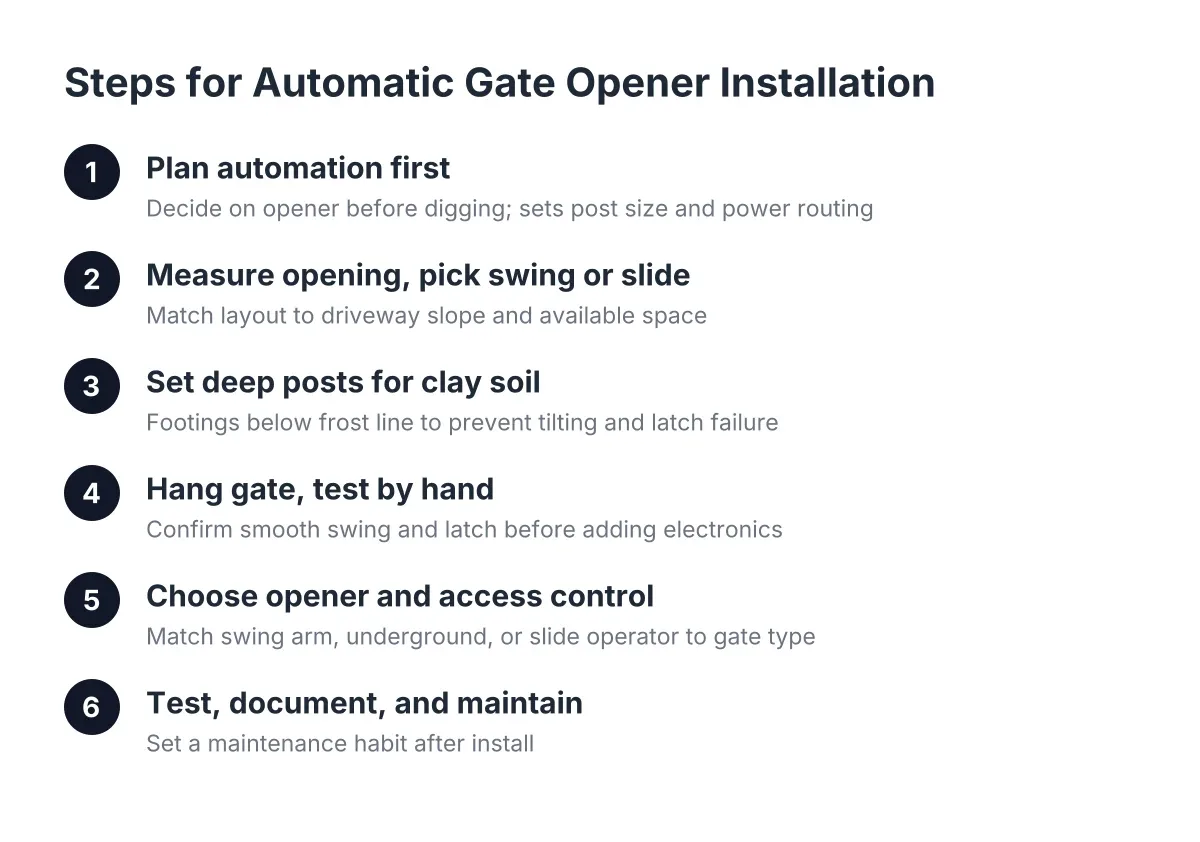
This is the step where DIY most often goes wrong. Cutting panels is manageable for a handy owner; an angle grinder with a metal cutoff wheel handles how to cut a wrought iron fence panel to length, followed by cold galvanizing paint on the cut edge to stop rust. Setting thirty posts dead straight in wet clay is a different skill. If the run is long, sloped, or includes a gate, a professional fence installation crew earns its labor cost here.
Step 5: Hang Panels, Install Gates, and Seal Every Cut Edge
With footings cured, panels attach to posts with brackets or welded connections. Check that the bottom rail height stays consistent along the run, and that racked panels follow the grade smoothly rather than in jolts. Gates get hung last, with hinges and latches adjusted so the gate swings true and latches without lifting.
Every field cut or weld needs touch-up. Bare steel rusts fast in Chattanooga's humidity, and a missed cut edge is where corrosion starts. Factory powder coating protects the rest of the panel, so the vulnerable spots are the ones modified on site. If an automatic gate is part of the plan, the operator, electrical run, and safety sensors are usually priced as a separate line item from the fence itself, so ask for that broken out on the quote.
Step 6: Know What Decorative Wrought Iron Fencing Costs and How to Pay for It
Fence pricing runs on linear footage, material, and complexity. According to HomeAdvisor, fence installation runs between $6 and $50 per linear foot depending on material, averaging $23 per linear foot nationally. Ornamental metal sits toward the upper part of that span, and heavy custom scrollwork pushes past it. Angi puts the national average fence installation at $3,277, with most projects falling between $1,860 and $4,843 depending on length and material.
What moves your number up or down:
- Linear footage: The single biggest driver. Fencing only the front yard in iron and the sides in chain link fence is a common cost-splitting move.
- Style complexity: Flat top costs less than spear top, which costs less than panels loaded with toppers and scrolls.
- Terrain: Slopes, rock, and tight access add labor.
- Gates: Each gate adds hardware and labor; an automatic gate adds an operator system on top.
If paying the full amount upfront is the sticking point, ask the contractor directly whether they offer financing or payment plans, whether checking eligibility requires a hard credit pull, and what the total cost looks like with financing versus cash. A straight answer to those three questions tells you a lot about the company. Suppose a homeowner gets a quote for a front-yard ornamental run that lands higher than expected; in that scenario, the practical moves are shortening the iron section, switching ornate panels for flat top, or spreading payments, in that order of savings.
Step 7: Walk the Finished Fence Before Final Payment
Do a slow walk of the completed line before you sign off. Check that posts are plumb, panel heights are consistent, cut sections sit in low-visibility spots, gates swing and latch cleanly, and every field cut got touched up with paint. Ask what maintenance the coating needs and how to spot early rust at welds and ground level.
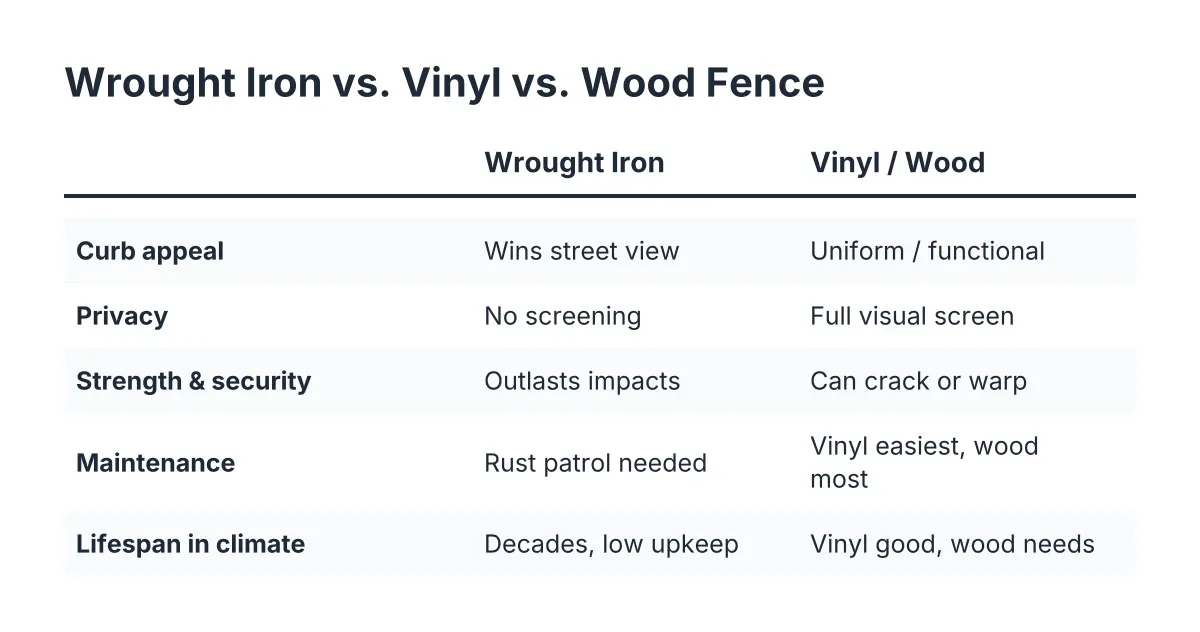
A wrought iron fence done right is one of the longest-lived fences you can own, which is part of why it costs more per foot than wood or chain link upfront. The trade-off is honest: higher initial cost, lower lifetime fuss, as long as the coating stays intact and rust spots get treated early. One limitation worth naming: if your existing fence posts are failing or the line crosses buried utilities or a retaining wall, bring in a professional before committing to a layout, because fixing a bad foundation after panels are hung costs far more than planning around it.
Ready to Price a Decorative Iron Fence in Chattanooga
If you are weighing styles, comparing panel options, or trying to figure out what a decorative run across the front of a house or rental property would cost, Chattanooga Fence Builders can walk the line with you and give a free estimate. We will tell you plainly what drives the quote, where a simpler panel saves money without hurting the look, and whether your soil and slope need anything special before the first post goes in. Reach out to get a quote and a straight answer.
If you need fence installation in Chattanooga, TN, Chattanooga Fence Builders can help.
Prefer to talk it through? Call (423) 615-8548 — a quick call is usually the fastest way to get a straight answer for your situation.