Wrought Iron Fence Terms Explained: A Plain-English Glossary
If you are pricing an iron fence for your home or business, the quotes come loaded with trade terms. This wrought iron fence glossary breaks down the words you will see on estimates and hear from contractors, in plain English. Use it to read a quote line by line, ask sharper questions, and spot problems before they cost you money. Each entry takes under thirty seconds to read.
- Wrought Iron: iron worked by hand, the traditional material
- Ornamental Iron: the modern steel version most people buy
- Picket: the vertical bars
- Rail: the horizontal bars holding pickets
- Post: the upright that anchors everything
- Finial: the decorative tip on top of a picket
- Scrollwork: curved decorative ironwork
- Panel: a pre-built fence section
- Footing: the concrete base under each post
- Frost Line: how deep the ground freezes
- Powder Coating: a baked-on protective finish
- Galvanizing: a zinc coating that fights rust
- Rust Jacking: rust that swells and splits the metal
- Rackable Panel: a panel that follows sloped ground
- Gate Hardware: hinges, latches, and locks
- Linear Foot: how fence pricing is measured
- Site Survey: the on-site measuring visit before a quote
Materials and Parts
These are the terms you will meet first in any wrought iron fence glossary, because they describe what the fence is made of and how its pieces fit together.
Wrought Iron
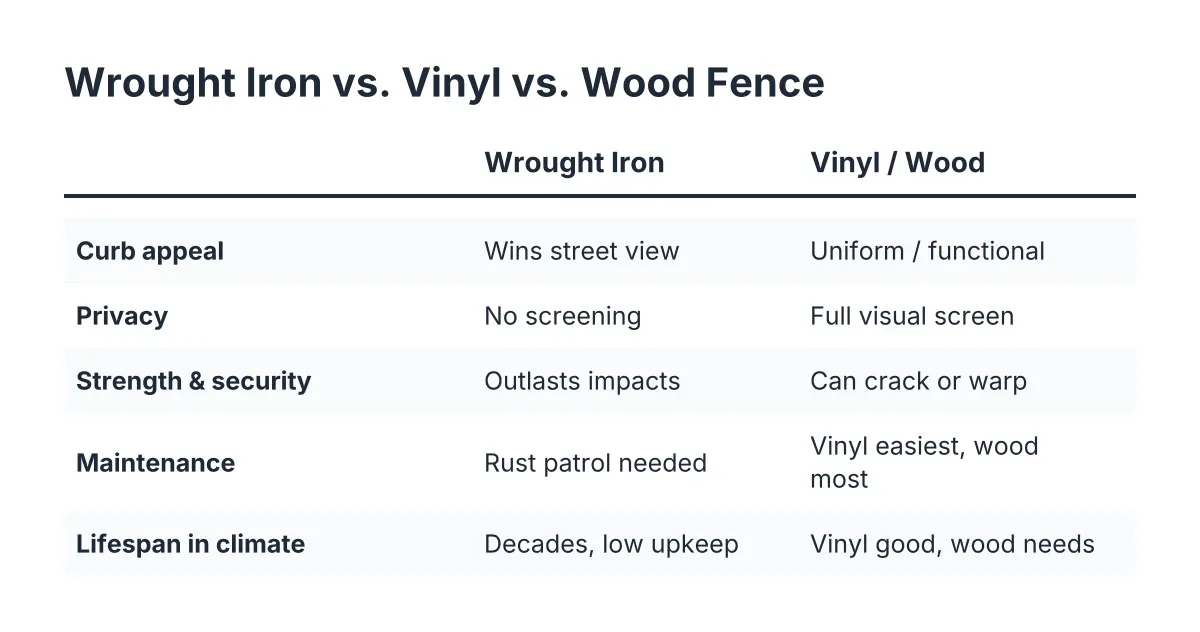
Wrought iron is a nearly pure form of iron that blacksmiths heat and shape by hand, known for its grain-like texture and natural rust resistance. True wrought iron is rare today because the mills that produced it closed decades ago. Most of what gets sold under that name is actually steel. If a contractor quotes you "wrought iron," ask whether it is authentic hand-worked iron or modern ornamental steel, because the cost difference is large.
Ornamental Iron Fencing Terms in the Wrought Iron Fence Glossary
Ornamental iron is the industry term for decorative metal fencing made from steel but styled to look like traditional ironwork. This is what most homeowners actually buy when they shop for a wrought iron fence, and it is a practical choice. Steel is stronger and cheaper than true iron, and with the right coating it holds up well. Seeing "ornamental iron" on a quote is normal, not a bait and switch, as long as the contractor is upfront about it.
Picket
A picket is one of the vertical bars that make up the body of an iron fence. Picket spacing matters for safety, especially around pools and with small kids or pets, so check your local code for spacing rules. Thicker, solid pickets cost more than thin hollow ones but resist bending and rust-through longer. When comparing quotes, ask whether the pickets are solid or tubular, because two fences that look identical can differ a lot here.
Rail
A rail is a horizontal bar that runs between posts and holds the pickets in place. Most residential iron fences have two or three rails; more rails mean more rigidity and usually more cost. If a repair quote mentions a bent or rusted rail, the fix often means replacing a whole panel rather than one bar. That is worth asking about before work starts.
Post
A post is the vertical upright, set into the ground, that carries the weight of the fence panels and gates. Posts do the structural work, so post problems are fence problems. Gate posts take the most stress and are often thicker or set deeper than line posts. In Chattanooga's clay-heavy soil, posts that were set too shallow are a common cause of leaning fences.
Finial
A finial is the decorative tip on top of a picket, such as a spear point, ball, or fleur-de-lis shape. Finials are mostly about looks, but spear-point styles also discourage climbing, which matters for security fencing. They are usually welded or pressed on, and broken finials are a common small repair item. Fancier finials add cost per picket, so they are one place to trim a quote if the budget is tight.
Scrollwork
Scrollwork means the curved, decorative iron shapes added between pickets or along the top of a fence or gate. It is the detail that gives iron fencing its classic look. Scrollwork is labor to make and install, so heavily decorated panels and gates cost more than plain ones. If you want the look on a budget, ask about putting scrollwork on the gate only and keeping the fence panels simple.
Panel
A panel is one pre-built section of fence, pickets and rails already assembled, that installs between two posts. Panel fencing installs faster than fencing welded together piece by piece on site, which keeps labor cost down. Panel width is standardized, so your total fence length and the number of corners affect how many panels and posts you need. Repairs often happen panel by panel, which is why a small-looking fix can involve a full section.
Installation and Site Work Terms in the Wrought Iron Fence Glossary
Footing
A footing is the concrete base poured around the bottom of a fence post to hold it upright in the ground. The footing is what keeps your fence straight through years of weather. Shallow or undersized footings are the usual reason iron fences lean. Around Chattanooga, clay soil and freeze-thaw winters shift posts and footings, so ask any contractor how deep they set posts and why.
Frost Line
The frost line is the depth to which the ground freezes in winter in a given area. Footings should reach below it, because soil above the frost line expands when it freezes and can push posts up out of the ground. This is called frost heave, and it is a slow-motion fence wrecker. A contractor who talks about the local frost line before digging is thinking past installation day.
Rackable Panel
A rackable panel is a fence panel built so the pickets can pivot slightly, letting the panel follow sloped ground without gaps underneath. The alternative is stair-stepping, where each panel stays level and the fence drops in steps down the hill. Chattanooga yards are rarely flat, so this comes up often. Racking usually looks cleaner on a slope but can cost more, and not every panel style racks, so ask early if your yard has grade changes.
Site Survey
A site survey is the visit where a contractor measures your property line, checks the slope and soil, and notes obstacles before writing a quote. A quote written without one is a guess. The survey is when gate locations, utility lines, and tricky grades get sorted out. Most fence companies, including ours, fold this into a free estimate, so there is no reason to skip it.
Finishes and Rust Protection
Powder Coating
Powder coating is a dry finish that gets sprayed onto metal and baked on, creating a shell tougher than regular paint. It is the standard finish on quality ornamental iron fencing and the main defense against rust. A good powder coat resists chips, fading, and moisture far better than brush-applied paint. In a humid climate like ours, the finish does heavy lifting; our guide to wrought iron fence durability in Chattanooga's humid climate covers what to expect year by year.
Galvanizing
Galvanizing means coating steel with a layer of zinc that corrodes before the steel underneath does, blocking rust. The best iron fencing is galvanized first and powder coated on top, giving two layers of protection. Fencing that is only painted will rust sooner, especially at welds and cut edges. If a quote is much cheaper than others, ask whether the material is galvanized; that is often where the savings came from.
Rust Jacking
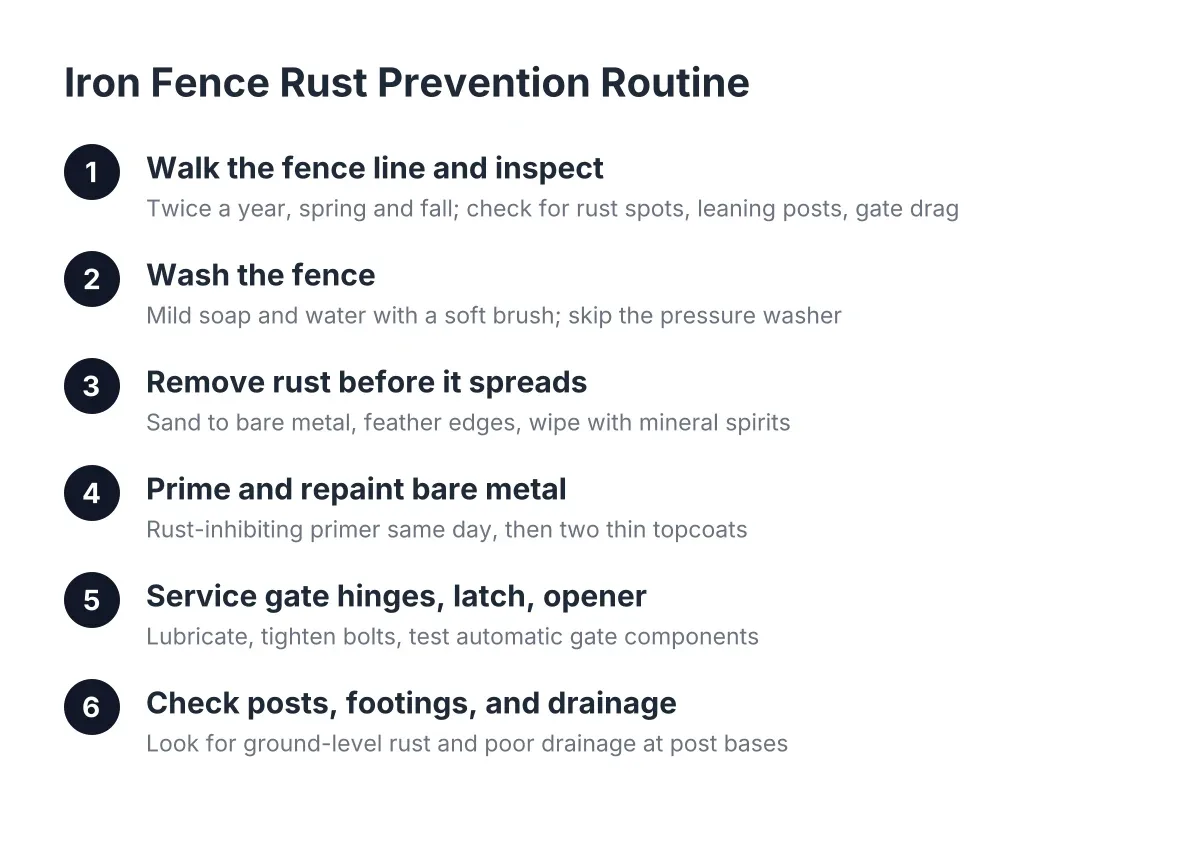
Rust jacking is what happens when rust forms inside or under a coating and expands, cracking the finish and splitting hollow metal parts from within. It is why a small rust spot on an iron fence should not be ignored. Caught early, rust can be sanded and sealed as a fence repair; left alone, it can force fence replacement of whole panels. Check the bottoms of pickets and posts each spring, since that is where water sits.
Gates, Pricing, and Paperwork
Gate Hardware
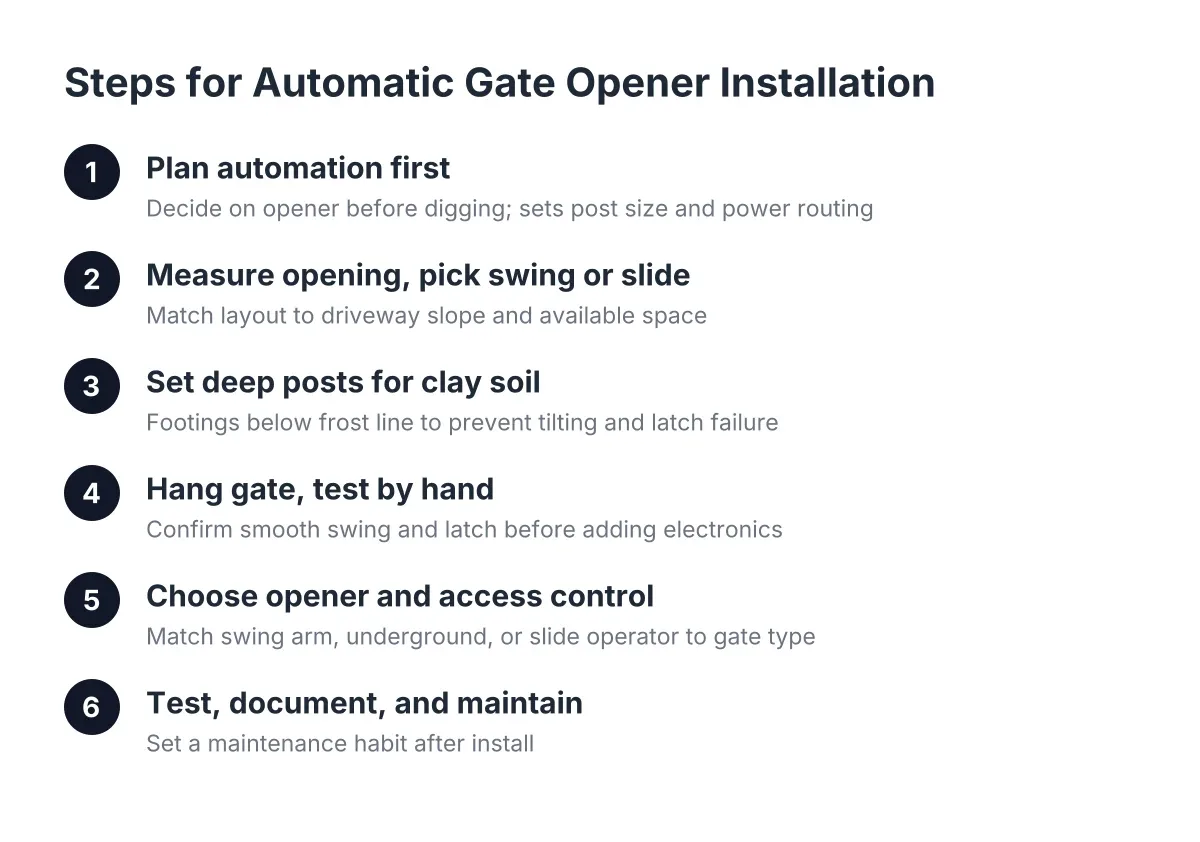
Gate hardware means the hinges, latches, locks, and closers that make a gate swing and secure. Hardware is where most gate problems start: a dragging gate usually means worn hinges or a shifted post, not a bad gate. Heavy iron gates need hardware rated for their weight, and skimping here leads to repeat gate repair calls. If you want an automatic gate, say so before the quote, because the operator, power, and safety sensors change the scope.
Linear Foot
A linear foot is a straight-line foot of fence length, and it is the unit most fence pricing is built on. A quote priced per linear foot lets you compare bids directly, as long as both quotes cover the same material, height, and footing depth. Gates, corners, slopes, and tear-out of an old fence add cost beyond the per-foot rate. For a plain-English breakdown of what drives the number, see our guide on what a wrought iron fence costs.
Using These Terms
With this wrought iron fence glossary in hand, you can read a quote line by line and know what each charge covers. You can ask whether pickets are solid or tubular, how deep the footings go, and whether the steel is galvanized under the powder coat. Those three questions alone separate a careful contractor from a fast one, and they take two minutes to ask.
If you need fence installation, Chattanooga Fence Builders can help.
Prefer to talk it through? Call (423) 615-8548 — a quick call is usually the fastest way to get a straight answer for your situation.