Wrought Iron vs. Vinyl vs. Wood Fence: 8 Comparisons for Chattanooga Homeowners
If you are comparing a wrought iron fence against vinyl and wood, you are weighing three materials that behave differently in Chattanooga's clay soil, humidity, and freeze-thaw winters. Each one wins on something: wrought iron on strength and curb appeal, vinyl on low maintenance, and wood on privacy per dollar. This list walks through eight head-to-head comparisons so you can pick the right material before you start collecting quotes.
One quick note on scope. A full fence installation usually includes layout, post setting in concrete, panel or picket installation, and at least one walk gate. Items like old fence removal, automatic gate openers, and custom decorative work are often priced separately, so ask about them up front.
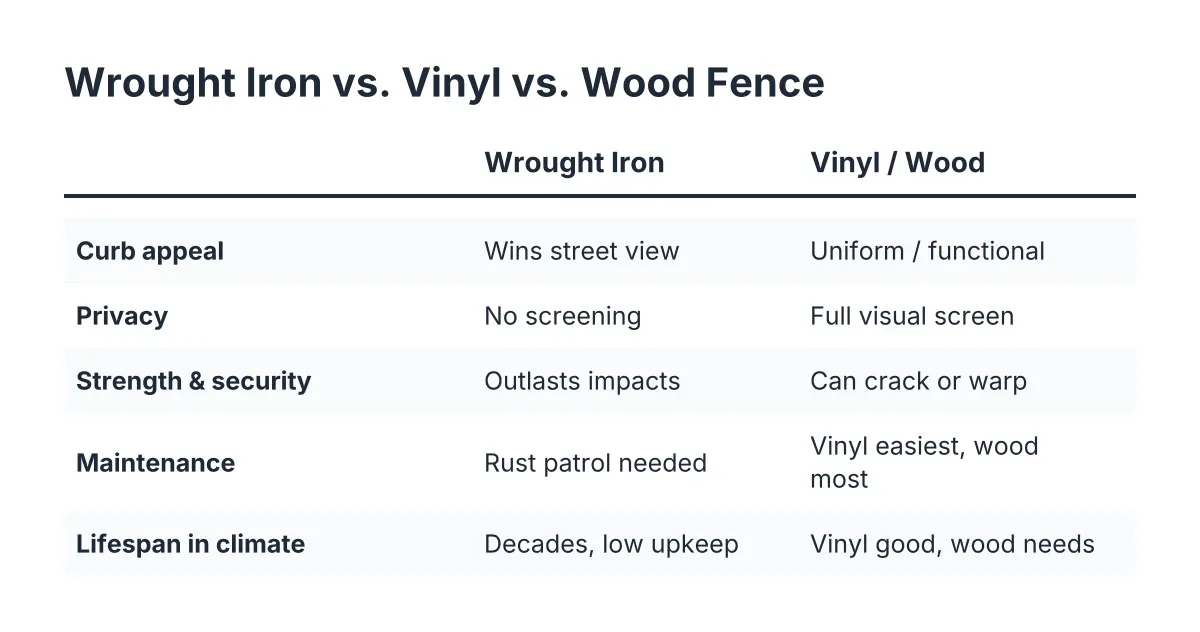
1. Curb Appeal: Wrought Iron Fence Designs Win the Street View
For a front yard where appearance drives the decision, a wrought iron fence is hard to beat. The thin vertical pickets, finials, and scrollwork options read as upscale from the street, and decorative iron panels can be matched to a historic home or a modern build. Vinyl looks clean but uniform, and wood reads as functional rather than ornamental.
However, that polish comes with a visibility trade-off. Iron is an open-picket style by design, so it defines a boundary without blocking the view. If you want the look of iron plus some screening, planting along the fence line is the usual fix.
2. Privacy: Wood and Vinyl Take This One Outright
If your main goal is blocking the new neighbor's view of your patio, iron is the wrong tool. A solid wood privacy fence or a vinyl privacy fence gives you a full visual screen at standard backyard heights. Wrought iron fence panels are spaced pickets, which is exactly why they look elegant and exactly why they hide nothing.
Many Chattanooga homeowners split the difference. They run a wood or vinyl privacy fence along the back and side yards, then use ornamental iron across the front where visibility and curb appeal matter. A fence company that installs all three materials can quote that combination in one visit.
3. Strength and Security: Iron Outlasts Impacts, Pets, and Climbers
Ornamental iron and steel fencing resists impacts that would crack a vinyl panel or snap a wood picket. A large dog leaning on it, a kid climbing it, or a falling limb glancing off it rarely leaves a mark. The pickets are also hard to climb and nearly impossible to kick through, which is why commercial fence installation so often uses metal.
By contrast, wood posts are prone to warping, rotting, and twisting over the years, which slowly loosens the whole structure. Vinyl resists rot but is still PVC; a hard impact in cold weather can crack a panel, and the material can burn in extreme conditions. For pure security per foot, metal wins.
4. Maintenance: Vinyl Is Easiest, Iron Needs Rust Patrol, Wood Needs the Most
Vinyl asks the least of you. It resists rot and fading, and an occasional rinse keeps it looking new. There is no staining schedule and no repainting.
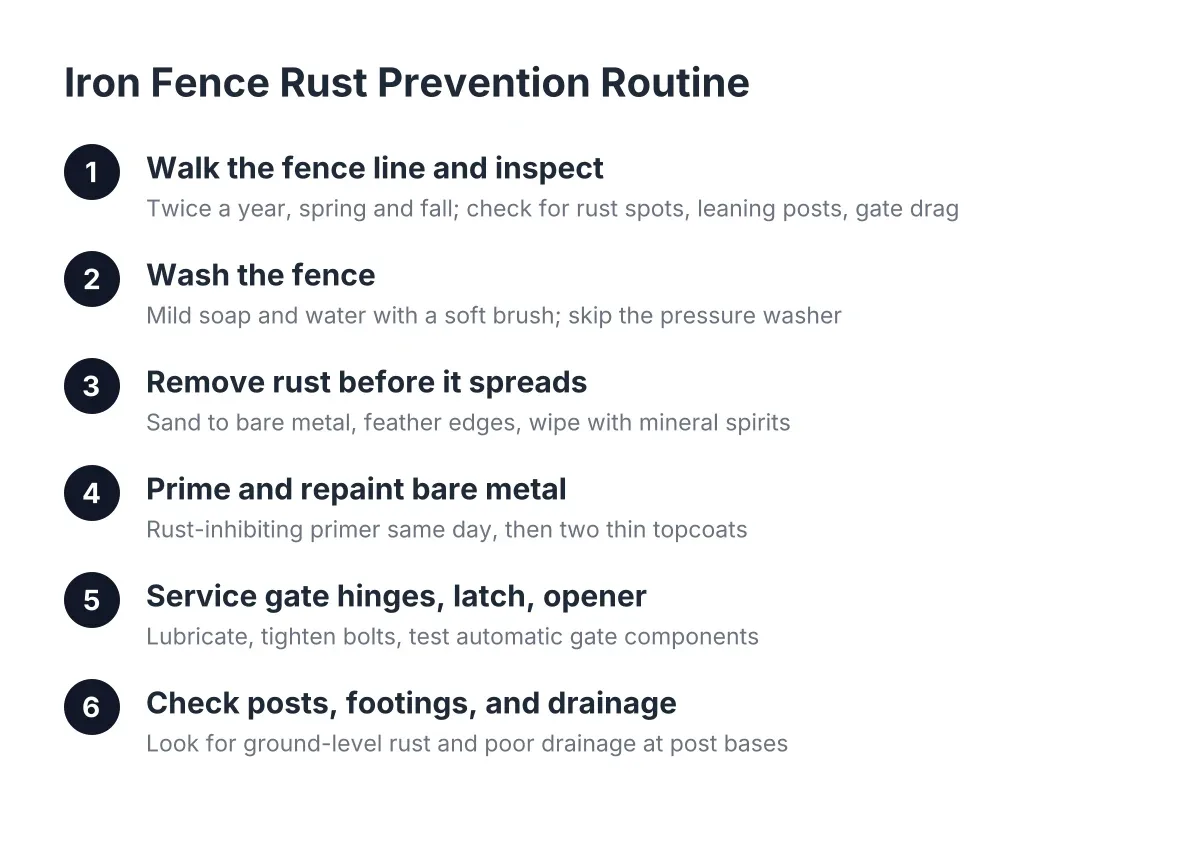
A wrought iron fence sits in the middle. Modern powder-coated iron and steel hold up well, but Chattanooga's humidity means you should inspect the coating every year or two and touch up scratches before rust starts. Wood demands the most attention; staining both sides of a wood fence is not just cosmetic, it meaningfully extends the fence's lifespan and protects your investment. Skip it, and treated pine weathers fast in our wet seasons.
5. Cost: What Each Material Really Costs to Install
Fence installation costs run between $6 and $50 per linear foot depending on material, averaging $23 per linear foot nationally, according to HomeAdvisor. Angi puts the average national project at $3,277, with most jobs falling between $1,860 and $4,843 depending on length and material. Within those ranges, chain link sits at the low end, wood and vinyl in the middle, and ornamental iron toward the top.
Several factors move the number for your specific yard:
- Linear footage and gate count. More feet and more gates mean more posts, more panels, and more labor.
- Material and style. Decorative iron panels with finials or scrollwork cost more than flat-top styles, just as board-on-board or horizontal wood designs cost more than a standard flat privacy fence. Custom styles genuinely use more material and labor; the higher price is not padding.
- Terrain and soil. Slopes, rock, and Chattanooga's clay-heavy soil affect how posts get set and how long the dig takes.
- Removal of an old fence. Tearing out and hauling off an existing fence is usually a separate line item.
Therefore, treat any online iron fence cost calculator as a rough starting point. A real quote needs someone to walk the fence line.
6. Lifespan in Chattanooga's Climate: Iron and Vinyl Go Long, Wood Works Harder
Our region is tough on fences. Humidity and seasonal rain keep wood damp, and freeze-thaw winter cycles shift posts and footings in clay soil. A well-coated iron fence set in proper concrete footings shrugs most of this off and can outlast both alternatives by decades.
Vinyl also holds up well against moisture since it cannot rot, though its posts are the foundation of the system and must be set correctly to keep panels straight through soil movement. Heavy-duty end and corner posts are made thicker than line posts for exactly this reason. Wood can serve a long time here too, but only with regular staining and sound posts; it is the material that depends most on upkeep.
7. Repair: How Each Material Fails and What Fixing It Involves
Every fence eventually needs repair, and the materials fail differently. Knowing the failure mode helps you judge whether a repair visit or a fence replacement makes more sense.
- Iron: Rust spots at welds and ground level, a bent picket from an impact, or a sagging iron gate that drags or will not latch. Most of these are fixable without replacing sections; hinges, latches, and coating touch-ups are routine gate repair work.
- Vinyl: A cracked panel or a leaning post. Panels often swap out cleanly, but a failed post means digging out concrete.
- Wood: Rotted posts, warped pickets, and loose rails. Individual boards are cheap to replace; widespread post rot usually points toward replacement.
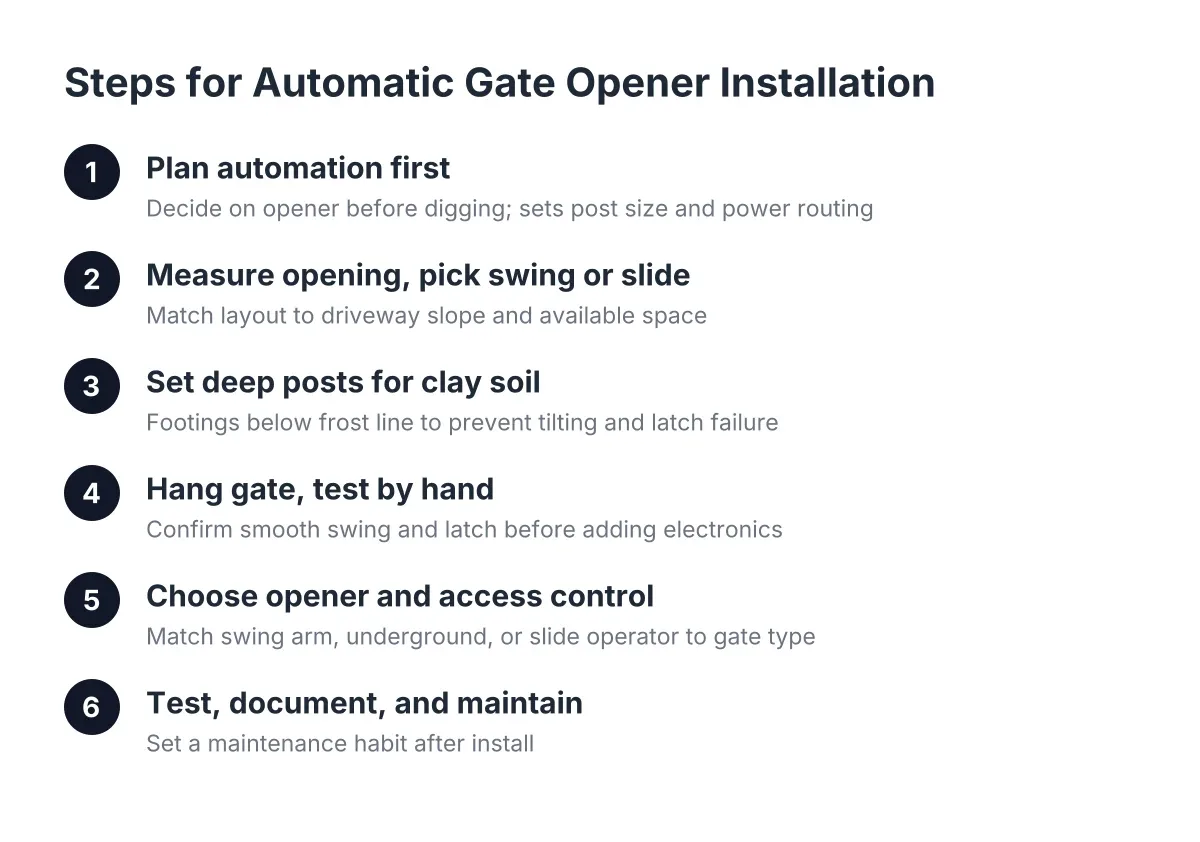
If your iron gate has an automatic opener, the math changes. Automatic gate repairs average $900, typically ranging from $550 to $1,500 depending on the repair type and gate material, according to Angi. Angi also notes that when a repair would exceed half the cost of a new system, replacement, which can run $2,000 to $11,000 or more, is the better investment. Suppose your iron driveway gate opener just clicks and the gate will not move; in that scenario, a technician checks power, the control board, and the operator arm before anyone talks about a new gate. A fair repair company diagnoses first and gives you the repair-versus-replace math in plain terms.
8. DIY vs. Hiring Wrought Iron Fence Installers
Homeowners can handle some fence work themselves: replacing a wood picket, tightening a gate latch, or touching up paint on iron. Full installation is a different job. Iron and steel panels are heavy, posts must be plumb and set in concrete at consistent spacing, and Chattanooga's clay and occasional rock make digging harder than it looks. Get the post depth wrong and freeze-thaw cycles will heave the fence out of line within a few winters.
In addition, call a pro now rather than later if you see these warning signs: a gate stuck half-open blocking your driveway, a fence leaning after a storm, an automatic gate opener that hums or clicks but does not move, or rust that has eaten through a post at ground level. Electrical work on automatic gates in particular is not a DIY job. Also check local permit and HOA rules before any installation; requirements vary by neighborhood, and a local installer will know what applies.
How to Choose a Fence Company for the Job
When you search for an iron fence near me or ornamental fence installers near me, you will mostly find directories. To sort real installers from lead resellers, ask each company three questions:
- Do you install and repair this material yourself? Some companies subcontract metal work. You want the crew that sets the posts to be accountable for them.
- What exactly is in the quote? A fair quote lists linear footage, post spacing and depth, concrete, gates and hardware, old fence removal, and cleanup as separate lines. Vague lump sums hide gaps.
- How do you handle this soil and climate? An installer working in Chattanooga should be able to explain how they set footings for clay soil and freeze-thaw movement without being prompted.
Timeline-wise, most residential fence projects take a few days of on-site work once materials arrive, though custom iron fabrication can add lead time ahead of installation. Confirm both the start date and the expected duration in writing.
The Bottom Line for 2026
Choose iron for strength, security, and front-yard curb appeal; choose vinyl for low maintenance; choose wood for the most privacy per dollar. Many of the best results in Chattanooga combine two materials on one property. Whichever direction you lean, get two or three written quotes and make each company explain its post-setting approach for local soil.
If you are weighing these options for your own yard, or you have an iron gate that stopped working and need to know whether it is a repair or a replacement, Chattanooga Fence Builders can walk your fence line, explain the cost factors in plain terms, and give you a free estimate before any work starts.
If you need fence installation, Chattanooga Fence Builders can help.
Prefer to talk it through? Call (423) 615-8548 — a quick call is usually the fastest way to get a straight answer for your situation.