9 Common Fence Repair Mistakes Homeowners Make Before Calling a Pro
A broken fence looks like a weekend project. Then the post won't come out, the concrete mix goes soupy, and the new section leans worse than the old one. Most of the common DIY fence repair mistakes we'll cover here happen before a professional ever gets a phone call. They happen in the first hour, when a homeowner or landlord grabs a shovel and starts guessing.
This list walks through nine of those mistakes, why each one costs you later, and how to tell when a DIY fix makes sense versus when it doesn't. It is written for the Chattanooga area, where clay soil and freeze-thaw winters punish shortcuts harder than most places. Whether you just had a wood fence installed or you manage a handful of rentals with aging chain link, the same traps apply.
1. Patching the Pickets When the Post Is the Problem
Replacing a cracked picket on a leaning fence is like painting over a water stain while the pipe still leaks. If the fence tilts, sags, or wobbles when you push on it, the failure is almost always at the post or the footing, not the boards. New pickets screwed to a rotting post will lean again within a season.
Before you buy lumber, grab the top of the nearest post and rock it. Movement at ground level means the post or its footing has failed. Fix that first, or you are spending money on a fence that is still falling down.
Why do wood fence posts fail even when the boards look fine?
Wood fence posts usually fail from rot at the ground line, even when the panels above have been repainted and maintained for years. Moisture sits where the post meets the soil, and that contact point decays long before the visible boards show trouble. This is why a fence can look healthy from the sidewalk and still be one storm away from going over.
Chattanooga's clay-heavy soil makes this worse. Clay holds water against the post after every rain, and the freeze-thaw cycles in winter shift footings and open gaps where more water gets in. A post that would last decades in sandy soil can rot out much faster here.
2. Common DIY Fence Repair Mistakes with Concrete Footings
A homeowner's first instinct when a wood post rots is often to dig out the whole footing and start over, sometimes jumping straight to a steel post. That is a lot of labor, and it is not always the practical move. In many cases, the existing concrete footing is still sound; only the wood inside or above it has failed.
An interim repair that preserves the footing can keep the fence standing straight for years. Later, when the whole fence is ready for replacement, that repair money was not wasted; it bought you time to budget for the full job. For a landlord with several properties, that staging approach can spread fence costs across turnover cycles instead of forcing one large bill.
3. Setting the New Post in Soupy Concrete
The most common mistake people make when mixing concrete for a fence post is adding too much water, because almost nobody measures it. Wet, soupy concrete is easier to pour, but it cures weak. A weak footing in Chattanooga clay will shift with the first hard freeze, and the post you just set starts leaning within a year or two.
Follow the bag ratio and mix to a thick, oatmeal-like consistency. In addition, fill the concrete up close to grade and slope the top away from the post. A common installation mistake is stopping the concrete a couple of inches below grade and backfilling with dirt or sod. That pocket traps moisture right at the post's ground-level contact point, which becomes the exact spot the post rots through.
4. Staining or Sealing New Wood Too Soon
This one catches people who just paid for a new wood fence and want to protect it immediately. Pressure-treated lumber comes loaded with moisture, and Chattanooga's humidity and seasonal rain slow down how fast it dries out. Stain applied before the wood has cured sits on the surface, blotches, and peels, and now you have to strip it before you can do it right.
The test is simple: sprinkle water on the fence. If it soaks in within a few minutes, the wood is ready to accept stain. If it beads up, wait and test again in a few weeks. Waiting feels wrong when the fence starts graying, but graying is cosmetic and reversible; a failed stain job is not. If you are unsure, ask the company that installed the fence what they recommend for your specific lumber, since drying time varies with the wood, the season, and how much sun the fence gets.
5. Hiring the Lowest Bid Without Asking What It Covers
Price-shopping fence repair is reasonable, especially for rental owners watching margins across multiple units. The mistake is treating every quote as the same job at different prices. Fence pricing reflects construction method, materials, how the posts are set, and how long the work is expected to last, not just lumber and labor hours.
For example, say a landlord in Hixson gets two quotes to fix a storm-damaged privacy fence section. Suppose one bid is a few hundred dollars cheaper but resets the posts in shallow, backfilled holes. In that hypothetical, the cheaper repair fails in two or three winters and the whole section gets rebuilt, costing more in total than the better quote would have. Ask each bidder how deep the posts go, how the concrete is finished at grade, and what happens if the repair fails early. The answers tell you more than the number does.
6. Guessing at Costs Instead of Getting a Real Quote
Online fence repair costs calculator tools and national averages are a starting point, not a budget. For context, Angi reports the average cost to install a fence nationally is $3,277, with a typical range of $1,860 to $4,843 depending on length and material, and HomeAdvisor puts fence installation cost at about $23 per linear foot on average. Repairs run on different math: access, how many posts are involved, and whether footings can be saved drive the price more than footage does.
Searching "wooden fence repairs near me" and calling two or three local companies for a free estimate will get you a number grounded in your actual fence, your soil, and your access. A ten-minute walk of the fence line with someone who repairs fences for a living beats an hour with a calculator.
7. Ignoring a Broken Gate Until It Becomes an Emergency
Gates fail gradually, then suddenly. A gate that drags, latches hard, or needs a lift to close is telling you a hinge post is moving or hardware is wearing out. Deferring that gate repair often turns a cheap adjustment into a rebuilt gate frame or a reset post.
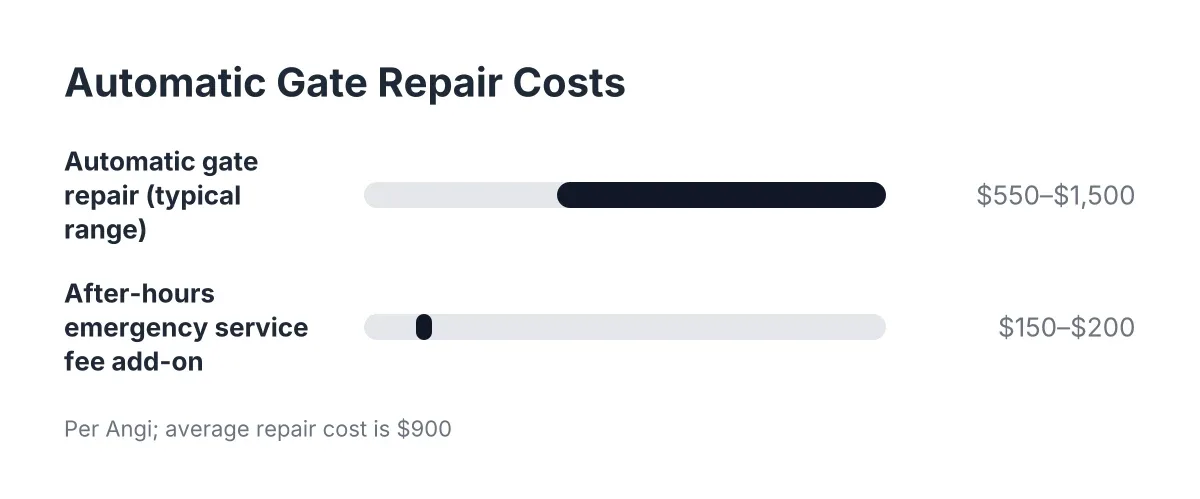
Automatic gates raise the stakes. According to Angi, automatic gate repairs average $900, typically ranging from $550 to $1,500, and homeowners should budget an extra $150 to $200 in emergency service fees if the gate fails after hours. Angi also notes that when repair costs pass 50 percent of a new system's price, replacement is usually the better investment. For a rental property where the gate secures a tenant's yard or pet, waiting until it fails outright means paying emergency rates on someone else's schedule.
8. Rebuilding on the Wrong Line or Against Local Rules
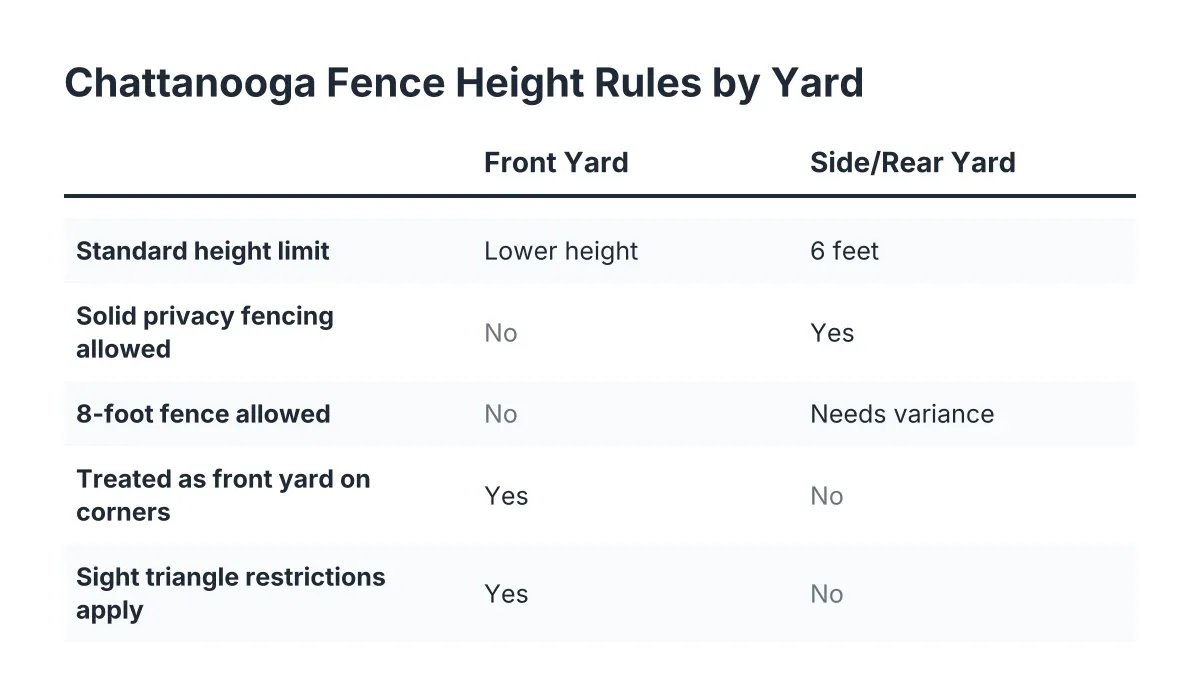
A repair that moves or rebuilds a fence section is a chance to repeat someone else's boundary mistake. Before resetting posts along a property line, confirm where the line actually is. Tennessee does not have one statewide setback rule for residential fences; requirements vary by city and county, and Chattanooga has its own regulations on fence height and placement, especially for corner lots and front yards. Some repairs that change height or location can trigger permit requirements where a simple like-for-like fix would not.
Therefore, if you are replacing more than a section or two, check with the local codes office first, and consult a surveyor if the line is in dispute. This is one area where a professional earns their fee just by knowing which rules apply as of 2026 and which fences they have seen forced to move.
9. Mismatching DIY Fence Repair Mistakes to the Rest of the Fence
A repair should disappear into the fence, and a lot of DIY fixes don't. Common fence repair mistakes in this category include mixing picket widths, ignoring board orientation, and placing a short or cut section in the most visible stretch of the yard. Experienced installers do the opposite: full, clean sections face the street and the main sightlines, and any cut or adjusted sections get tucked where they draw less attention.
The same logic applies to layout. Get the visually prominent end of the fence right first, because small adjustments can be absorbed at the far end where nobody looks. For landlords, a mismatched patch job also reads as deferred maintenance to prospective tenants walking the property, which works against you at listing time.
When to Stop DIYing and Call Someone
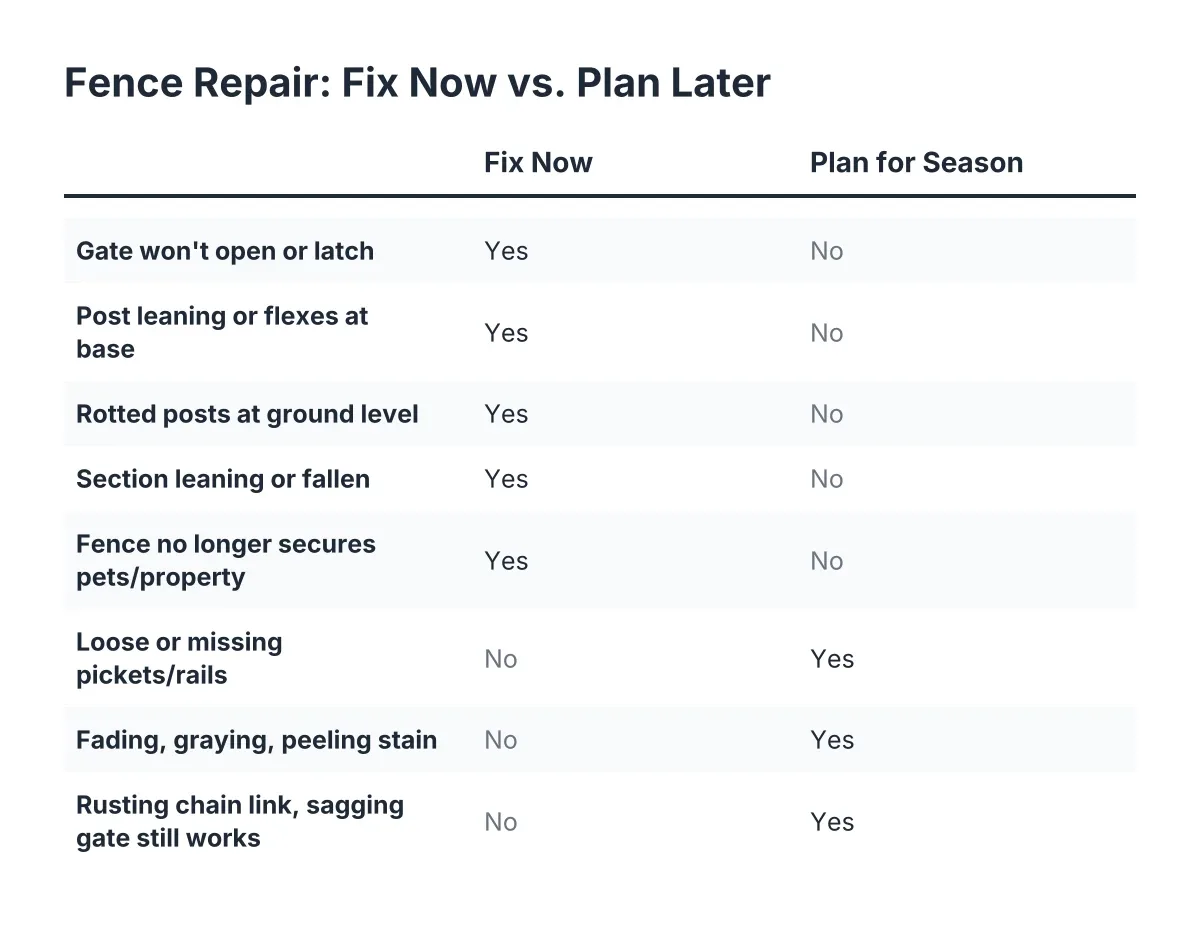
Not every fix needs a contractor. Swapping a picket, tightening a gate hinge, or re-securing a loose rail is well within reach for most homeowners with basic tools. The common fence repair mistakes on this list cluster around three harder jobs: anything involving posts and footings, anything involving property lines or permits, and anything involving automatic gate mechanisms.
Here is a quick gut check before you start:
- Push test fails at the post: the problem is structural, and a surface fix will not hold.
- You would be digging or pouring concrete: post depth and concrete finish at grade decide whether the repair lasts in Chattanooga clay.
- The repair changes height, location, or materials: confirm local rules before you build.
- The gate is automatic: motors, sensors, and safety mechanisms are not a guess-and-check project.
- More than a quarter of the fence needs work: price the repair against replacement before committing.
That last point deserves a plain answer. Repair makes sense when the damage is isolated and the posts are mostly sound. Replacement makes sense when rot or lean shows up across multiple sections, because serial repairs on a failing fence cost more over time than one planned rebuild. A straightforward estimate should tell you which side of that line your fence sits on, in plain terms, before any work starts.
If you need fence repair, Chattanooga Fence Builders can help.
Prefer to talk it through? Call (423) 615-8548 — a quick call is usually the fastest way to get a straight answer for your situation.