8 Signs Your Fence Needs Repair Now vs. What Can Wait for Seasonal Maintenance
Not every fence problem is an emergency. Some of the signs your fence needs repair demand a call this week; others can wait for a planned maintenance visit in spring or fall. The trick is knowing which is which, especially if you own rental property and a tenant just texted you a photo of a gate hanging off its hinge. This list walks through eight signs, sorted by urgency, so you can decide what gets fixed now and what goes on the calendar. Understanding fence repair urgency will help you respond effectively to both critical and routine issues.
A quick rule of thumb before the list: if the problem affects security, safety, or access, fix it now. If it affects appearance or long-term lifespan, plan it. That one filter will sort most fence issues in Chattanooga correctly.
1. The Gate Won't Open, Close, or Latch (Fix It Now)
A gate that won't work is the clearest sign your fence needs attention today, not next quarter. If you can't get a car out, or a tenant's dog can slip through a gate that won't latch, you have an access and liability problem, not a maintenance item. This represents an immediate fence repair urgency.
For manual gates, the usual causes are a sagging hinge, a shifted post, or a gate dragging on ground that heaved over winter. For an automatic gate, the opener may click without moving, which often points to a sensor, remote, or motor issue rather than the gate itself. Many of these are single-visit gate repair jobs, not full replacements.
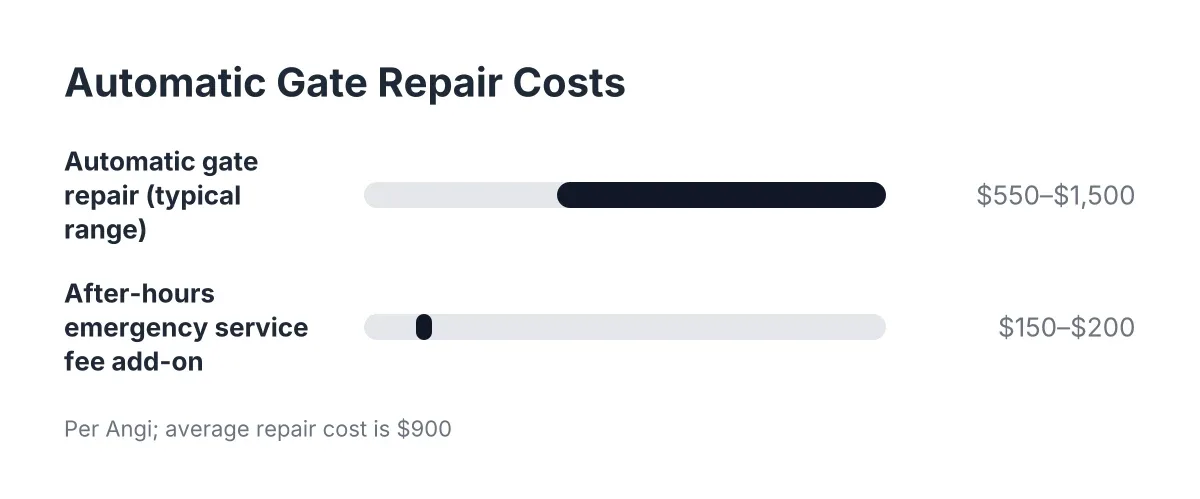
According to Angi, automatic gate repairs average $900, typically ranging from $550 to $1,500 depending on the repair type and gate material. Angi also notes a useful threshold: if repair costs exceed 50% of a new system's price, replacement is usually the better investment. Ask whoever quotes the work to show you which side of that line you're on before anything starts.
2. Leaning Posts or a Whole Section Tilting (Fix It Now)
A leaning fence post is a structural failure in progress. Posts hold everything else up, so once one leans, the load transfers to its neighbors and they start to fail too. In Chattanooga, clay-heavy soil and freeze-thaw winters shift posts and footings more than most homeowners expect, so a slight lean in March can become a fallen section by July.
However, a leaning post doesn't always mean digging out the concrete footing. In many cases a rotted wood post can be repaired in a way that preserves the existing footing, which keeps the fence standing now and lets that money count toward an eventual full replacement later. That interim approach fits a rental property budget better than tearing everything out at the first sign of trouble.
If an entire run is tilting, or several posts move when you push on them, get a professional assessment. That pattern usually points to a footing or soil problem that DIY bracing won't solve.
3. Rotted Posts at Ground Level (Fix It Now)
Here is the frustrating part about wood fences: the posts rot even when the panels look fine. A homeowner can repaint pickets for years while the post is quietly failing right at the soil line, where moisture sits against the wood. Grab each post and push. If it flexes at the base, the rot has already done its work.
Ground-level rot is a now problem because the next windstorm decides the timeline for you. Our humid summers and seasonal rain keep that soil-line zone wet for months at a stretch, which is why post rot shows up here faster than in drier regions. When posts show rot at ground level, fence repair urgency increases sharply because structural failure can follow quickly.
Suppose you own a duplex in East Ridge and the turnover inspection finds two posts soft at the base along the shared backyard. In that scenario, replacing or reinforcing those two posts now, for a few hundred dollars in that illustrative case, beats replacing a 40-foot section after it blows down onto the neighbor's side.
4. Loose, Missing, or Broken Pickets and Rails (Fix It This Season)
One or two loose pickets won't bring the fence down. If the posts are sound and the rails are solid, missing boards are a cosmetic and containment issue you can batch into a seasonal fence repair visit along with other small items on the list.
The exception is rental property with a pet clause or a pool. A gap a dog can push through, or an opening into a pool area, moves this from "this season" to "this week" because the lease and your liability exposure say so. The same board, different stakes.
For landlords with several units, batching helps the budget. One trip to fix pickets at three properties costs less per repair than three separate service calls, and it is worth asking any contractor whether they'll price it that way.
5. Signs That Demand Fence Repair Urgency
What are the signs that my fence needs repair right away? Immediate repair signs are anything involving failed structure or lost function: a gate that won't secure the yard, posts that move when pushed, sections leaning past a slight tilt, storm damage, or rot at the base of posts. These get worse on their own and often take neighboring sections down with them.
Use this quick sort when you walk the fence line:
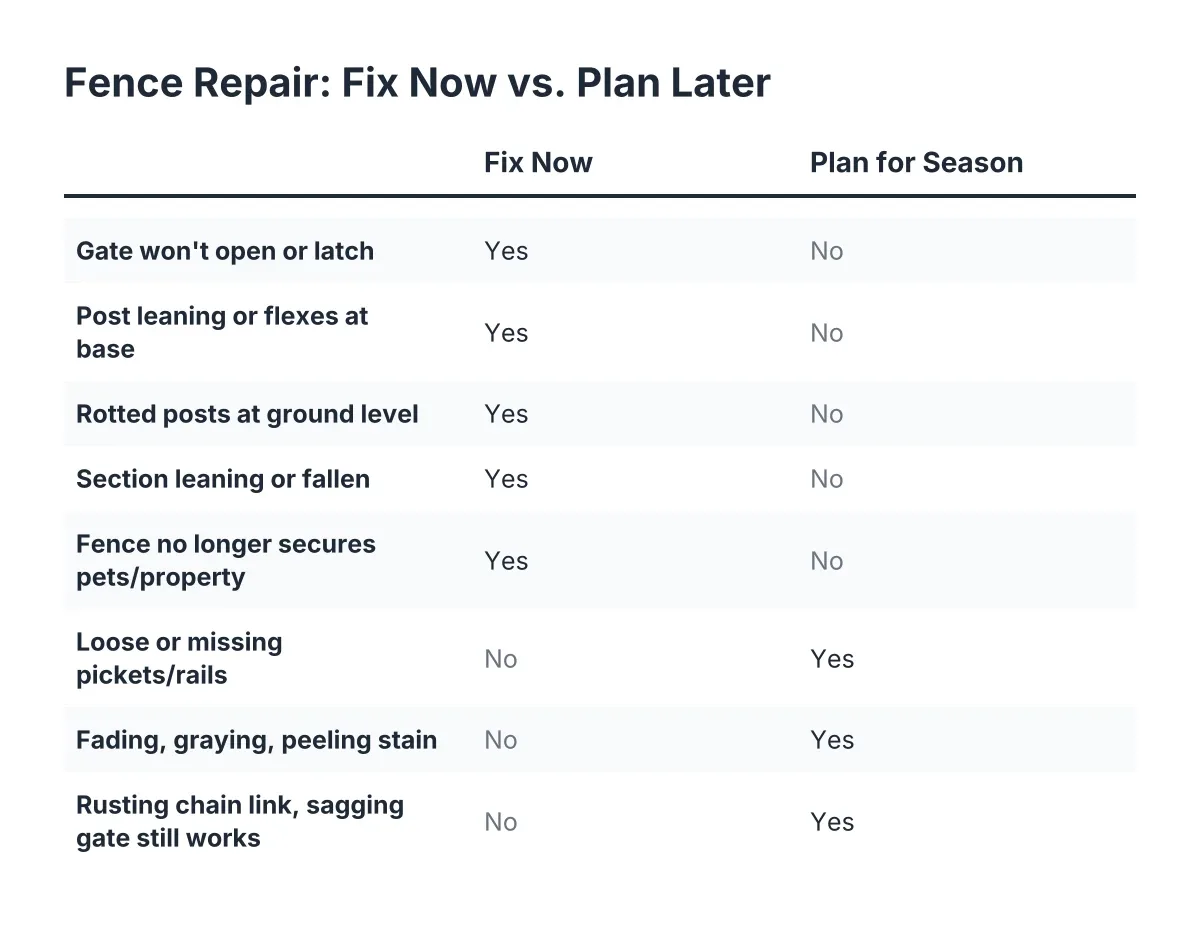
- Fix now: gate won't open or latch, post flexes at the base, section leaning or fallen, fence no longer contains pets or secures the property, splintered boards at kid height.
- Plan for this season: faded or peeling stain, a few loose pickets, minor sag in a gate that still latches, surface mildew, hardware starting to rust but still working.
- Watch and recheck: hairline cracks in vinyl, slight post movement after a hard freeze, a gap under the fence from soil washing out.
The watch list matters in Chattanooga specifically. Freeze-thaw cycles can heave a post slightly in January and settle it back by April, so recheck before paying to fix something winter may undo on its own.
6. Fading, Graying, and Peeling Stain (Plan It for the Right Season)
Gray, weathered wood is not an emergency, but it is the sign your fence needs maintenance before the damage becomes structural. Once the stain or sealant fails, water gets into the wood, and water is what turns a cosmetic problem into rot.
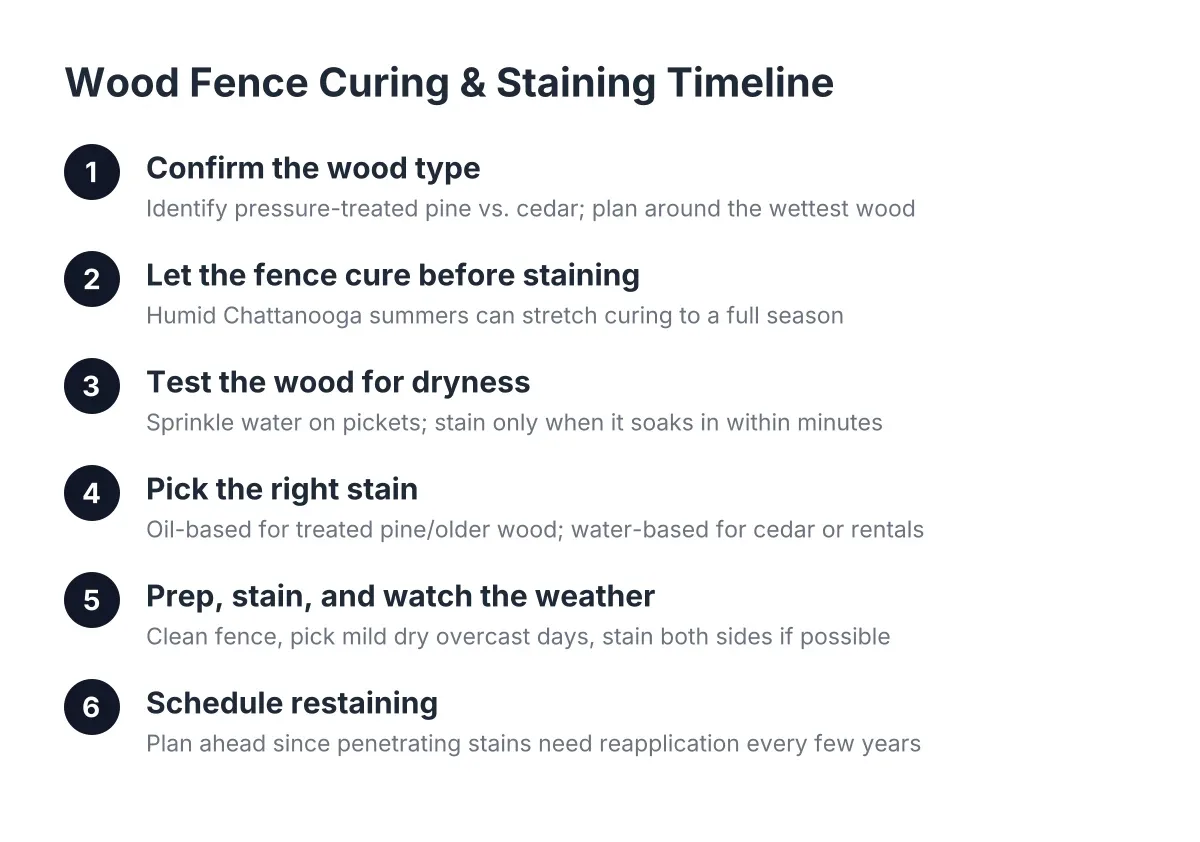
Timing matters more here than most owners realize. In this region's humidity, treated wood needs time to cure before it will take stain properly, and staining right before a rainy stretch wastes the work. Fall and the drier parts of late spring tend to be the practical windows.
One detail worth knowing: staining both sides of a wood fence, not just the side facing your yard, meaningfully extends its lifespan. For a landlord, that is the cheap half of the return-on-investment equation, since a stained fence that lasts years longer delays the replacement cost entirely.
7. Rusting Chain Link or Sagging Gates That Still Work (Plan It)
Chain link fence rust usually starts at cut ends, tension bands, and the bottom of posts. Surface rust is a maintenance item; you can schedule it. Rust that has eaten through the fabric or a post is a repair item, because a chain link fence with a hole in it no longer does its one job on a rental: containment.
A gate that sags but still latches sits in the same category. Tighten or replace the hinges during a planned visit before the sag turns into a gate that drags, binds, and then one day refuses to open at all. Most emergency gate repair calls started months earlier as a slow sag somebody meant to get to.
Vinyl fence sections follow a similar logic. A hairline crack can wait and be watched; a shattered panel after a mower strike or storm leaves a gap and should be swapped promptly, since vinyl rarely fails gradually once cracked through.
8. Weighing Repair Against Replacement
When should I repair my fence versus replace it completely? Repair makes sense when damage is isolated: a few posts, one section, one gate. Replacement makes sense when problems are spread along the whole run, when posts are failing in multiple spots, or when each repair buys less time than the last one did.
For context on the replacement side of the math, Angi reports the average cost to install a fence nationally is $3,277, with a typical range of $1,860 to $4,843 depending on length and material. HomeAdvisor puts fence installation between $6 and $50 per linear foot depending on material, averaging $23 per linear foot. Your numbers will vary with layout, material, and site conditions, but those figures frame the decision.
There is also a middle path. Repairs that preserve good footings and sound sections can carry a tired fence a few more years, so the money spent now effectively bridges you to a planned fence replacement on your schedule instead of the weather's. A straight answer from a contractor should lay out both options with the cost drivers for each, in plain terms, before any work starts.
How Long Does It Take to Repair a Fence?
Most single-issue fence repairs take a few hours to one day. Replacing a post or two, rehanging a gate, or swapping damaged pickets is typically a same-day job once the crew is on site. Larger repairs involving multiple posts, new footings, or automatic gate components can stretch to two or more visits.
Two local factors add time. First, new concrete footings need to cure before the fence can take load, which adds a return trip on post replacements. Second, wet clay soil after heavy rain slows digging and can push a job back a day. Neither is a red flag; both are normal for Chattanooga conditions.
Automatic gate work runs on its own clock. Diagnosing an opener that clicks but won't move is often quick, but if a motor or control board has to be ordered, expect a gap between diagnosis and the fix. According to Angi, homeowners should also budget an extra $150 to $200 in emergency service fees if an automatic gate fails after hours, which is one more reason to fix a sagging gate before it becomes a midnight problem.
Can I Repair My Fence Myself or Should I Hire a Professional?
You can handle small fence fixes yourself: tightening hinge screws, replacing a picket, or cleaning and re-staining panels. A search for handyman fence repair near me covers that tier of work fine. Structural problems are different. Post replacement, footing work, leaning sections, and automatic gate electrical issues are where DIY attempts tend to cost more than they save.
The common trap is treating the symptom. Screwing a leaning section to the next post hides the failed footing underneath, and the whole run comes down later in one piece instead of one section. If more than one post moves, or the gate problem involves an opener's motor or wiring, bring in a professional and get the actual cause named before money goes into patches.
One honest trade-off to weigh: a professional visit costs more than a Saturday of your own labor, and for a single loose board it may not be worth it. The value shows up on structural and gate work, where a correct diagnosis determines whether you pay for one fix or three.
The Bottom Line: Walk the Fence Twice a Year
Walk the fence line every spring and fall, push on each post, swing every gate, and sort what you find into now, this season, and watch. In Chattanooga, the post-winter walk matters most, because freeze-thaw movement and months of wet clay do their damage between November and March.
Fix the access, safety, and structure problems when you find them. Batch the cosmetic and maintenance items into one planned visit per season. Owners who follow that split spend less over the life of the fence than owners who wait for the gate to stop opening, and they are never the ones scrambling for emergency gate repair with a car stuck behind a gate that only clicks.
If you need fence repair, Chattanooga Fence Builders can help.
Prefer to talk it through? Call (423) 615-8548 — a quick call is usually the fastest way to get a straight answer for your situation.