DIY vs. Professional Fence Repair: When to Call a Chattanooga Contractor
A broken fence or a gate that won't latch forces a quick decision: grab your tools or call someone. The honest answer depends on what broke, not on how handy you are, and this guide walks through the choice between DIY and professional fence repair step by step. Some fixes take an hour and a cordless drill. Others involve concrete footings, Chattanooga's clay soil, or an automatic gate opener, and those go sideways fast when you guess. Fix what you can and only pay for help when it actually saves you money.
This matters double if you own rental property. A sagging gate at a rental is a security issue, a pet containment issue, and sometimes a lease issue. You need the fix done right the first time, because driving back out next month costs you more than the repair did.
Step 1: Diagnose What Actually Broke
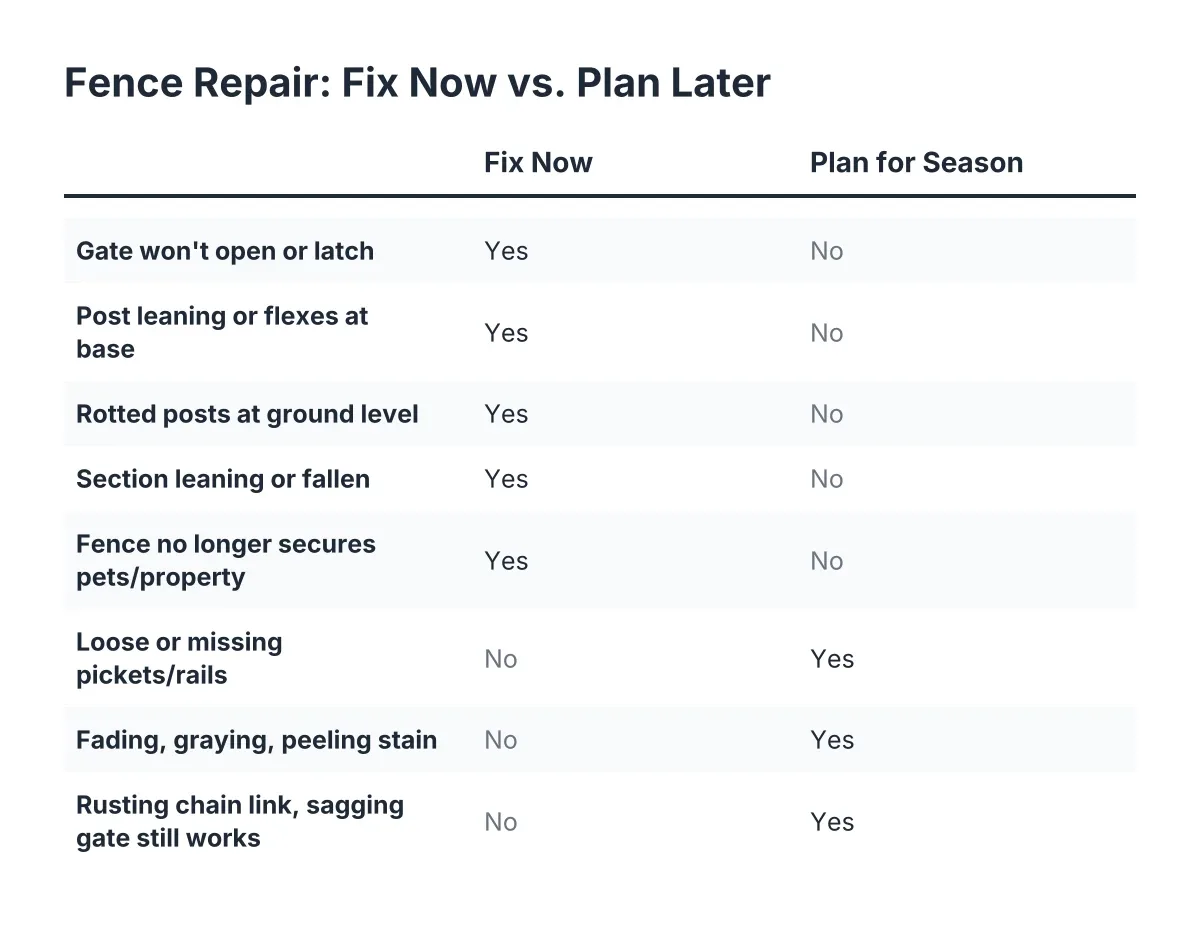
Before you decide between DIY and professional fence repair, figure out the real failure. A leaning panel is a symptom. The cause is usually underneath it.
Walk the fence line and check these spots:
- Pickets and rails. Loose, cracked, or missing boards. The easiest category to fix yourself.
- Posts. Grab each post near a damaged section and push. If it moves, the problem is at or below ground level, not the boards.
- Hardware. Hinges, latches, and gate wheels. Sagging gates often come down to one worn hinge.
- Rot and insect damage. Probe wood at ground level with a screwdriver. If it sinks in, the post is rotting where you can't see it.
- Gate opener (if automatic). Clicking with no movement, a dead remote, or a gate stuck half-open points to power, sensors, or the operator itself.
Here in Chattanooga, clay-heavy soil and freeze-thaw winter cycles shift posts and footings over time. Therefore, a fence that leans a little more every spring is usually a footing problem, not a board problem. That distinction drives everything that follows.
Step 2: Handle the True DIY Fixes First
Start with the repairs that are genuinely yours to do. These are low risk, low cost, and hard to get wrong.
Good DIY candidates:
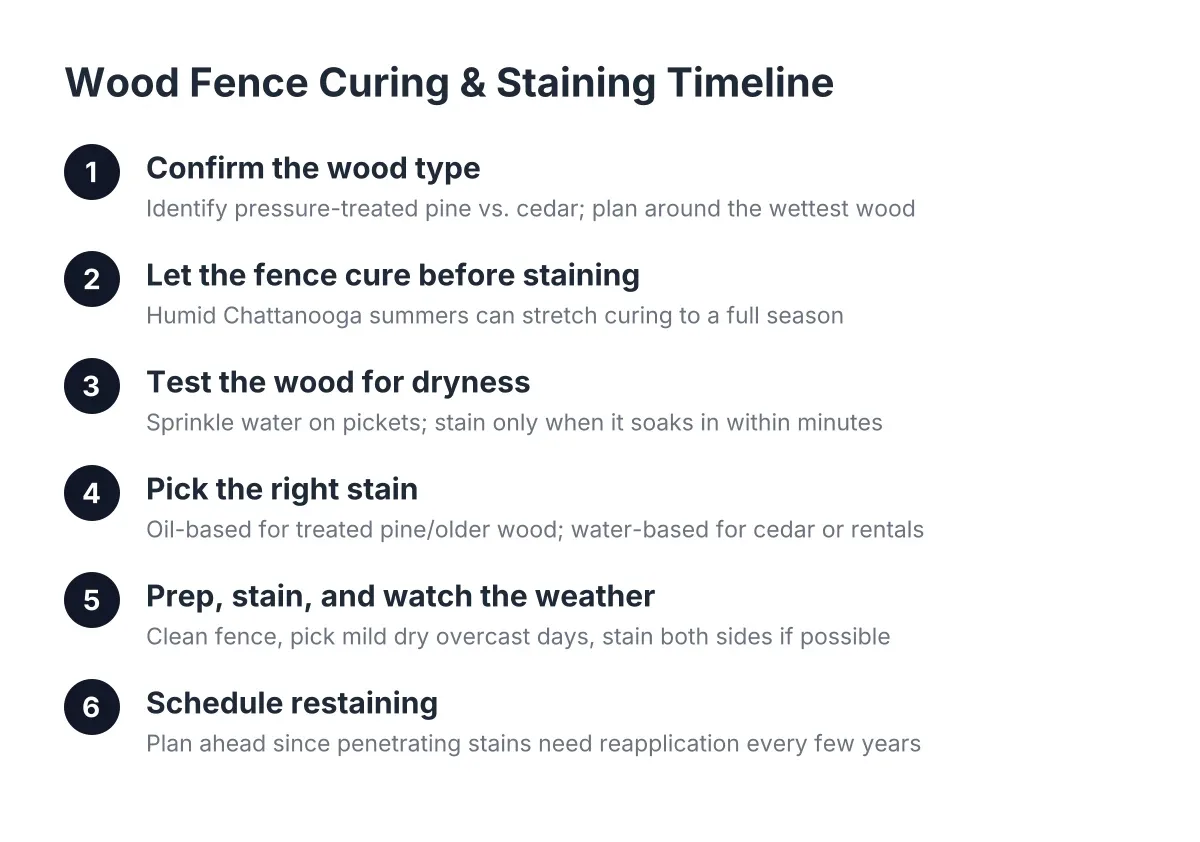
- Replacing individual pickets. Pull the damaged board, screw a matching one to the existing rails. New wood will look lighter until it weathers, which takes months in our humid climate.
- Tightening or replacing gate hardware. A sagging manual gate often needs a new hinge or an anti-sag kit with a turnbuckle cable. That kit costs less than a service call and installs in under an hour.
- Re-securing a loose rail. Add a metal rail bracket where the rail meets a solid post.
- Chain link patches. Re-tying loose fabric to the rail with aluminum ties, or replacing a bent top rail section.
- Adjusting a dragging gate latch. If the gate dropped slightly, moving the latch or strike plate a half inch often buys you a season.
Suppose you own a rental in Hixson and the tenant reports a gate that won't latch after a storm. In that scenario, a hinge swap and latch adjustment might be a 45-minute trip with parts from the hardware store. That is money well saved, and it keeps the yard secure for the pet clause in the lease.
Step 3: Know Which Repairs Call for a Professional
Some jobs look simple and are not. These are the repairs where calling a fence repair contractor usually beats doing it yourself, either on cost, on safety, or on how long the fix lasts.
DIY vs. Professional Fence Repair: Broken or Rotted Posts Set in Concrete
A post rotted at ground level sounds like a dig-and-replace job. However, breaking out a concrete footing in Chattanooga clay is brutal work, and resetting a post plumb so it holds through freeze-thaw cycles takes practice. There is also a smarter option most homeowners never consider: cutting the post above the rot and setting a steel post into the original footing. That approach preserves the footing, costs less than full removal, and the work carries forward if you replace the whole fence later. A contractor will know when that shortcut applies and when it doesn't.
Multiple Leaning Sections
One leaning post is a repair. Three or four leaning posts along one run means the footings are failing as a group, and patching them one at a time wastes money. A professional can tell you whether to reset the run or whether you are at the point where fence replacement beats repeated repair. That repair-or-replace judgment is where an experienced eye earns its fee.
Anything Involving an Automatic Gate
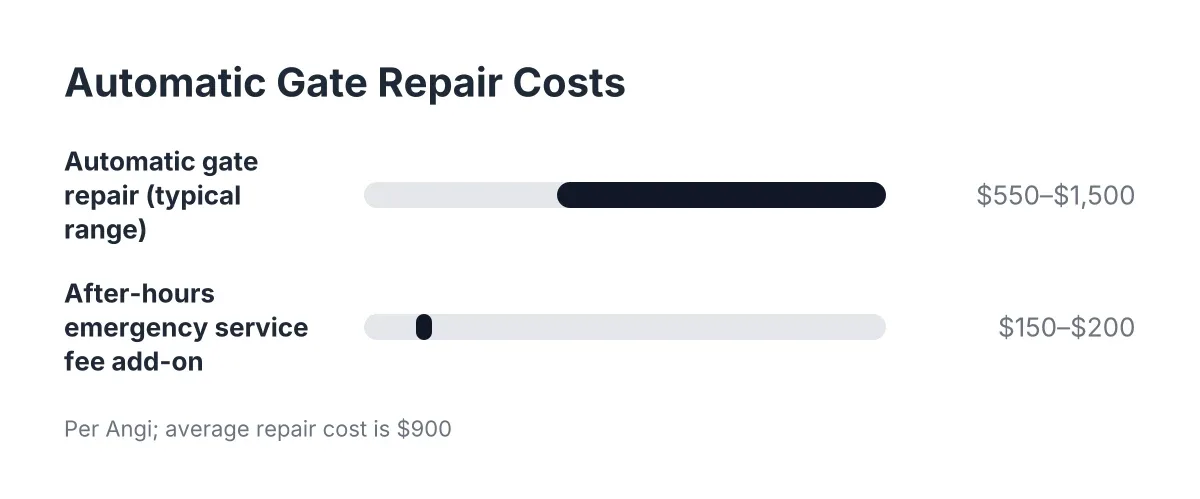
If your automatic gate just clicks and does nothing, resist the urge to open the operator housing. Gate openers combine electrical components, sensors, and moving parts under tension. According to Angi, automatic gate repairs average $900, typically ranging from $550 to $1,500 depending on the repair type and gate material. Angi also notes that when a repair would exceed 50% of a new system's price, replacement is the better investment. A gate repair technician can make that call in one visit; guessing at it yourself can turn a sensor fix into an operator replacement.
One more point for the budget: Angi reports that after-hours failures can add $150 to $200 in emergency service fees. If the gate is stuck open but the property is otherwise secure, waiting for a normal-hours appointment often saves real money.
Vinyl Fence Damage
A cracked vinyl fence panel is rarely a patch job. Vinyl sections come in specific profiles and colors, and matching them matters for resale and curb appeal. Sourcing the right panel is half the job, and a contractor who installs vinyl fence regularly already knows the suppliers.
Step 4: Run the Math
Next, compare the real costs when weighing DIY versus professional fence solutions, not just the parts receipt. DIY looks cheap until you price your own time, the tools you'd need to buy, and the odds of doing it twice.
Weigh these factors:
- Tools. Post repairs may need a demolition bar, a post level, concrete mix, and sometimes a jackhammer rental for old footings. If you don't own them, rental fees eat the savings.
- Your time. A pro crew resets a post in a fraction of the time a first-timer spends fighting clay and old concrete.
- Redo risk. A post set out of plumb or in a shallow footing will lean again by next winter. Then you pay for the repair twice.
- Scale. One picket is DIY. Twenty feet of storm damage is a crew job, and for context, HomeAdvisor puts national fence installation at an average of $23 per linear foot, ranging from $6 to $50 depending on material.
- Liability. For landlords, a gate that fails to latch after your repair is a different problem than one that fails after a contractor's documented work.
For a small landlord, the math usually lands like this: handle hardware and board fixes yourself or through your handyman, and bring in a fence company for posts, footings, automatic gates, and anything structural. Repairs done right on your schedule beat emergency calls during a tenant turnover.
Step 5: Check Permits and Property Lines Before Structural Work
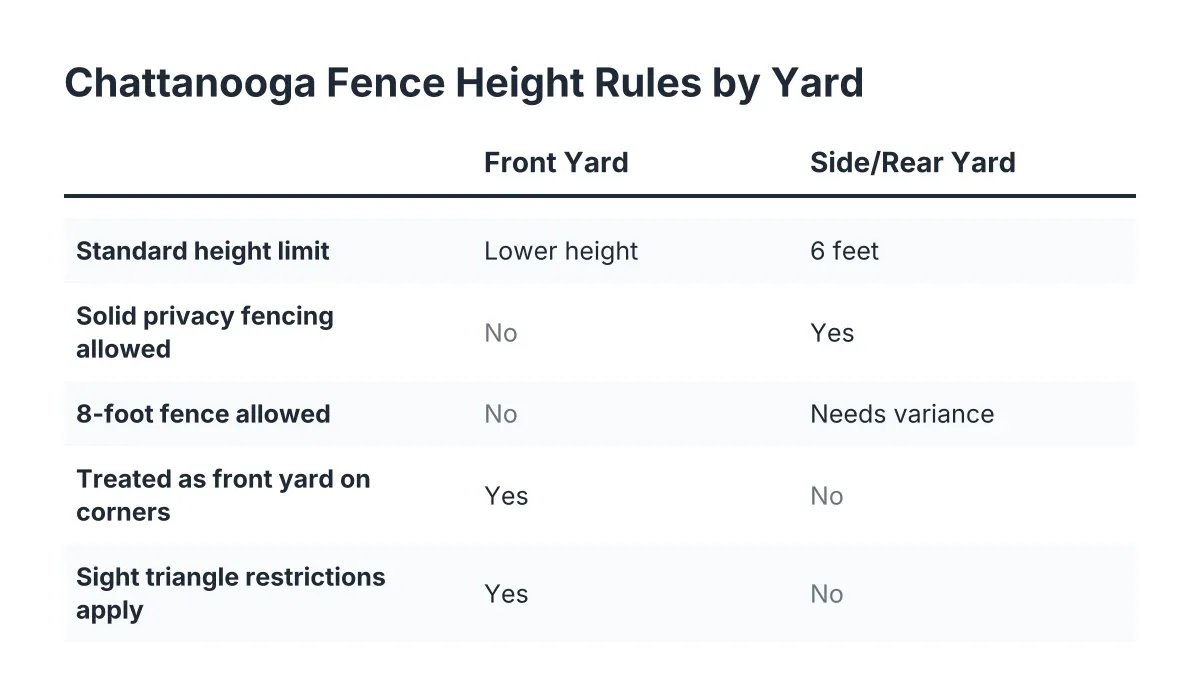
Like-for-like fence repair rarely needs a permit in the Chattanooga area. However, if the repair turns into replacement, or you change the fence height, location, or materials, local rules can apply. Tennessee and Georgia handle setbacks and permits differently, and Chattanooga has its own city regulations on fence height and placement. Confirm the rules with the city or county before any work that moves or rebuilds a fence line, especially on a rental where a neighbor dispute can drag you in as the owner. When a property line is in question, a professional survey is worth the cost; this is one area where guessing is never the cheap option.
Step 6: Get a Quote Before You Commit Either Way
Finally, when the job sits in the gray zone, get a quote before you decide. A free estimate costs you nothing and gives you a number to measure the DIY option against. It also tells you something diagnosis alone can't: whether a contractor sees the damage as a contained repair or an early sign of a fence at the end of its life.
Ask whoever quotes the work:
- Is this a repair, or am I close to the point where replacement is the better spend?
- Can the existing footings be reused, or do they need to come out?
- How long will this repair last given the soil and drainage here?
- For gates: is this a hardware fix, an opener component, or a full operator problem?
A straight answer to those questions tells you more about a contractor than any ad will. Be cautious of anyone who jumps straight to full replacement without explaining why the repair won't hold.
Quick Reference: Where the DIY and Professional Lines Fall
How do you decide between DIY and professional fence repair at a glance? Keep repairs that involve boards, hardware, and surface fixes on your side of the line. Send anything involving footings, structural posts, automatic gates, or multiple failing sections to a professional. The cost of getting structural work wrong exceeds the cost of hiring it out.
DIY: replacing pickets, tightening hinges, anti-sag gate kits, chain link tie repairs, latch adjustments, cleaning and sealing wood.
Professional: rotted or broken posts, concrete footing work, runs with multiple leaning sections, automatic gate and opener problems, vinyl panel replacement, storm damage across long stretches, and any repair that might actually be a replacement decision.
The trade-off is honest in both directions. DIY saves money on small jobs and costs you on big ones. Professional work costs more upfront on small jobs and saves you on the big ones. Sort each repair into the right bucket, and your fence budget goes a lot further, whether it protects your own backyard or a rental across town in Soddy-Daisy.
If you need fence repair, Chattanooga Fence Builders can help.
Prefer to talk it through? Call (423) 615-8548 — a quick call is usually the fastest way to get a straight answer for your situation.