Fence Permits and Setback Requirements in Chattanooga, TN: What to Check Before Repairs
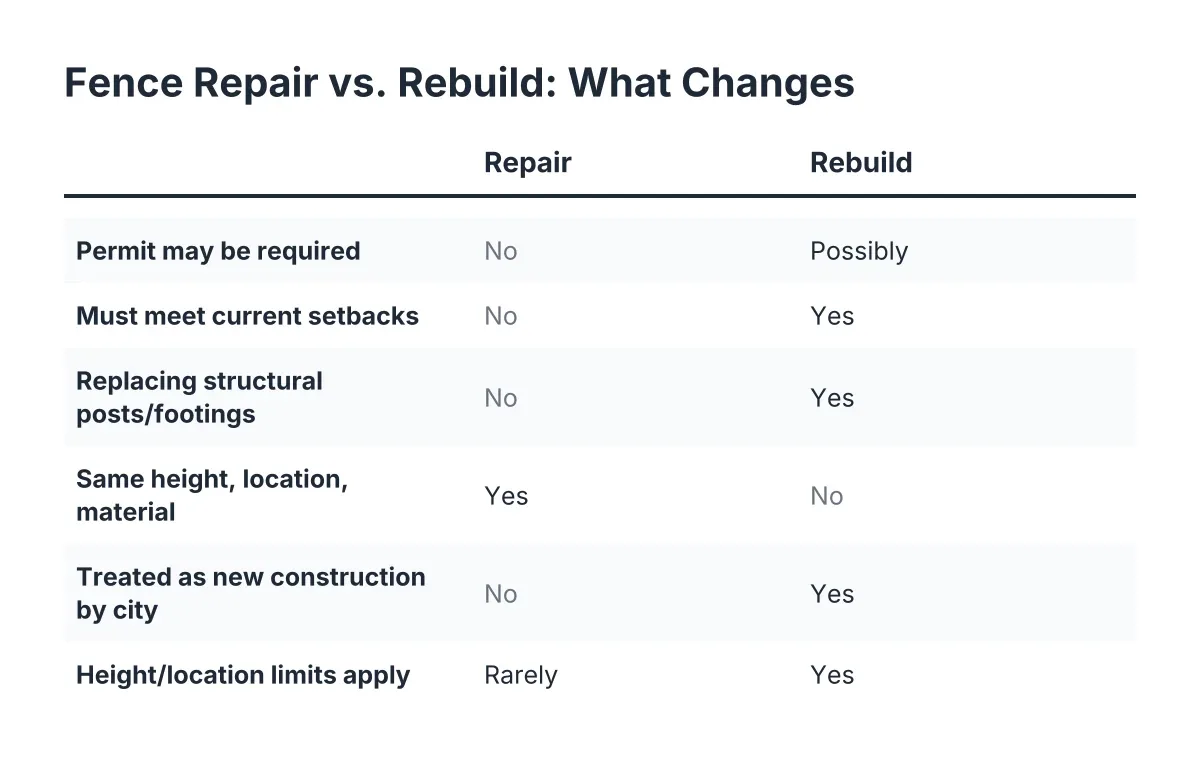
Your fence is leaning after a storm, or a gate panel came loose and the whole section needs rebuilding. Before you grab a shovel or call a contractor, there is a question most Chattanooga homeowners skip: do fence permits and setback requirements apply to the work you are about to do? Understanding the difference between fence repair versus rebuild is critical for determining what regulations apply. For a small fix, usually not. For a bigger repair, the answer can change, and finding out after the posts are set is the expensive way to learn.
This guide walks through how fence rules work in the Chattanooga area, when a repair crosses the line into work the city cares about, and how to check your own situation before anyone digs. None of this is legal advice. Codes change, and the final word always comes from the City of Chattanooga, Hamilton County, or your own municipality. But knowing what to ask, and who to ask, puts you ahead of most homeowners who find out about setbacks from an unhappy neighbor or a code officer.
Why Permits Come Up During Fence Repair and Rebuild
Most people connect permits with new construction, not fixing what is already there. That instinct is mostly right. Swapping a few rotted pickets, re-hanging a sagging gate, or replacing a cracked rail is maintenance. Cities generally do not regulate maintenance, and no inspector is going to knock on your door because you replaced a hinge.
The trouble starts when a repair quietly becomes a rebuild. Suppose a windstorm knocks down forty feet of privacy fence along your back line in East Brainerd. The posts snapped at the ground, so you are not patching anything; you are setting new posts, pouring new footings, and building new sections. At that point, the work looks a lot like new fence installation to the city, even though you call it a repair.
That distinction matters for three reasons:
- Permits. Some jurisdictions require a permit for new fence construction or full replacement, even when they ignore repairs.
- Setbacks and placement. When you rebuild, the fence may need to meet current rules, even if the old fence did not.
- Height and location limits. Corner lots, front yards, and sight lines at driveways often carry stricter rules than back yards.
In short, the bigger the repair, the more the rules apply. A loose gate latch is your business. Fifty feet of new posts along the property line is the city's business too.
When Fence Repair Versus Rebuild Matters: Key Distinctions
There is no single bright line, but the practical test most jurisdictions use comes down to structure and footprint. Ask yourself two questions before starting.
First, are you replacing structural elements? Pickets and rails are cosmetic. Posts and footings are structural. Replacing one broken post in an existing hole is still repair territory. Replacing a long run of posts, or moving to a different post material, starts to look like reconstruction.
Second, is the fence changing in any way? Same height, same location, same material usually keeps you in repair territory. But if the storm damage tempts you to go from a four-foot chain link fence to a six-foot wood fence, or to shift the line two feet toward the neighbor, you are now building something new. When considering fence repair versus rebuild, material or height changes clearly signal new construction. New construction rules, including fence permits and setback requirements, apply to the new fence even though the project started as storm cleanup.
Here is an illustrative scenario. Say a homeowner in Hixson has a wood fence where three posts heaved out of plumb over two freeze-thaw winters. A contractor resets those posts in their existing footings and re-hangs the panels. That is fence repair, plain and simple, and no permit question comes up. Now say the same homeowner decides that while the crew is out, they want the whole 120-foot run replaced and raised to eight feet for privacy from a new development behind them. That second version is a replacement project, and it is worth a call to the city before the quote is signed. Height limits in particular can kill an eight-foot plan in some zones.
Do I Need a Permit to Build a Fence in Tennessee?
Tennessee has no statewide fence permit. Permit requirements come from your city or county, so a homeowner in Chattanooga, Signal Mountain, Soddy-Daisy, or Collegedale can each face different rules. Many residential fences in the area go up without a building permit, but zoning rules on height, placement, and sight lines still apply even when no permit is required.
That last part trips people up. "No permit needed" does not mean "no rules apply." Zoning ordinances regulate where a fence can stand and how tall it can be, and those rules apply whether or not a permit exists for the project. A fence built in the wrong place without a permit is still in the wrong place.
The safest habit is a short call to the relevant office before any rebuild or replacement:
- Inside Chattanooga city limits: the city's land development or zoning office can tell you current fence rules for your zone.
- Unincorporated Hamilton County: county zoning handles it.
- Smaller municipalities like Signal Mountain, Red Bank, East Ridge, or Collegedale often have their own ordinances, and they are not copies of Chattanooga's.
- Across the state line in Ringgold or Fort Oglethorpe, Georgia rules apply, and Georgia municipalities set their own permit requirements just like Tennessee ones do.
Five minutes on the phone with the right office beats a stop-work notice. Give them your address, describe the project, and ask two questions: do I need a permit, and what are the height and setback rules for my lot?
Setback Requirements for Fences: How Far From the Property Line?
Setback requirements tell you how far a structure must sit from a property line, a street, or a sidewalk. For most residential fences in Tennessee, there is no state rule forcing a fence back from the line; many fences sit right on or just inside the boundary. However, local zoning can impose setbacks in specific situations, and those situations are exactly where repair projects go wrong.
Watch for these common setback and placement issues:
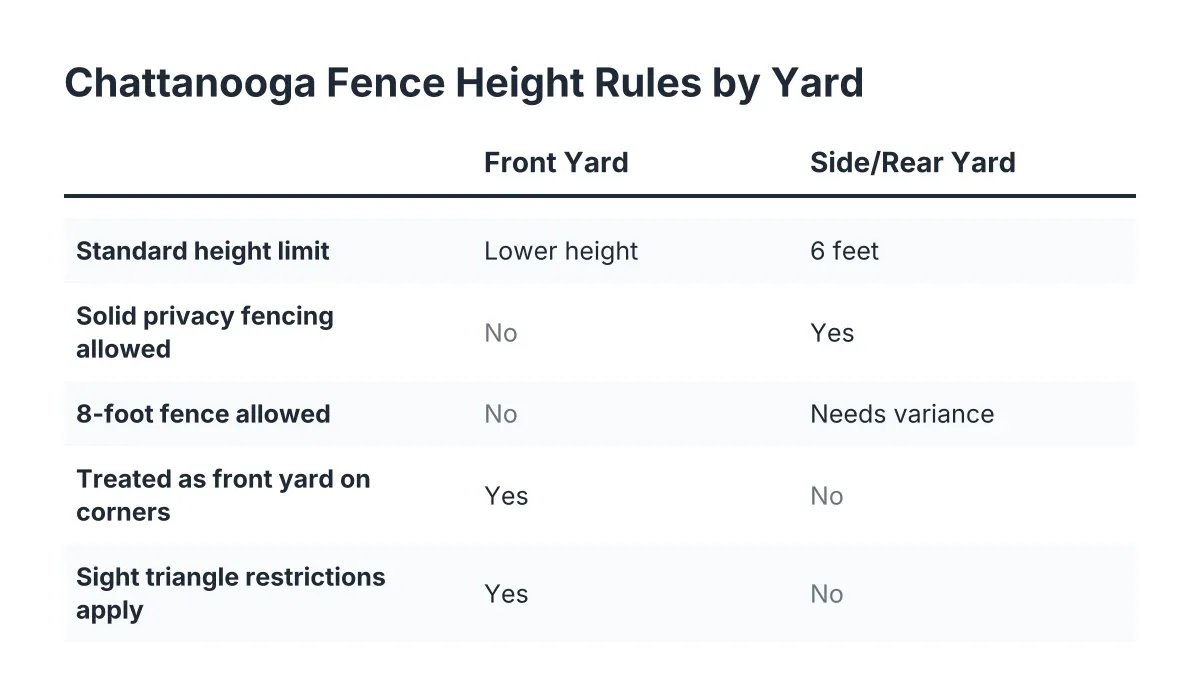
- Corner lots and sight triangles. Near intersections and driveways, fences often face height limits or setback rules so drivers can see cross traffic. A tall privacy fence rebuilt at the corner of a lot is the classic violation.
- Front yards. Many zones cap front-yard fence height lower than back-yard height, and some require fences to sit behind a certain line.
- Easements. Utility and drainage easements run along many Chattanooga property lines. You can sometimes fence over an easement, but the utility can remove the fence to access it, at your cost.
- Right-of-way. The strip between the sidewalk and street usually belongs to the city, not you, even if you mow it. Fences do not belong there.
The honest answer to "how far off the property line should my fence be" is: it depends on your lot, your zone, and your municipality, so confirm before you rebuild. One practical habit worth copying: even where the rule allows a fence directly on the line, setting it a few inches inside your own property avoids boundary disputes and keeps both faces of the fence clearly yours to maintain.
Why Setbacks Matter More on a Rebuild Than a Repair
An old fence that does not meet current setback rules is often allowed to stay as a legal nonconforming structure. It was fine when it was built, so it gets grandfathered in. But grandfathering typically protects the existing fence, not a new one. Tear out the posts and rebuild from scratch, and some jurisdictions require the new fence to meet today's rules, even on the same line.
As a result, a full replacement is the moment to check fence permits and setback requirements, not after the concrete cures. Moving a rebuilt fence even a foot can mean new post holes, new footings, and a day of labor you already paid for once.
Where Is Your Property Line, Actually?
Setback rules are useless if you do not know where the line is, and most homeowners do not. The old fence is not proof. Fences drift over decades; the previous owner may have built inside the line for convenience, or over it by mistake. Rebuilding on the old fence's footprint locks in whatever error already exists.
Before a major rebuild along a shared boundary, you have a few options, from cheapest to most certain:
- Check your plat. Your closing documents or the Hamilton County Register of Deeds may include a plat showing lot dimensions and any easements.
- Look for survey pins. Metal pins at lot corners can sometimes be found with a cheap metal detector, though pins get moved and buried.
- Hire a surveyor. For a long run of new privacy fence on a disputed or unclear line, a boundary survey is the only answer that holds up. It costs money, but far less than rebuilding a fence or settling a dispute with a neighbor.
Tennessee also has traditional fence law covering shared boundary fences, mostly aimed at agricultural partition fences between landowners. For a typical city lot, the practical rule is simpler: build on your own side of a confirmed line, talk to the neighbor first if the fence sits on the boundary, and get anything about shared costs in writing.
What About HOAs and Call-Before-You-Dig?
City rules are not the only ones that apply. If your neighborhood has an HOA, its covenants may restrict fence height, material, color, and placement more tightly than the city does. An HOA can make you tear out a vinyl fence it never approved even if the city had no problem with it. For any visible change, material swap, or height increase, get HOA approval in writing before work starts.
Separately, any repair that involves digging new post holes means calling 811 first. It is free, it is required, and buried gas, power, and fiber lines do not care that you were only fixing a fence. A reputable crew handles the locate call as part of the job; if a contractor plans to dig without one, that tells you something about the rest of their work.
Is an 8-Foot Privacy Fence Too High in Chattanooga?
An eight-foot privacy fence exceeds the residential height limit in many zones, where six feet is the common cap for side and back yards and front yards are often limited lower. Some jurisdictions allow taller fences with a permit or variance, especially along busy roads, but you cannot assume eight feet is allowed just because a neighbor has one.
Height questions come up constantly on replacement projects. A homeowner who lived with a six-foot wood fence for fifteen years now wants eight feet because a two-story house went up behind them. The desire makes sense. The process matters: confirm the limit for your zone first, and if eight feet is not allowed outright, ask about a variance before buying materials. A variance takes time, so build it into the project schedule rather than discovering it mid-quote.
As of 2026, the practical advice has not changed: verify the current ordinance for your specific address, because height limits vary by zone, by yard location on the lot, and by municipality across the Chattanooga area.
How This Changes the Fence Repair and Rebuild Decision
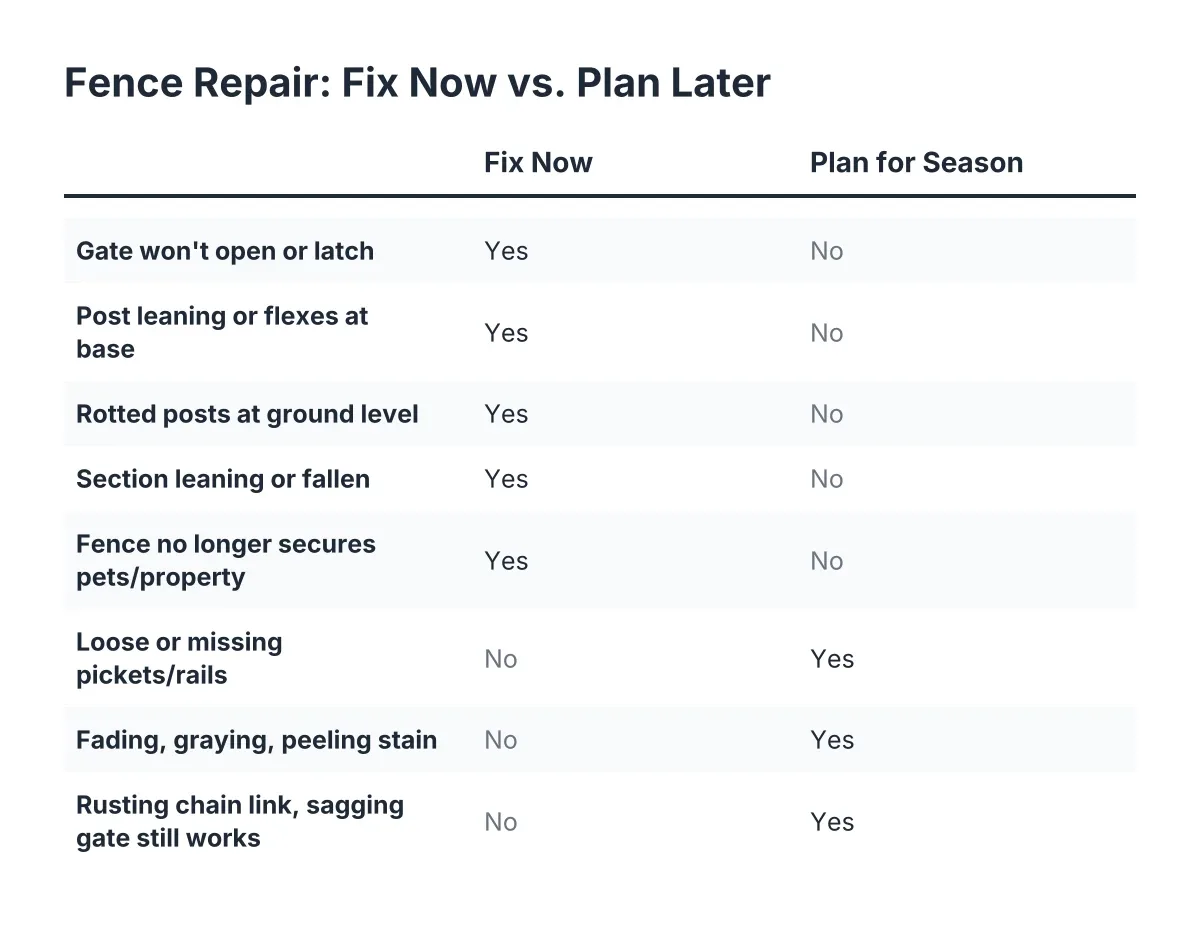
Permits and setbacks are not just paperwork; they shift the math on whether to repair or replace. A repair that preserves the existing posts and footings usually stays clear of permit questions entirely, keeps the fence's grandfathered placement, and costs less. For example, resetting a leaning post or bracing a sagging section keeps a fence standing while you plan, and that interim spending is not wasted; it buys time toward a future full replacement done right, with new posts, confirmed lines, and any needed approvals handled up front.
Replacement, on the other hand, opens every question at once: permit, setback, height, property line, HOA, and utilities. That is not a reason to avoid replacing a failed fence. It is a reason to treat replacement as a planned project with a week or two of checking, not a weekend scramble. National figures give a sense of the stakes: fence installation runs between $6 and $50 per linear foot depending on material, averaging $23 per linear foot, according to HomeAdvisor. On a long run, a placement mistake that forces a rebuild doubles real money. A wood fence calculator can rough out your linear footage and material quantity, but it cannot tell you whether the line you measured is actually yours, which is why the boundary check comes first.
Cost drivers worth understanding before you compare quotes:
- Linear footage and height. More fence and taller fence mean more posts, more concrete, and more panels.
- Material. Chain link, wood, and vinyl carry different material and labor costs, and different lifespans in Chattanooga's humidity.
- Site conditions. Slopes, clay-heavy soil, old footings, and tight access all add labor. Steep slopes also force tighter post spacing so rails seat properly, which means more posts per foot.
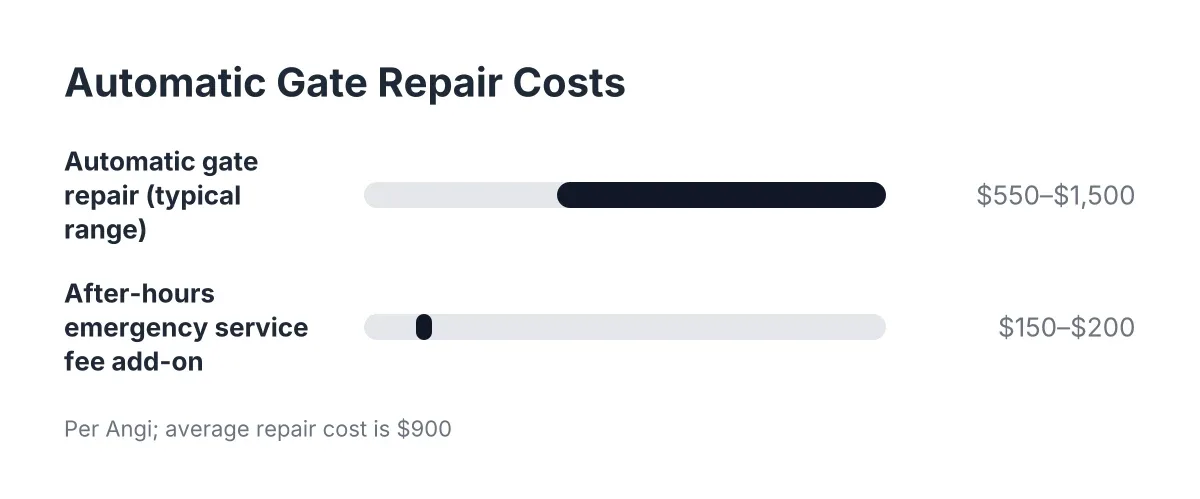
- Scope creep. Gates, automatic gate openers, and demolition of the old fence each add to the total.
There are also judgment calls a checklist cannot settle. If the property line is disputed, if the fence sits in an easement, or if a neighbor built the original fence and you are not sure who owns it, talk to a surveyor or an attorney before spending on the fence itself.
A Simple Pre-Repair Checklist for Chattanooga Homeowners
Before any fence project bigger than swapping pickets or fixing a gate latch, run through this list. It takes an afternoon and prevents the expensive surprises.
- Define the scope honestly. Count how many posts and how many feet of fence are actually being replaced. Structural replacement along a long run means treating it as a rebuild.
- Confirm your jurisdiction. Chattanooga city, unincorporated Hamilton County, and the smaller municipalities each have their own rules. Your mailing address does not always match your jurisdiction.
- Call the zoning office. Ask about permits, height limits, and setbacks for your specific address and zone. Note the name of the person you spoke with and the date.
- Verify the property line. Plat, pins, or survey, in that order of certainty, before setting posts on or near a boundary.
- Check for easements and right-of-way. Your plat or deed should show recorded easements along the lines.
- Clear it with the HOA if you have one, in writing, before materials are ordered.
- Call 811 before any digging, even for a single post.
- Talk to the neighbor if the fence sits on a shared line. A five-minute conversation now prevents a dispute later.
Most of these steps cost nothing but time. The ones that cost money, like a survey, cost less than redoing the work.
The Bottom Line Before You Fix That Fence
Small repairs rarely involve the city. Replace a picket, reset a post in its existing footing, fix a dragging gate, and you can move on with your week. But the moment a repair turns into new posts along a long run, a height change, or a new location, Chattanooga's fence permits and setback requirements come into play, and a rebuilt fence may have to meet today's rules even where the old one did not.
The pattern to remember is simple. Repairs preserve what exists, including its grandfathered status. Rebuilds reset the clock and invite every rule to apply fresh. Know which one your project is before the first post hole gets dug, make the phone calls, and the actual fence work becomes the easy part.
If you need fence repair, Chattanooga Fence Builders can help.
Prefer to talk it through? Call (423) 615-8548 — a quick call is usually the fastest way to get a straight answer for your situation.