Gate Hinge Replacement: 8 Signs of Wear and What Metal Gate Repair Costs
Most gate problems start at the hinges. A gate that drags, sags, or slams usually has worn pins, loose hinge screws, or a hinge post that has shifted, and catching it early keeps a small metal gate repair from turning into a full gate replacement. This matters whether you are a homeowner with a new wood fence and gate, or a landlord with a chain link gate that has to latch before the next tenant moves in.
Here are eight signs your gate hinges are wearing out, what each one costs to fix in general terms, and when the smart move is to call a pro instead of reaching for a wrench.
1. The Gate Drags on the Ground
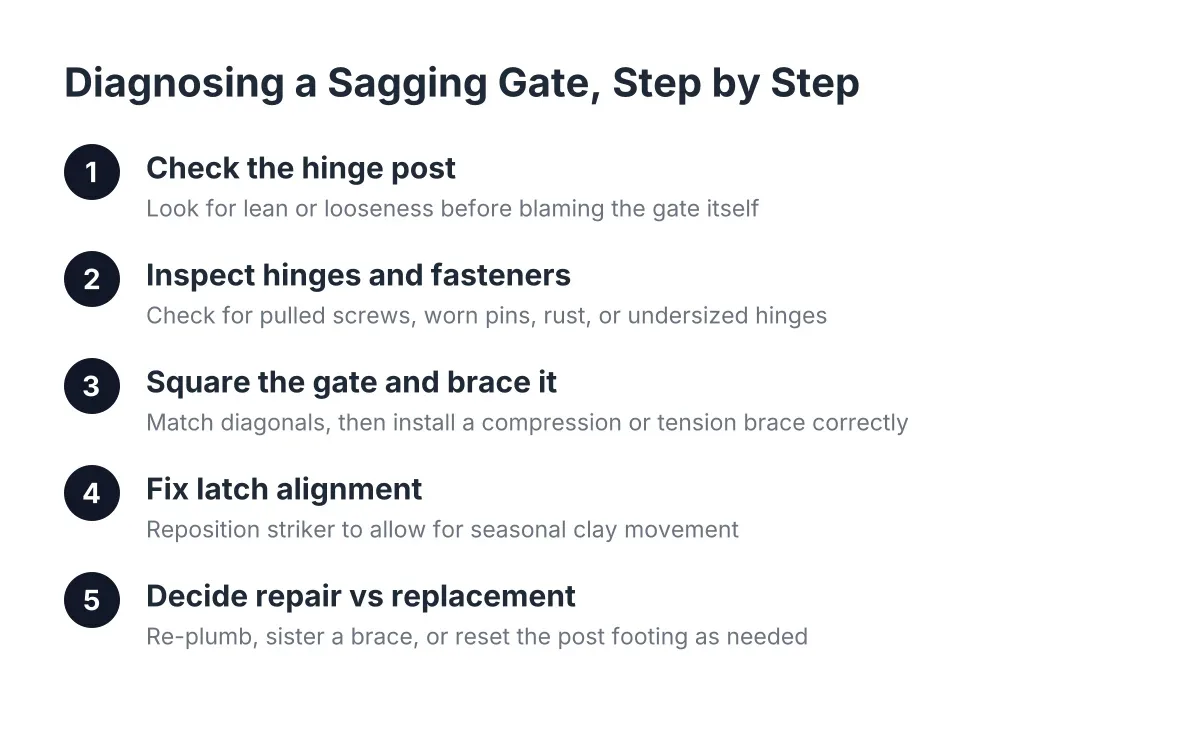
A dragging gate is the most common hinge complaint, and it has two usual causes: worn hinge pins or a leaning hinge post. Lift the latch side of the gate by hand. If it moves up an inch or more before resisting, the hinges have play in them and the pins or barrels are worn. If the whole gate and post lean together, the post is the problem, not the hinge.
Hinge wear is the cheaper fix. Replacing a pair of hinges is a quick job for a fence company and sits at the low end of gate repair costs. A leaning post means digging, resetting, or replacing the post, which drives the price up. In Chattanooga, clay-heavy soil and freeze-thaw winters shift posts and footings more than most homeowners expect, so a gate that dragged after a wet winter often points to the post.
2. Rust Streaks Below the Hinges
Rust streaks running down a metal gate or staining a wood post below the hinge mean the hinge is corroding from the inside. Once rust eats into the pin and barrel, the hinge grinds instead of swings, and the extra friction loosens the screws or welds holding it in place.
Surface rust can be wire-brushed and painted. However, if the hinge barrel has visible pitting or the pin wobbles in its sleeve, replacement beats restoration. New hinges cost less than the labor to fight a seized one, and modern self-closing or adjustable hinges often outlast the originals.
3. Loose or Stripped Hinge Screws
Screws that keep backing out are a symptom, not the disease. On a wood post, stripped screw holes usually mean the wood around them is softening or splitting. On a vinyl gate, the hinge-side upright takes all the load, and hollow vinyl without internal reinforcement will let screws pull through over time. A reinforcing channel insert inside the upright holds screws far better and makes the gate frame much harder to break.
Here is the useful detail: the latch side rarely has this problem, because latch hardware does not carry the gate's weight. If a repair quote includes reinforcing the hinge side but not the latch side, that is normal practice, not a shortcut.
4. The Gate No Longer Lines Up with the Latch
When the gate swings but the latch misses the striker, something has moved: the gate racked out of square, the hinges bent, or the ground shifted under a post. Ground movement is worth planning around, not just fixing. Setting the latch striker near the top of its adjustment range gives the gate room to settle and still catch.
Therefore, a good repair includes re-squaring the gate, not just bending the latch into alignment. On a sagging metal or wood gate, that may mean adding a diagonal brace or tension cable. One caution on rigid braces: a hard anti-sag brace installs in the opposite orientation from a flexible cable kit, and installing it backward makes the sag worse. This is one of the most common DIY mistakes we see described, and it is a fair reason to hand the job to a gate company.
5. Squeaking, Grinding, or Popping When the Gate Swings
Noise is early warning. A squeak means the pin is dry; a grind means metal is wearing on metal; a pop usually means a weld or fastener is flexing under load. Oil the pins first. If the noise returns within a few weeks, the hinge is worn past what lubrication can cover, and replacement is the honest answer.
For example, say a landlord in East Ridge gets a tenant complaint that the backyard gate screeches and sticks. In that hypothetical, a service visit that replaces two rusted hinges and re-hangs the gate is a modest line item; ignoring it until the gate pulls the post loose turns the same visit into a post replacement with concrete work.
6. What a Full Metal Gate Repair Visit Should Include
A proper metal gate repair covers more than swapping hardware. A good provider should inspect the hinge posts and footings, check the gate frame for square, replace or reinforce worn hinges, and adjust the latch so it catches cleanly through the full swing. On automatic and electric gates, the visit should also test the opener arm, safety sensors, and travel limits, since a binding hinge strains the motor.
What is usually extra: post replacement, concrete work, welding on a broken frame, and opener parts. Ask up front which of those the quote covers. A fair quote itemizes hardware, labor, and any post or footing work separately, so you can see where the money goes.
7. Hinge Repair Costs and the Repair-or-Replace Line
Manual gate hinge work sits at the affordable end of fence and gate repair; the cost drivers are hinge type, gate weight, post condition, and whether welding is needed. Wrought iron gate repair costs run higher than chain link or wood because heavy gates need heavy hardware and sometimes mobile welding.
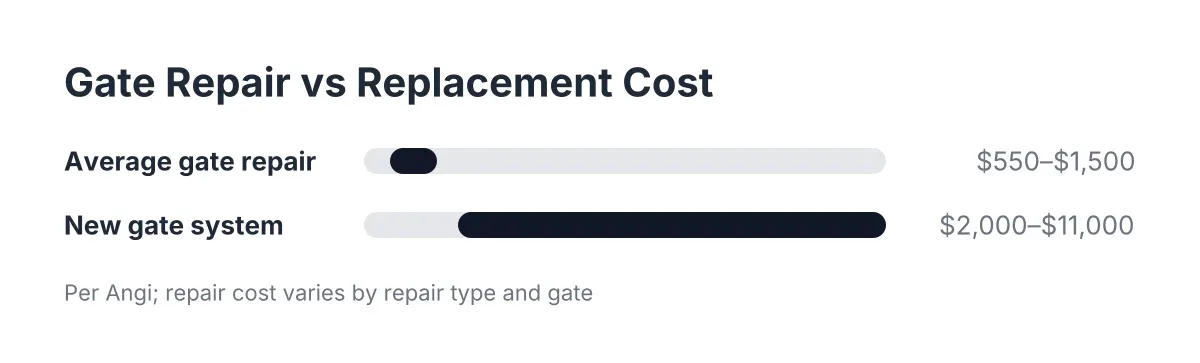
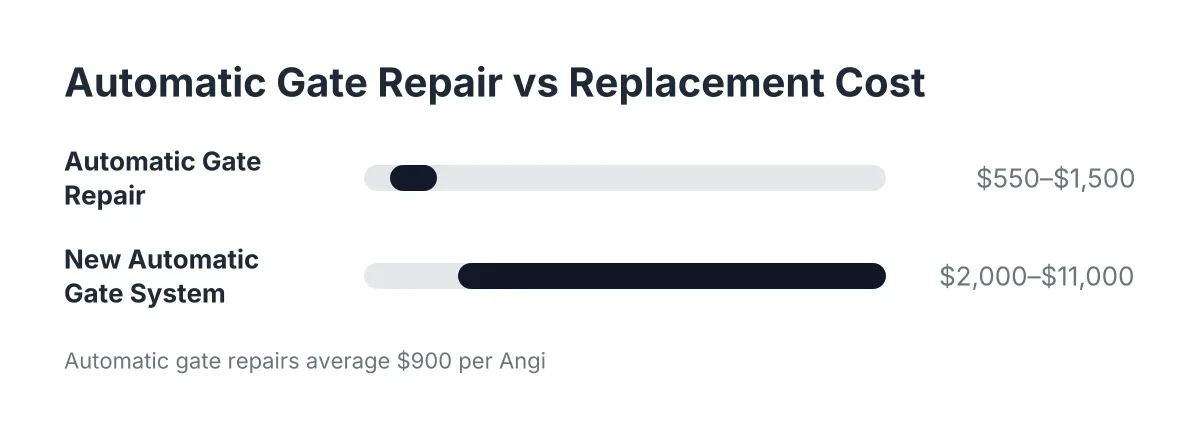
Automatic gates are a different budget category. According to Angi, automatic gate repairs average $900, typically ranging from $550 to $1,500 depending on the repair type and gate material. Angi also notes a useful rule of thumb: if the repair would cost more than 50% of a new system, replacement is the better investment, with new systems running $2,000 to $11,000 or more. In addition, Angi reports that after-hours failures can add $150 to $200 in emergency service fees, which is a strong argument for fixing a grinding hinge before it strands the gate open on a Friday night.
A quick decision checklist:
- Worn hinges, solid posts, square frame: repair, and expect a small bill.
- Worn hinges plus one leaning post: repair, but budget for post work.
- Rusted-through frame, multiple failed welds, rotted or heaved posts: get a replacement quote alongside the repair quote and compare.
- Automatic gate with repeated opener faults: apply the 50% rule before paying for another service call.
8. DIY or Call a Pro for Metal Gate Repair?
Homeowners can safely handle lubrication, tightening screws, swapping a standard bolt-on hinge, and adjusting a latch striker. Those jobs need basic tools and an hour on a Saturday. Searching "driveway gate repair near me" makes sense once the job crosses into structure: welding, post setting in concrete, re-squaring a racked frame, or anything on an electric gate.
Call a professional now if the gate is pulling the post out of plumb, if a heavy iron gate has a cracked weld at the hinge, or if an automatic gate moves erratically. A failing hinge on a heavy gate is a drop hazard, and opener electrical work is not a DIY category. The same logic applies if you are typing "electric gate repair near me" after a storm; a gate stuck open on a rental is a security and liability problem worth same-week attention, not a someday project.
Questions to Ask Before You Hire a Gate Company
Hiring for gate repair is mostly about getting a clear scope before anyone touches the gate. Three questions sort out most providers quickly:
- Will you check the posts and footings, or only the hardware? A hinge swap on a leaning post fails within a season.
- Is welding included if the frame needs it, or is that a separate visit and charge?
- What happens if the gate needs replacement instead? Ask whether the service call or diagnostic fee applies toward the bigger job.
In the Chattanooga area, add one local question: how will you account for our clay soil and freeze-thaw movement? A provider who sets the latch with settling in mind, and who reinforces the hinge side of vinyl gates, is thinking past the day of the repair.
The Bottom Line on Worn Gate Hinges
Hinges fail slowly, then all at once. Drag, rust streaks, loose screws, latch misses, and new noises are the gate telling you it needs attention while the fix is still cheap. Handle the small stuff yourself, compare repair against replacement when the frame or posts are involved, and bring in a pro for welding, post work, or anything automatic.
If your gate is dragging, sagging, or missing the latch anywhere in the Chattanooga area, Chattanooga Fence Builders can look at the hinges, the posts, and the frame together and give you a straight answer on repair versus replacement. Reach out for a free estimate and a plain-terms quote before the small fix becomes the big one.
If you need gate repair, Chattanooga Fence Builders can help.
Prefer to talk it through? Call (423) 615-8548 — a quick call is usually the fastest way to get a straight answer for your situation.