Residential vs. Commercial Gate Repair: A Step-by-Step Guide to Getting It Fixed Right
A broken gate on a home and a broken gate on a business look like the same problem. They are not. Residential and commercial gate repair differ in scope, hardware, cost drivers, and how fast the job has to happen. Understanding the differences between residential vs commercial gate needs is key. If you own a house with a sagging driveway gate, or you manage a few rental units where a lease requires a secure yard, this guide walks you through the process step by step. You will know what the repair includes, what a fair quote looks like, and when a repair stops making sense.
The short version: residential gate repair usually comes down to hinges, latches, posts, and sometimes an opener. Commercial gate repair adds heavier gates, more cycles per day, access control, and safety requirements. The steps below work for both, but the decision points change depending on which side you are on.
Step 1: Identify Which Type of Gate Problem You Have
Start by sorting the problem into one of three buckets. This decides who you call and how urgent it is.
- Structural problems. Sagging, dragging, a gate that will not latch, a leaning post, or rot and rust at the hinge points. Common on wood fence and chain link gates.
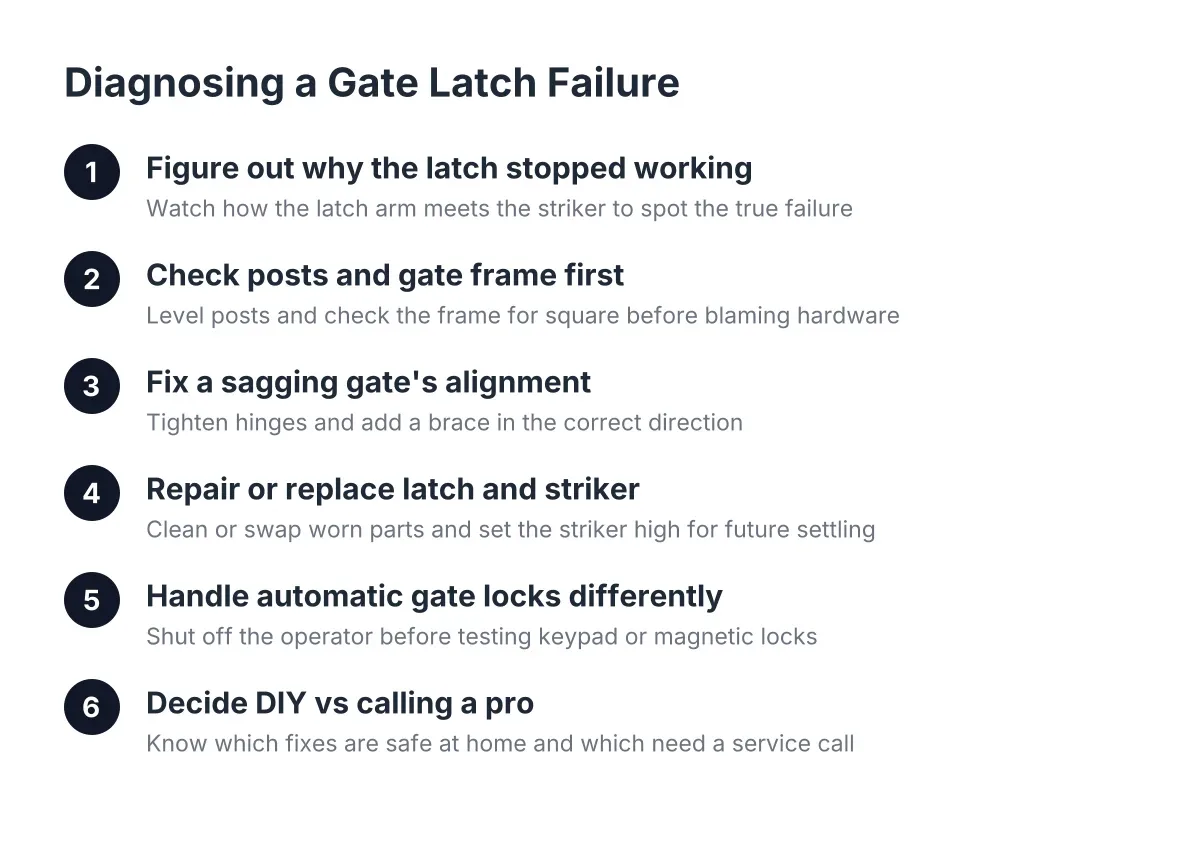
- Hardware problems. Broken hinges, a latch that will not catch, a lock that sticks, or a wheel that fell off a rolling gate.
- Automatic gate problems. The opener hums but nothing moves, the gate opens partway and reverses, or it stopped responding to the remote entirely.
For a homeowner, a structural or hardware problem is an inconvenience. For a landlord, it can be a liability. Suppose a tenant with a dog reports that the backyard gate will not latch during a turnover inspection. That gate is now a lease compliance issue, and the clock matters more than it would on your own house.
Chattanooga adds its own wrinkle here. Our clay-heavy soil and freeze-thaw winters shift posts and footings over time. A gate that latched fine in October and drags in March often has a moved post, not a broken gate.
Step 2: Residential vs Commercial Gate Repair Scope
This step matters more than most people expect. The same symptom, a gate that will not close, is a different job on a rental duplex than on a warehouse yard.
What residential gate repair usually involves
Residential gate repair covers driveway gates, backyard gates in a privacy fence or chain link fence, and single automatic gate openers. The gates are lighter, they cycle a handful of times per day, and the fixes are usually hinge replacement, latch adjustment, post resetting, or opener service. Most jobs finish in a single visit once parts are on hand.
For small landlords, rental gates sit in this category even though the property is a business. A chain link gate on a rental yard is a residential-scope repair with a commercial reason behind it: tenant safety and lease requirements.
What commercial gate repair adds on top
Commercial gate repair deals with heavier sliding and swing gates, cantilever gates, access control systems like keypads and card readers, and openers rated for dozens or hundreds of cycles a day. These jobs often need heavier hardware, safety devices like photo eyes and edge sensors, and sometimes coordination with whoever manages the access system.
As a result, commercial jobs take longer to diagnose and quote. A storefront or storage yard gate may also need to stay secure during the repair, which changes how the work gets scheduled. If your "commercial" gate is a single swing gate on a small office lot, expect the job to run closer to residential scope. The complexity comes from the equipment, not the zoning.
Step 3: Do the Safe Checks Yourself Before Calling
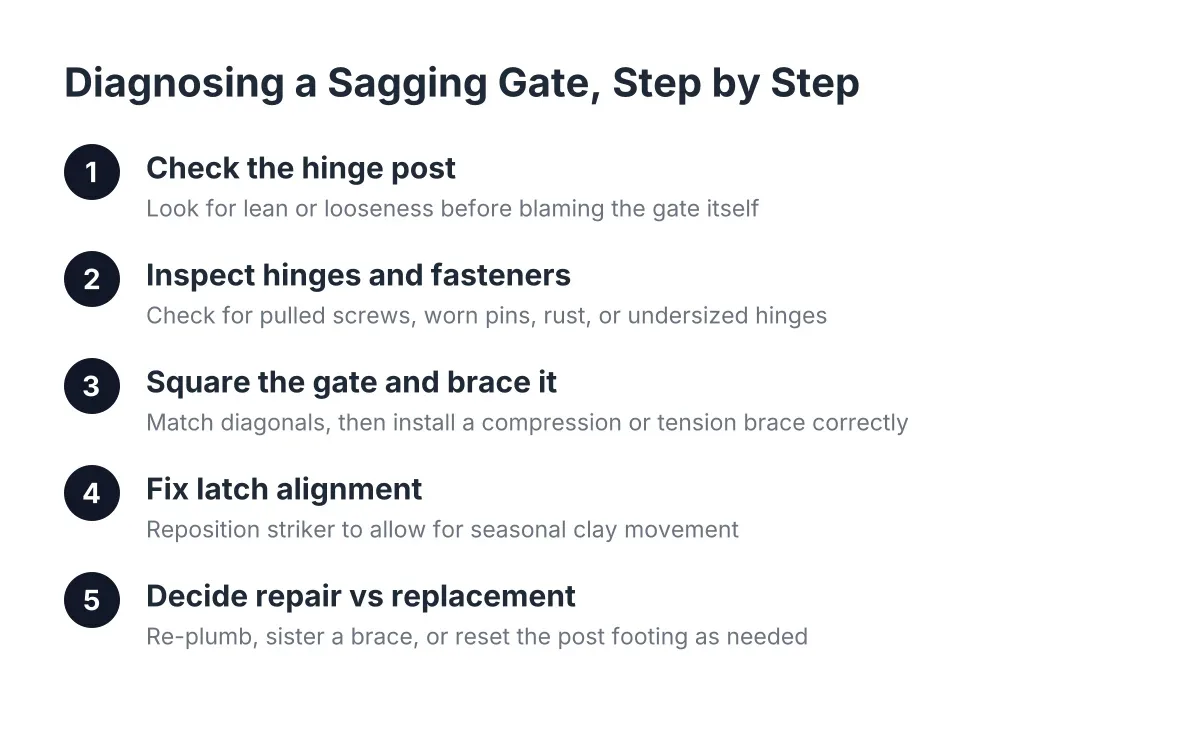
Before you pay for a service call, run through the checks any owner can do safely. First, open and close the gate by hand and watch where it binds. A gate that drags at the latch side usually has a hinge or post problem, not a latch problem.
Next, for an automatic gate, check the basics: power to the opener, the remote battery, and whether anything is blocking the safety sensors. Leaves and spider webs trip photo eyes more often than people think. Then look at the posts. Grab the hinge post and push. If it moves, the footing has shifted, which is common after a wet Chattanooga winter.
Stop there if any of these apply. Do not work on opener motors, gate springs, chain drives, or anything electrical. Do not try to lift or re-hang a heavy metal or commercial gate alone; a falling gate causes serious injuries. And if an automatic gate closes on objects without reversing, take it out of service and call a pro, because a failed safety reverse is a hazard, not a quirk.
Step 4: Get a Quote That Matches the Scope
Now call for gate services and get the problem scoped properly. A fair quote, whether for residential or commercial gate repair, should spell out three things in plain terms:
- What is broken and why. "The hinge post heaved out of plumb" tells you something. "Gate needs work" does not.
- Repair versus replace, with reasons. According to Angi, if an automatic gate repair would cost more than half the price of a new system, replacement is the better investment. A good contractor will tell you which side of that line you are on before work starts.
- What is included and what is extra. Resetting a post in concrete, new hardware, opener parts, and haul-away should each be named. On commercial jobs, ask whether access control reprogramming is included or billed separately.
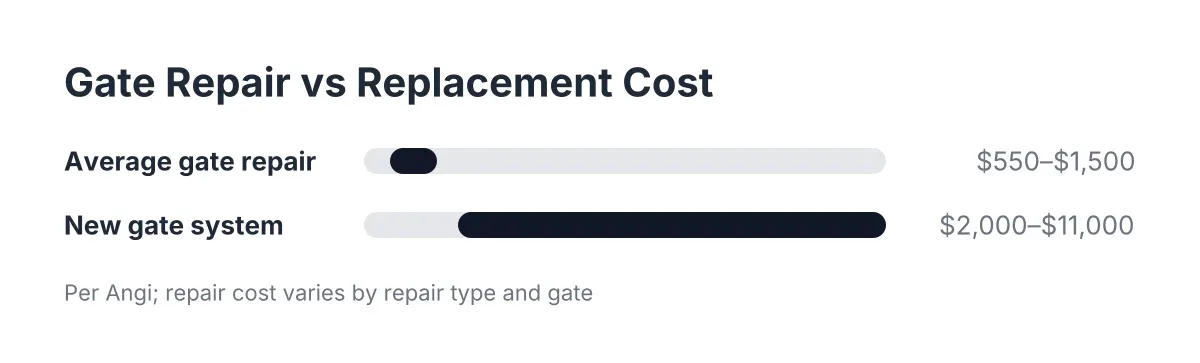
For budget context, Angi reports automatic gate repairs average about $900, with most falling between $550 and $1,500 depending on the repair type and gate material. Simple hinge and latch work on a manual gate costs well under that. After-hours breakdowns cost more; Angi puts emergency service fees at an extra $150 to $200.
If cash is tight, say so when you ask for the quote. Many contractors can sequence the work, fix the safety and security items now and schedule cosmetic work later, or point you toward payment options. Asking costs nothing, and it beats putting an urgent repair on a high-interest card.
Step 5: Weigh Repair Against Replacement Before You Commit
Here is where residential and commercial owners should think differently. On a home, a gate is part of your fence and your curb appeal. On a rental or business property, it is a line item that has to earn its cost back.
Say a landlord in East Ridge has a rusted chain link gate on a rental where the lease requires a fenced yard for pets. In that scenario, a hinge-and-latch repair might keep it serving for another year or two, while a full gate replacement resets the clock for a decade. If the fence around it is also near the end of its life, replacing the gate alone can be money spent twice. The math changes again for automatic gates, where Angi notes full system replacement runs $2,000 to $11,000 or more, so repairs make sense longer before replacement wins.
One honest trade-off: the lowest repair bid is not always the cheapest path. A patched gate on a shifted post will drag again next winter, and you will pay for the same gate repair twice. Fixing the footing costs more up front and usually less over the life of the fence.
Step 6: Prepare for the Repair Visit
A little prep makes the job faster, which keeps labor time down.
- Clear vehicles, trash cans, and stored items away from the gate on both sides.
- For rentals, notify the tenant and confirm access; a contractor should not take direction from a tenant without the owner's authorization anyway.
- For automatic gates, locate the opener manual and any remotes or keypads so the tech can test everything.
- Decide in advance how much you are willing to spend before replacement makes more sense, so you can approve or decline on the spot.
Timing matters in Chattanooga too. Post resets involve concrete, and heavy rain or freezing ground can push a footing repair by a day or two. Build that slack into your schedule, especially if you are working against a tenant move-in date.
Step 7: Test Everything Before the Crew Leaves
Finally, do not sign off until you have cycled the gate yourself. Open and close it fully several times. Check that the latch catches without lifting or forcing the gate. On a reset post, confirm the gate swings without dragging at any point in its arc.
On an automatic gate, test the remote, the keypad if there is one, and the safety reverse. Ask the tech to show you the manual release so you can open the gate during a power outage. For commercial gates, cycle the access control for each entry method and confirm the safety devices stop the gate.
Then ask two closing questions: what maintenance will keep this repair lasting, and what early warning signs mean call before it fails again. Hinge lubrication, keeping sensor lenses clean, and watching for the first signs of post movement cover most of it.
When to Bring in a Local Gate Company
You can handle sensor cleaning, lubrication, and minor latch adjustments yourself. Everything involving posts, heavy gates, opener motors, or safety systems belongs with a professional, and anything on a commercial gate with access control almost always does. If you are searching for a gate company near me after a breakdown, the steps above will help you scope the problem and judge the quote you get back.
Chattanooga Fence Builders handles residential and commercial gate repair across the Chattanooga area, along with automatic gate installation and repair, fence repair, and fence replacement when the gate problem turns out to be a fence problem. If your gate is sagging, dragging, or dead on its track, reach out for a free estimate and a plain-terms answer on whether a repair or a replacement makes more sense for your property.
If you need gate repair, Chattanooga Fence Builders can help.
Prefer to talk it through? Call (423) 615-8548 — a quick call is usually the fastest way to get a straight answer for your situation.