Gate Latch and Lock Repair: Common Failures, Fixes, and When to Call a Pro
A gate latch that will not catch is the most common gate repair call we get in Chattanooga, and the good news is most latch and lock failures follow a few predictable patterns. If your new wood fence gate has started bouncing off the striker, or the lock on your automatic gate quit engaging, this guide walks you through how to diagnose the problem and fix it step by step. You will also learn which fixes belong to a homeowner and which ones justify a service call.
Most latch failures are not actually latch failures. The hardware takes the blame, but the real cause is usually movement somewhere else: a post that shifted in Chattanooga's clay-heavy soil, a gate that sagged out of square, or wood that shrank as it dried after installation. Work through the steps in order and you will find the true cause instead of replacing parts that were never broken.
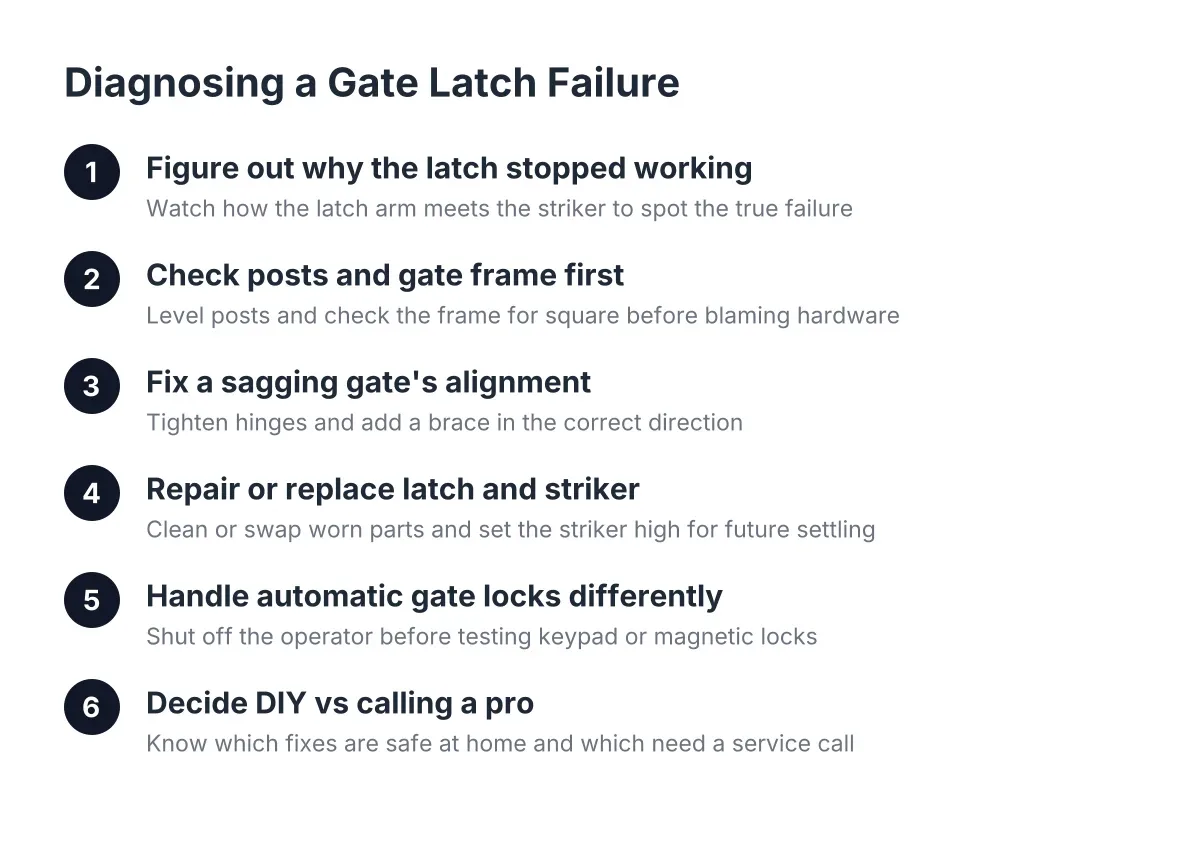
Step 1: Figure Out Why the Latch Stopped Working
Before you buy anything, open and close the gate slowly and watch where the latch arm meets the striker. There are only a few ways this connection fails, and each one points to a different fix.
- The latch arm hits above or below the striker. The gate or a post has moved. This is an alignment problem, not a hardware problem.
- The latch catches but pops open in wind. The striker is worn, the latch spring is weak, or the gap between gate and post has grown.
- The latch arm sticks or will not move. Rust, paint, or debris has seized the mechanism.
- The lock cylinder turns but nothing happens. The cam or tailpiece inside the lock has sheared, which is common on older keyed gate locks.
- Screws are pulling out of the post or gate frame. The wood has split or rotted, or on a vinyl gate, the screws never had enough material to bite into.
Mark the current latch position with a pencil before you touch anything. If the misalignment grows over the next few weeks, you are watching a post move, and no amount of hardware swapping will outrun it.
Step 2: Check the Posts and Gate Frame Before Blaming the Hardware
This step matters most for new wood fence owners. Fresh treated lumber holds a lot of moisture when it goes in the ground. Over the first several months in Chattanooga's humidity and seasonal rain, that wood dries, shrinks, and sometimes twists. A latch that lined up in June can miss its striker by fall, and nothing is wrong with the latch itself.
Put a level on both the hinge post and the latch post. Then check the gate frame for square by measuring diagonally corner to corner; the two measurements should match. If a post is leaning, the fix is at the footing, not the latch. Chattanooga's freeze-thaw winters push on footings set in clay, so a post that heaved over winter may need to be reset before any latch work pays off.
However, resetting a post in concrete is where many homeowners should stop. If the footing has cracked or the post has rotted at the ground line, a fence repair pro can often reset or sister the post while preserving the existing footing, which keeps the cost down and the fence standing.
Step 3: Repairing a Sagging Gate's Latch Alignment
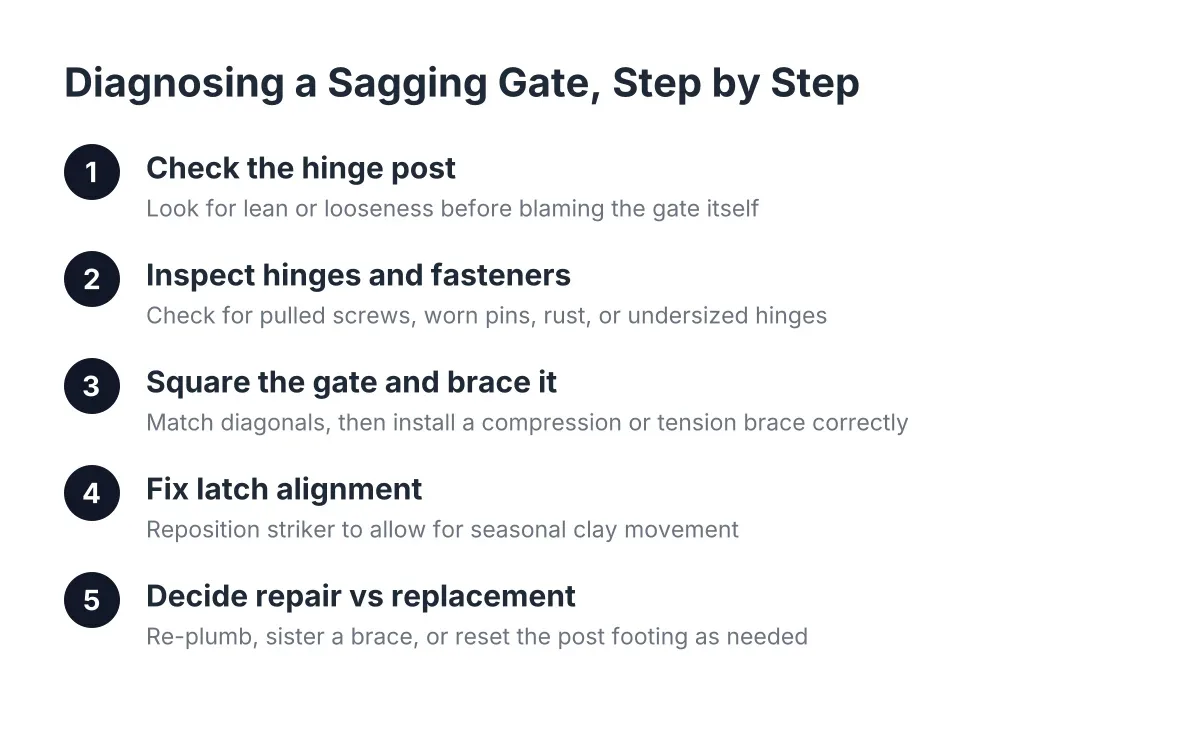
A sagging gate drops the latch arm below the striker, and it gets worse every season. Tightening hinge screws is the first move; loose hinges account for a surprising share of sag. If the hinge screws spin without biting, replace them with longer screws or move the hinge slightly so the screws grab fresh wood.
Next, if the frame itself has racked out of square, add an anti-sag brace. You have two options, and direction matters:
- A cable-and-turnbuckle kit (flexible) runs from the top hinge-side corner down to the bottom latch-side corner. Tightening the turnbuckle pulls the latch corner back up.
- A rigid brace or tension bar (hard) runs the opposite direction, from the bottom hinge-side corner up to the top latch-side corner, so it works in compression.
Installing a rigid brace along the cable path is a common mistake, and it accelerates the sag instead of stopping it. A basic gate repair kit from the hardware store handles most wood gate sag if the posts are still plumb. Once the frame is square again, the latch usually lines up without moving any hardware.
Step 4: Repair or Replace the Latch and Striker
With the gate square and the posts plumb, address the hardware itself. Remove the latch, soak moving parts in penetrating oil if they are seized, and scrub off rust with a wire brush. If the spring is weak or the arm is bent, replace the whole latch; latch hardware is cheap compared to another service trip.
When you mount the new striker, set it near the top of the latch's travel rather than dead center. Ground movement and settling will shift the relationship between gate and post over time, and a striker set high gives the gate room to drop while still catching. This one placement decision prevents a repeat repair a year from now.
On vinyl gates, pay attention to what the screws bite into. The latch side of a vinyl gate rarely rips out, so the post itself usually does not need reinforcement. The gate frame is a different story. If the latch screws in the gate upright are pulling loose, a metal insert channel inside the upright gives the screws real material to grip and makes the frame far more resistant to failure. That is a fix worth asking a gate repair service about, since it involves partially disassembling the gate.
Step 5: Handle Locks on Automatic and Driveway Gates Differently
Keyed locks, keypads, and magnetic locks on an automatic gate fail in their own ways, and the stakes are higher because the operator keeps trying to move a gate the lock will not release. If your driveway gate lock stops engaging, shut off the operator before testing anything by hand. A misaligned magnetic lock or a failed strike on a metal gate is often an alignment issue, same as a wood gate, but the diagnosis involves wiring and control boards.
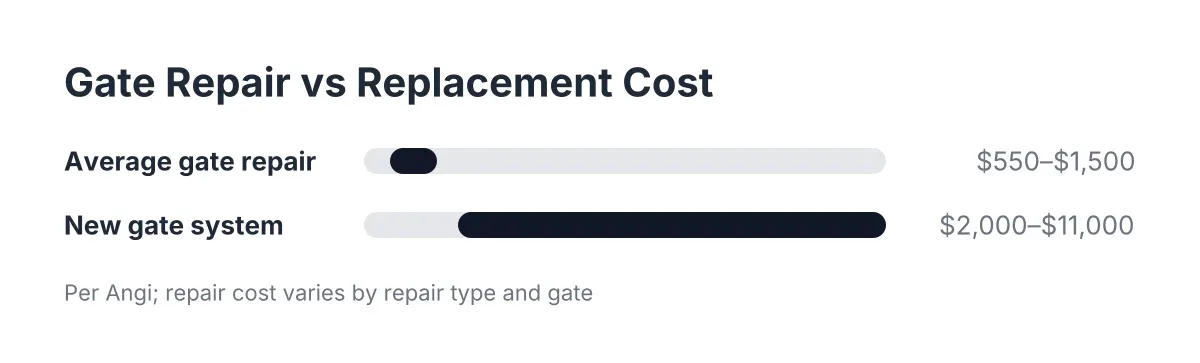
This is where cost math matters. According to Angi, automatic gate repairs average $900, typically ranging from $550 to $1,500 depending on the repair type and gate material. Angi also notes that if repair costs climb past 50 percent of a new system's price, replacement is the better investment. In addition, expect an extra $150 to $200 in emergency service fees if the gate fails after hours, per Angi. Therefore, if the failure is just a latch or lock on a manual gate, you are in a far cheaper category than operator or control board work.
For example, suppose a homeowner in East Brainerd has a new privacy fence with a walk gate that stopped latching three months after installation. In that scenario, the likely culprit is wood shrinkage pulling the striker out of alignment, a fifteen-minute adjustment, not a hardware failure. The same symptom on an automatic driveway gate could mean a failed lock relay, which is a technician's job.
Step 6: Decide Between DIY Gate Repair and a Service Call
Be honest about where the problem sits. Homeowners can handle cleaning and lubricating a latch, swapping a worn latch or striker, tightening hinges, and installing a cable anti-sag kit. Call a pro for leaning posts, cracked footings, rotted wood at the ground line, vinyl frame reinforcement, any work on an automatic gate operator, and welding repairs on a metal gate. Electrical faults and gates that move on their own are call-now situations, since an automatic gate that cycles unexpectedly is a safety hazard.
When you compare gate repair companies, three questions sort them out fast:
- Will you tell me whether this is a hardware fix or a post and footing problem before quoting? A fair quote names the cause, not just the part.
- Do you handle both the fence and the gate hardware? Latch problems that trace back to post movement need one company accountable for both.
- When does repair stop making sense versus gate replacement? A straight answer here tells you the company is not selling you work you do not need.
One trade-off worth naming: a latch adjustment on a gate hung from a moving post is temporary by definition. If the soil under the footing is still settling, budget for one follow-up adjustment after the first full freeze-thaw cycle rather than expecting a single visit to hold forever.
Get a Straight Answer on Your Gate in Chattanooga
Most latch and lock problems come down to alignment, sag, or worn hardware, and the steps above will solve the majority of them in an afternoon. When the problem runs deeper, into footings, vinyl frame reinforcement, or automatic gate electronics, that is the point to bring in help. Chattanooga Fence Builders repairs gates and fences across the Chattanooga area, from a walk gate on a new wood fence to automatic gate installation and repair for driveways and commercial properties. If your gate will not latch, lock, or close, reach out for a free estimate and a plain explanation of what the fix involves before any work starts.
If you need gate repair, Chattanooga Fence Builders can help.
Prefer to talk it through? Call (423) 615-8548 — a quick call is usually the fastest way to get a straight answer for your situation.