Wood Fence Curing and Staining Timeline for Chattanooga’s Humid Climate
A new wood fence in Chattanooga, TN cannot be stained the day the crew leaves. Pressure-treated lumber arrives loaded with moisture, and our humid summers and seasonal rain slow the drying process. Get the wood fence curing time wrong and the stain beads up, peels, or traps moisture that rots the boards from the inside. This step-by-step guide walks you through the full process, from the day your fence goes in to the day the last coat dries, with the timing adjusted for the Chattanooga climate instead of a label written for a drier state.
This matters whether you own the home or you own six rental units. A properly cured and stained wood fence lasts years longer than a bare one, which stretches every dollar you spent on the installation. Skipping or rushing the stain is how a budget fence turns into a repeat expense.
Step 1: Confirm What Kind of Wood You Have
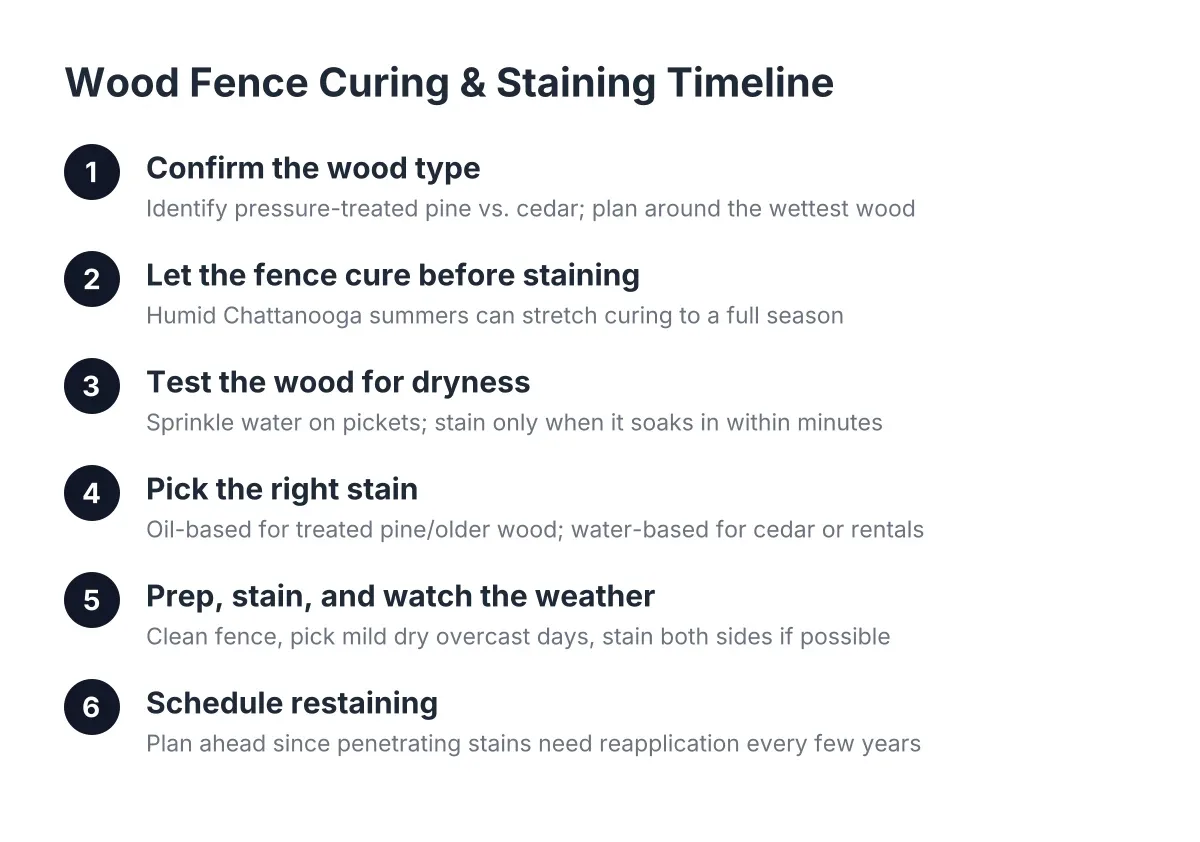
Start by finding out whether your fence is pressure-treated pine or cedar, because the two cure on different schedules. Most privacy fences built in the Chattanooga area use pressure-treated pine for posts and often for pickets. Treated pine comes from the mill saturated with preservative solution, so it needs the longest drying time before stain will absorb.
Cedar, by contrast, is naturally drier and can usually accept stain sooner. If your fence mixes the two, which is common when cedar pickets hang on treated pine posts and rails, plan your timeline around the wettest wood in the fence.
If you are still in the quote stage and comparing materials, ask the contractor to state the wood species in writing. Searching for 6×8 wood fence panels cheap will turn up pre-built options, but cheap panels often use thinner, wetter lumber that takes longer to cure and warps more while it dries. A clear answer up front saves guesswork later.
Step 2: Wood Fence Curing Time Before You Stain
Curing means letting the moisture inside the lumber evaporate until the wood is dry enough to absorb stain. In a dry climate that might take a few weeks for treated pine. In Chattanooga, TN, with humid summers and regular rain, the same fence often needs longer, sometimes a full season, before it is ready.
There is no single number of days that fits every fence. The timeline depends on these factors:
- Wood type. Pressure-treated pine needs the most time; cedar needs less.
- Season. A fence installed in late spring dries faster than one installed before a wet fall.
- Sun exposure. A fence in full sun along an open backyard cures faster than one shaded by trees or a house.
- Rainfall. Every soaking rain resets part of the drying clock.
For example, suppose a landlord in Hixson has a privacy fence installed around a rental in June ahead of a new tenant with a dog. Full summer sun and long dry stretches could have that fence ready for stain by early fall. The same fence installed in October, with shorter days and wetter weather, might not be ready until the following spring. Neither outcome means anything went wrong; it is the climate doing what it does.
Rushing this step is the most common mistake when dealing with wood fence curing time. Stain applied to wet lumber sits on the surface, dries unevenly, and peels within a year, and then you pay to strip and redo the work.
Step 3: Test the Wood for Dryness
Do not guess when the fence is ready; test it. The simplest check costs nothing and takes ten seconds. Sprinkle water on a picket in a few spots around the fence, including shaded sections.
Here is how to read the result:
- Water beads up and sits on the surface. The wood is still too wet inside. Wait two to three weeks and test again.
- Water soaks in within a minute or two. The wood is dry enough to absorb stain.
- Results vary by section. Stain only when the slowest, shadiest section also passes. A fence stained in patches of readiness ends up with patches of color.
Test after a dry stretch, not the day after rain. In Chattanooga's humidity, surface moisture can fool you even when the interior of the board is ready, so give the fence several rain-free days before you decide.
Step 4: Pick the Right Stain for the Wood and Its Age
Choose the stain based on the wood, not the label's marketing. As a general rule, oil-based stains suit pressure-treated pine and older, weathered fences because they penetrate deeper into dense or dried-out lumber. Water-based stains dry faster, carry lower fumes, and clean up with soap and water, which makes them a practical pick for cedar and for anyone staining a fence at an occupied rental.
Semi-transparent stains show the wood grain and are more forgiving to apply and recoat. Solid stains act more like paint, cover more flaws, and peel more visibly when they fail. For rental properties where low maintenance matters more than looks, a semi-transparent penetrating stain is usually the lower-hassle choice over time.
One trade-off worth naming: penetrating stains need reapplication every few years, while leaving the fence bare costs nothing now but shortens the fence's usable life. If you plan to sell or re-list the property within a year, run the numbers both ways before you buy stain.
Step 5: Prep, Stain, and Mind the Weather Window
Before any stain goes on, clean the fence. Brush off dirt and mildew, which grows fast in this climate, and let the fence dry fully afterward. Then watch the forecast. You want mild temperatures, no rain in the forecast for at least a day or two after application, and ideally an overcast sky so the stain does not flash-dry in direct sun.
Apply stain with a brush, roller, or sprayer, working it into the grain and back-brushing sprayed sections so it penetrates instead of pooling. Hit the end grain and the bottoms of the pickets, which soak up ground moisture first. If both sides of the fence are yours to access, stain both sides; a fence sealed on both faces resists moisture from every direction and lasts noticeably longer, which is the whole return on the work.
In addition, pay attention to the bottom of the fence. If your cedar pickets sit near the ground, a pressure-treated rot board along the bottom keeps the pickets from wicking up water after every storm. It is a cheap add-on during fence installation or fence repair that protects the most vulnerable part of the fence.
Step 6: Put Restaining on the Calendar
Staining is not a one-time job. Chattanooga's humidity, rain, and freeze-thaw winters wear down any finish, so plan to inspect the fence each spring. When water stops beading on the surface and starts soaking straight in, the old coat has worn through and it is time to reapply.
For a landlord with several properties, a simple spreadsheet works: note the install date, the first stain date, and a reminder to water-test each spring. Catching a worn finish early means a quick recoat. Missing it for a few years means gray, checked boards, and often a fence repair call for rot at the posts and rails. Posts fail from rot even when the panels look fine, because the posts live in contact with wet soil year-round, so check them at ground level during the same inspection.
When Wood Fence Curing Time and Staining Call for a Pro
Most homeowners can handle the water test and a weekend of staining. However, some situations are worth a professional look before you open a can of stain. If pickets are warping as they dry, if posts are leaning in Chattanooga's clay-heavy soil, or if rot has already started at the base of the fence, staining over the problem locks it in. Fix the structure first, then protect it.
A reputable local contractor should explain the timeline for wood fence curing time and staining for your specific installation before the job starts, in plain terms, including when your new fence will be ready for its first coat. If a quote skips that conversation, ask. For cost context while you compare bids, fence installation averages about $23 per linear foot nationally according to HomeAdvisor, and the national average for a full installation is $3,277 according to Angi. Your actual number depends on length, material, and site conditions, but those figures give you a sanity check.
One more note for budget shoppers weighing materials in 2026: if staining and restaining sounds like more upkeep than you want, chain link or vinyl removes the finish schedule entirely. Searches for chain link fence installation near me spike among rental owners for exactly that reason. Wood wins on looks and privacy; it just asks for this timeline in return.
Quick Timeline Recap for Chattanooga, TN
- Install day: Confirm the wood type in writing.
- First weeks to months: Let the fence cure; longer for treated pine, longer in wet seasons.
- Ready check: Water test in multiple spots after several dry days.
- Stain day: Clean first, pick a dry weather window, coat both sides if you can.
- Every spring: Water test again and recoat when the stain stops shedding water.
Follow that sequence and the stain does its job: a wood fence that sheds Chattanooga's rain instead of soaking it up, and a budget that is not funding the same fence twice.
If you need fence repair, Chattanooga Fence Builders can help.
Prefer to talk it through? Call (423) 615-8548 — a quick call is usually the fastest way to get a straight answer for your situation.