What Causes Fence Damage in Middle Valley and Signal Mountain? FAQ Guide
If you live in Middle Valley or on Signal Mountain, your fence takes a specific kind of beating. Understanding the causes of fence damage in Middle Valley, Signal Mountain, and the rest of the Chattanooga, TN area helps you decide whether you need a repair, a replacement, or just some maintenance before the next storm. This FAQ answers the questions homeowners ask most when a fence starts leaning, a post snaps, or a gate stops swinging.
What causes fence damage in Middle Valley and Signal Mountain homes?
Fence damage in Middle Valley and Signal Mountain comes mostly from four sources: clay-heavy soil that shifts with moisture, freeze-thaw cycles that heave posts, humidity and rain that rot wood, and wind or falling limbs during storms. Each one attacks a different part of the fence, and each calls for a different fix.
Clay soil is the quiet one. It swells when wet and shrinks when dry, which loosens posts and footings over time. Storms are the loud one. A single windy night on the mountain can push over a panel that was already weakened by rot you never noticed.
Why does Chattanooga's clay soil cause so much fence damage?
Clay soil causes fence damage because it expands and contracts with moisture far more than sandy or loamy soil does. When the clay swells after heavy rain and then shrinks in a dry spell, it works posts loose the same way wiggling a tooth does. Over a few seasons, a solid post becomes a leaning one.
Freeze-thaw winters make it worse. Water in the soil freezes, expands, and pushes footings upward. Posts set too shallow, or set without proper footings, show it first. If your fence leans more every winter, soil movement is almost always the cause, not the fence material itself.
Why is my wood fence rotting, and how is it fixed?
Wood fences rot in this region because humidity and seasonal rain keep the wood damp, especially at the ground line where posts meet soil. Rot starts where water sits: post bases, bottom rails, and the bottom edge of pickets. Once the wood softens, the fence loses the strength to resist wind.
The fix depends on where the rot lives. Rotted pickets and rails swap out panel by panel. A rotted post is a bigger job because the footing has to be dealt with. In some cases a crew can repair the post while preserving the existing concrete footing, which keeps the fence standing now and lets that money count toward a future full replacement.
Staining both sides of a wood fence, not just the street side, meaningfully extends its life. Many homeowners skip the inside face, and that is often where rot starts.
What storm damage should Signal Mountain homeowners expect?
Signal Mountain fences see more wind and tree damage than valley fences because of elevation and heavy tree cover. The most common storm damage includes:
- Blown-over panels where posts were already loose or rotted
- Broken rails and pickets from falling limbs
- Racked or sagging gates that no longer latch after the fence shifts
- Chain link fabric stretched or crushed by debris
After a storm, check posts first, not pickets. A cracked picket is cosmetic. A cracked or leaning post means the section will fail again in the next storm, even if you nail the panel back up.
Why is my gate stuck, dragging, or not opening?
A stuck or dragging gate usually means the fence moved, not the gate. When clay soil shifts a gate post even an inch, the gate sags, drags on the ground, and stops latching. Hinges wear out too, but post movement is the more common cause of fence damage in Middle Valley yards with heavy clay.
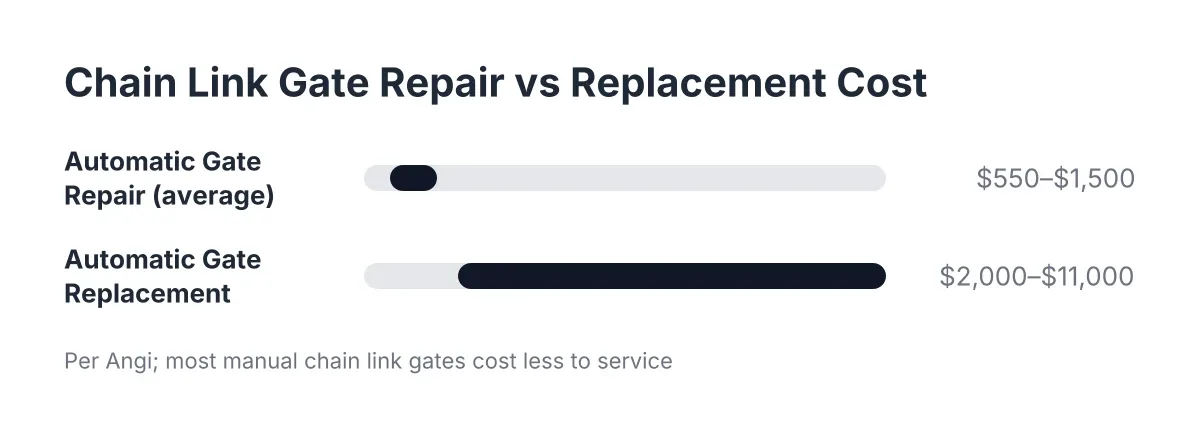
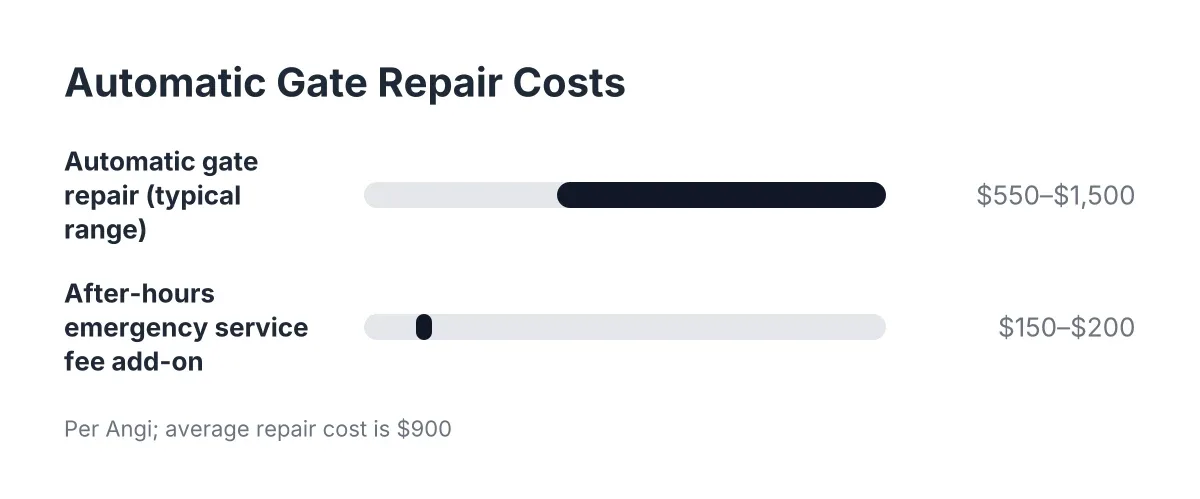
Automatic gates add electrical failure points: a dead remote battery, a blocked safety sensor, a tripped breaker, or a worn opener motor. If your automatic gate clicks but does not move, check the breaker and the sensors before assuming the opener is dead. According to Angi, automatic gate repairs average $900, typically ranging from $550 to $1,500 depending on the repair type and gate material. Angi also notes that when a repair would cost more than half the price of a new system, replacement is the better investment.
What does a fence repair service actually include?
A standard fence repair visit includes diagnosing the cause of the damage, replacing or resetting the failed components, and confirming the repaired section is plumb and solid. For wood fences that means posts, rails, pickets, and hardware. For gates it means hinges, latches, posts, and for automatic gates, the opener, sensors, and wiring.
What is usually extra: hauling away a large volume of old fencing, grading or drainage work around posts, staining or sealing after the repair, and tree or limb removal. A fair quote spells out which of these are included. Ask before work starts so there are no surprises on the invoice.
How long does it take to repair a fence?
Most single-section fence repairs take a few hours to one day. Replacing a few pickets or a rail is quick. Resetting a post in concrete takes longer because the new footing needs time to cure before the fence can take load, so the crew may return to hang the panel or gate.
One wrinkle worth knowing: posts concreted in within the past year are much harder to pull than older ones, which often pop out easily. That is why two repairs that look identical can take different amounts of time, and why a good estimator looks at the footing before quoting.
How much does fence repair cost in Middle Valley and Signal Mountain?
Fence repair cost in Middle Valley and Signal Mountain depends on what failed, how many sections are involved, and whether footings need to come out. Picket and rail swaps sit at the low end. Post resets cost more because of excavation and concrete. Automatic gate repairs run higher than manual gate work because of the opener and electronics.
For context on the replacement side of the decision, HomeAdvisor reports fence installation runs between $6 and $50 per linear foot depending on material, averaging $23 per linear foot nationally as of recent data. If damage covers a large share of the fence, compare the repair quote against replacement cost per foot before committing. In 2026, with material prices still moving, getting that comparison in writing matters.
Be cautious about choosing on price alone. The cheapest quote often reflects shortcuts in footing depth or materials, and a fence that fails early costs more over time than a quality repair did upfront.
Can I repair the fence myself, or should I hire a professional?
You can handle small cosmetic fixes yourself: replacing a few pickets, tightening hardware, re-staining, or adjusting a latch. Hire a professional for anything involving posts, footings, gates that will not close, or automatic gate electronics. Post work requires digging out concrete in clay soil, and gate openers involve wiring that is easy to damage.
Call now rather than later if a post is visibly leaning, a gate will not secure a yard with pets or kids, or a section is down along a property line. A damaged fence that waits through one more storm season usually turns a one-post repair into a multi-section job. If the fence sits on or near a property line, confirm the boundary before any rebuild; a surveyor or your plat map settles it, and that is one call worth making before the crew arrives.
How do I choose a fence repair contractor near Middle Valley?
Choose a contractor who diagnoses the cause before quoting the fix. Ask these three questions:
- What caused this damage, and will the repair address the cause or just the symptom?
- Does the quote include removing old footings, haul-away, and matching existing materials?
- When does a repair stop making sense and a fence replacement become the smarter spend?
A straight answer to the third question is the trust signal that matters most. A contractor willing to explain when replacement beats repair, in plain terms and before any work starts, is quoting the job honestly.
Suppose a homeowner in Middle Valley comes home to find the gate dragging and two sections leaning after a windy night. In that scenario, a solid contractor checks the posts and footings first, explains that clay movement loosened one post and rot took the other, and quotes a two-post reset with a cured-footing return visit rather than pushing a full replacement the fence does not need.
Ready to find out what your fence needs?
Chattanooga Fence Builders repairs and installs wood fences, vinyl fences, chain link fences, privacy fences, and gates, including automatic gate repair, across Chattanooga, Middle Valley, Signal Mountain, and nearby communities. If your fence is leaning, your gate will not open, or a storm left a section on the ground, reach out for a free estimate. You will get a plain explanation of what failed, what the fix involves, and whether a repair or a replacement makes more sense, before any work starts.
If you need fence repair, Chattanooga Fence Builders can help.
Prefer to talk it through? Call (423) 615-8548 — a quick call is usually the fastest way to get a straight answer for your situation.