Chain Link Fence Repair: Common Damage Types and What Each Fix Involves
Most chain link fence problems look worse than they are. A sagging gate, a hole in the mesh, or a leaning post can usually be fixed without replacing the whole run. Still, chain link fence repair gets priced differently depending on what broke, and knowing the different chain link damage types before you call anyone puts you in a stronger spot. This guide walks through the most common types of chain link damage, what the fix for each one actually involves, and what pushes the cost up or down.
If you own a rental in Chattanooga, Hixson, or Soddy-Daisy, this matters more than it might for a homeowner. A broken fence can stall a lease that requires a secure yard for a pet, and it can hold up a turnover inspection. The good news is that chain link is the most repairable fence material there is. Here is how to work through it, step by step.
Step 1: Walk the Fence Line and Identify the Damage Type
Before you think about fixes or estimates, walk the whole fence line, not just the spot a tenant pointed out. Chain link damage comes in a handful of common types, and most fences with one problem have a second one hiding nearby.
Look for these:
- Torn or stretched fabric. The woven mesh has a hole, a cut, or a section pushed in by a falling limb or a vehicle.
- Leaning or loose posts. The post moves when you push it, or the whole line tilts. In Chattanooga, clay-heavy soil and freeze-thaw winters shift posts and footings more than most people expect.
- Bent top rail. The horizontal pipe along the top has a kink or a bow, usually from a limb or someone climbing the fence.
- Sagging or dragging gate. The gate scrapes the ground, will not latch, or has pulled its hinge post out of plumb.
- Popped fence ties. The small wires holding the mesh to the posts and rail have come loose, so the fabric flaps or bellies out.
- Rust. Surface rust is cosmetic; rust that eats through the fabric or a post at ground level is structural.
Take photos of each problem as you go. For a landlord, those photos do double duty: they help any contractor give you an accurate estimate over the phone, and they document the condition of the property for your records.
Step 2: Separate Fabric Problems From Frame Problems
This is the single most useful distinction in chain link fence repair. The fabric is the woven wire mesh. The frame is everything rigid: posts, top rail, tension bands, and gate hardware. Fabric problems are cheaper and faster to fix. Frame problems take more labor, and sometimes concrete work.
Fabric fixes include patching a hole, weaving in a new section of mesh, or stretching loose fabric tight again. A small tear can often be laced closed with repair wire. A larger hole gets fixed by unweaving a strand on each side of the damage and weaving in a matching section cut from a repair roll. Done right, the splice is hard to spot from a few feet away.
Frame fixes are a different job. A leaning post usually means the footing shifted or the post rusted off at grade. The repair involves digging out the old footing, resetting or replacing the post in fresh concrete, and reattaching the fabric and rail. A bent top rail gets cut out and replaced with a new section joined by rail sleeves.
Why this matters for your estimate: a fence with three fabric holes might cost less to fix than a fence with one bad post, even though the holes look more dramatic. The post is the structural work.
Step 3: Check the Gate Before Anything Else Gets Quoted
Gates fail first on almost every chain link fence, because they are the only part that moves. If your tenant reported "the fence is broken," there is a decent chance the real issue is the gate.
Common gate problems and their fixes:
- Sagging gate frame. Fixed with a tension truss or by squaring the frame; sometimes the gate gets replaced outright if the frame is bent.
- Dragging latch side. Often just worn hinges, a cheap and quick swap.
- Loose hinge post. This is a post problem, not a gate problem, and it gets fixed like any leaning post: reset in concrete.
- Latch that will not catch. Hardware replacement, usually the smallest line item on any estimate.
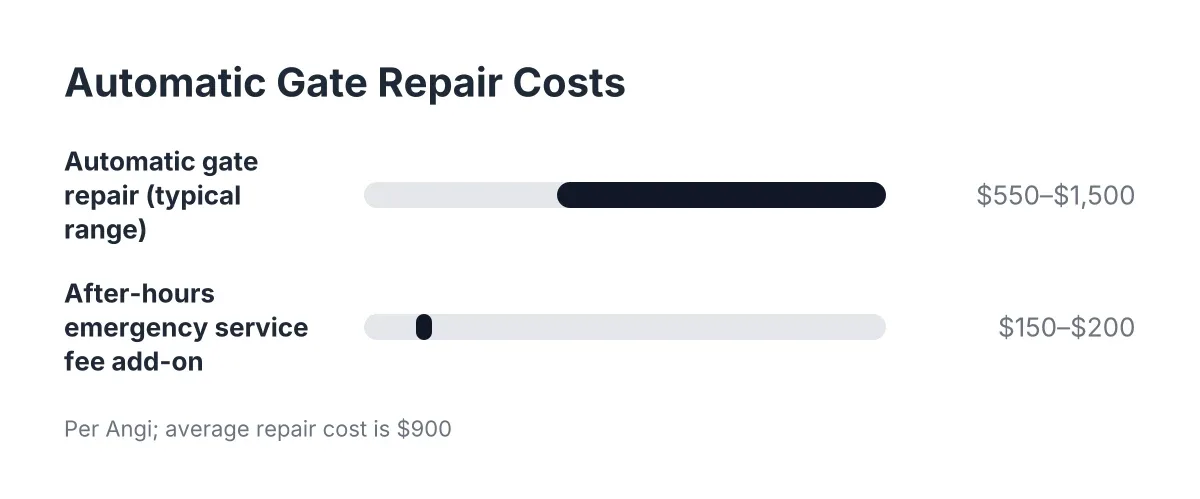
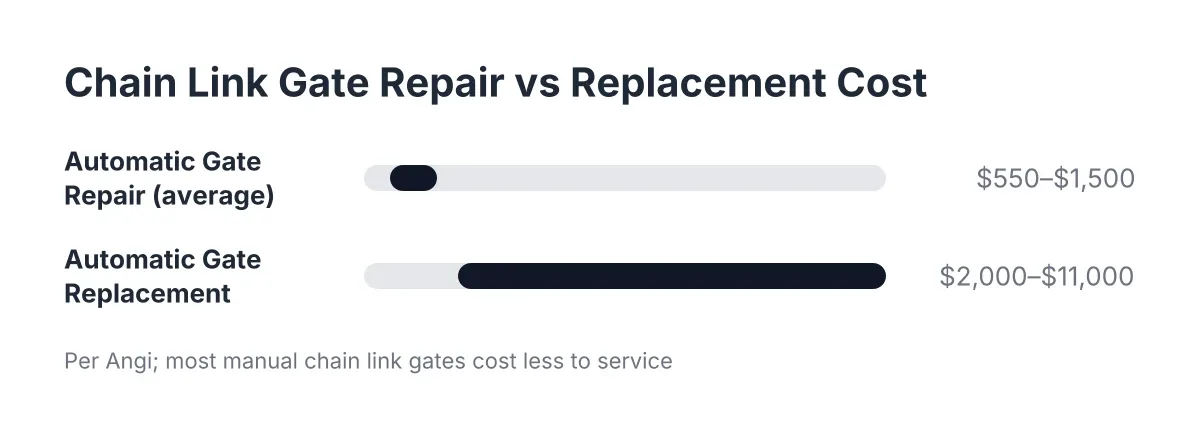
According to Angi, automatic gate repairs average $900, typically ranging from $550 to $1,500 depending on repair type and gate material. Most rental-grade chain link gates are manual and cost far less to service, but according to Angi, if automatic gate repair costs exceed 50% of a new system's price, full replacement — costing $2,000 to $11,000 or more — is the better investment.
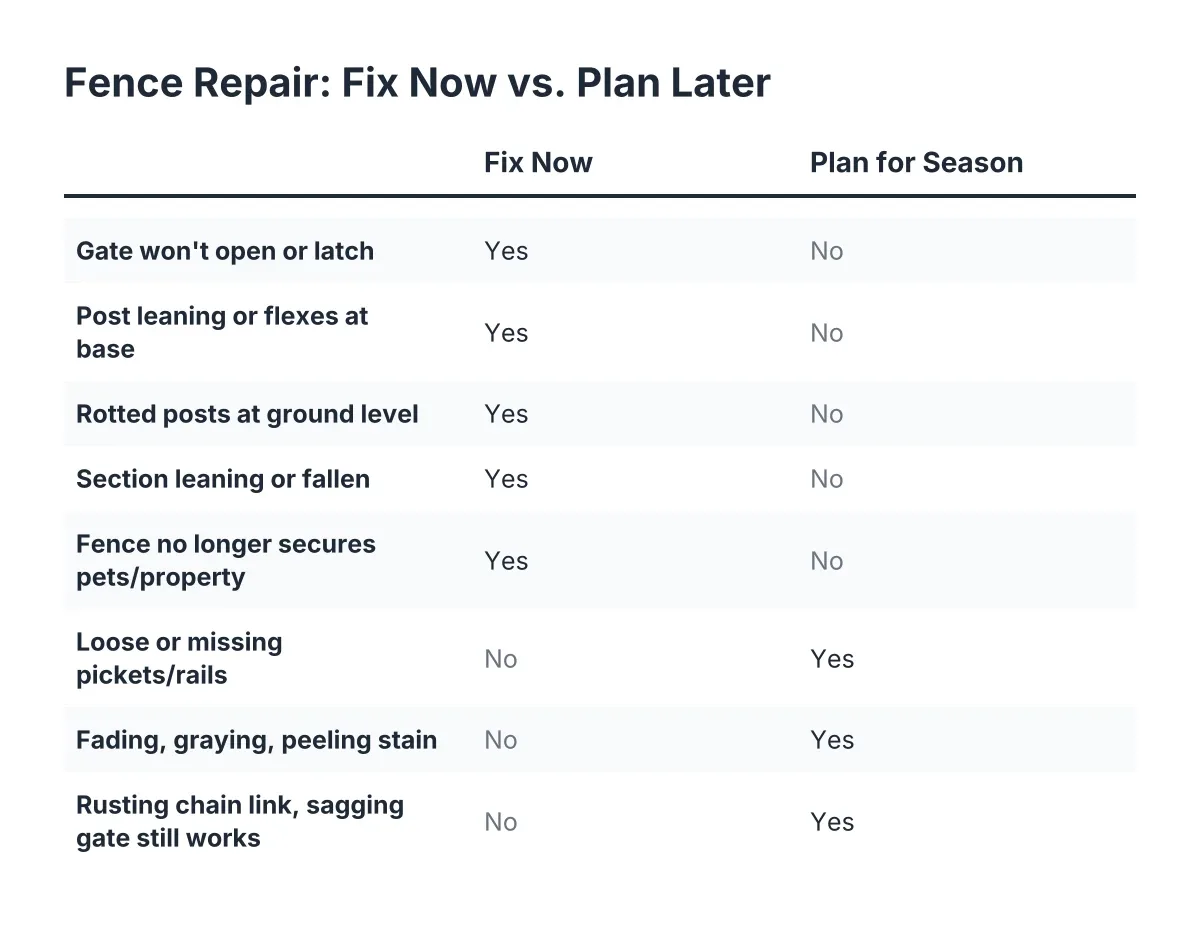
A secure, working gate is often the lease requirement, not the fence itself. If budget forces you to phase the work, fix the gate first.
What Happens If You Don't Repair a Damaged Fence?
Leaving chain link damage alone lets small problems become structural ones. Loose fabric catches wind and pops more ties, a leaning post loads its neighbors and tips the whole line, and a gap that a dog could not fit through in March fits the dog by June. For a landlord, an unsecured yard also becomes a liability question the moment a tenant's pet gets out.
Step 4: Understand the Types of Chain Link Damage and What Drives Repair Estimates
Once you know the damage types on your fence, the estimate starts to make sense. Contractors are not pricing "a fence repair" as one thing; they are pricing a list of specific tasks. Here is what moves the number, in general terms:
- Fabric versus frame, as covered above. Mesh work is light; post and footing work is heavy.
- How many posts need resetting. Each post means digging, concrete, and cure time. This is usually the biggest cost driver.
- Access. A fence line a truck can reach costs less to work on than one behind a locked backyard on Signal Mountain with a slope.
- Fabric height and gauge. Taller fences and heavier commercial-gauge mesh cost more to match and more to stretch.
- Matching existing material. Galvanized is easy to match; older vinyl-coated colors can be harder, which sometimes means replacing a longer section for a uniform look.
- Soil and season. Chattanooga's clay holds water, and winter freeze-thaw cycles heave footings. Post work in saturated clay takes longer than the same work in dry ground.
Be careful with the cheapest number you get. A low bid that skips resetting a marginal post, or that wires a patch over a hole instead of weaving it in, often means paying for the same fence repair again within a couple of years. The lowest invoice and the lowest total cost are not the same thing.
Step 5: Decide What You Can Do Yourself
Some chain link fixes are honest DIY territory, especially for a hands-on landlord maintaining several units.
Reasonable DIY jobs:
- Replacing popped fence ties. Buy ties sized for your pipe diameter; they come in different lengths for a reason. Bend each tie so the wrap traps the fabric link tight against the pipe. Bent the wrong way, wind will pop it open again.
- Swapping gate hinges or a latch. Basic hardware, basic tools.
- Patching a small hole with repair wire. Not pretty, but functional for a back fence line between units.
Jobs worth hiring out:
- Resetting or replacing posts. Digging out a concrete footing in clay, setting a post plumb, and re-tensioning fabric is harder than it looks, and a post set wrong fails again.
- Stretching new fabric. Without a fence puller and come-along, hand-stretched mesh sags within a season.
- Any repair along a disputed property line. Confirm the line before anyone digs; moving a fence twice costs more than measuring once.
One honest limitation: if more than a third of your posts are loose or rusted at grade, repair stops making financial sense and you are looking at fence replacement for that run. A contractor walking the line can tell you where that threshold sits for your specific fence, and a straight answer on repair versus replacement should come before any work starts.
Step 6: Get an Estimate That Itemizes by Damage Type
When you call for a chain link fence repair estimate, ask the contractor to break the quote out by task: fabric work, post work, rail work, and gate work as separate line items. A lump-sum number tells you nothing; an itemized quote lets you phase the work, compare bids fairly, and decide which fixes can wait for the next turnover.
For example, suppose a landlord in East Ridge has a rental with a hole in the back fabric, two leaning line posts, and a gate that will not latch. In that scenario, a sensible phased plan is gate hardware now so the yard secures for the current tenant, posts next because they are structural and will worsen through winter, and the fabric splice last because it is cosmetic once the hole is laced shut temporarily.
Ask these questions on the call:
- Which items are structural and which are cosmetic?
- Will the repaired sections match the existing fence in height, gauge, and finish?
- How long will concrete footings need to cure before the fabric is re-tensioned?
- Is anything on this list a sign the whole run is near end of life?
A contractor comfortable answering those in plain terms is a contractor you can use across a whole portfolio. In Chattanooga, where soil and weather work against footings year after year, that relationship tends to pay for itself.
The Bottom Line
Chain link is the most forgiving fence material to repair. Identify the damage type first, separate fabric problems from frame problems, fix the gate before anything else, and get estimates itemized by task. Do that, and the repair bill stops being a mystery number and becomes a list of decisions you control.
If you need fence repair, Chattanooga Fence Builders can help.
Prefer to talk it through? Call (423) 615-8548 — a quick call is usually the fastest way to get a straight answer for your situation.