Gate Repair Terms Explained: A Plain-English Glossary
If you are reading quotes or searching for help with a stuck, sagging, or dead gate, the jargon piles up fast. This gate repair glossary breaks down the terms Chattanooga homeowners and property owners hear most, in plain English. Use it to read an estimate line by line, describe your problem clearly on the phone, and spot what actually needs fixing. No sales talk, just the words and what they mean.
- Hinge: the pivot hardware that lets a gate swing
- Gate Post: the upright the gate hangs from
- Sag: when a gate droops and drags
- Latch: the catch that holds a gate shut
- Drop Rod: the pin that anchors one leaf of a double gate
- Gate Operator: the motor that opens an automatic gate
- Swing Gate vs. Slide Gate: the two main ways gates move
- Photo Eye: the safety sensor that stops a closing gate
- Safety Loop: a buried wire that detects vehicles
- Limit Switch: tells the operator where open and closed are
- Keypad and Remote: the devices that trigger the gate
- Frost Heave: winter ground movement that shifts posts
- Racking: a gate frame twisting out of square
- Footing: the concrete base that holds a post steady
- Service Call: the base charge for a tech to come out
- Free Estimate: a no-cost look and written price
- Repair vs. Replacement: fixing the gate or starting over
Gate Hardware Basics in Your Gate Repair Glossary
These are the parts every gate has, whether it is a wood fence gate in a backyard or a steel gate at a business. Most gate repair quotes name at least one of them.
Hinge
A hinge is the pivot hardware that attaches a gate to its post and lets it swing open and closed. Hinges carry the full weight of the gate every time it moves, so they wear out before most other parts. Loose screws, bent straps, or rusted pins are common hinge problems. A quote that lists "hinge replacement" usually means new hardware, not a new gate, which keeps the cost on the lower end.
Gate Post
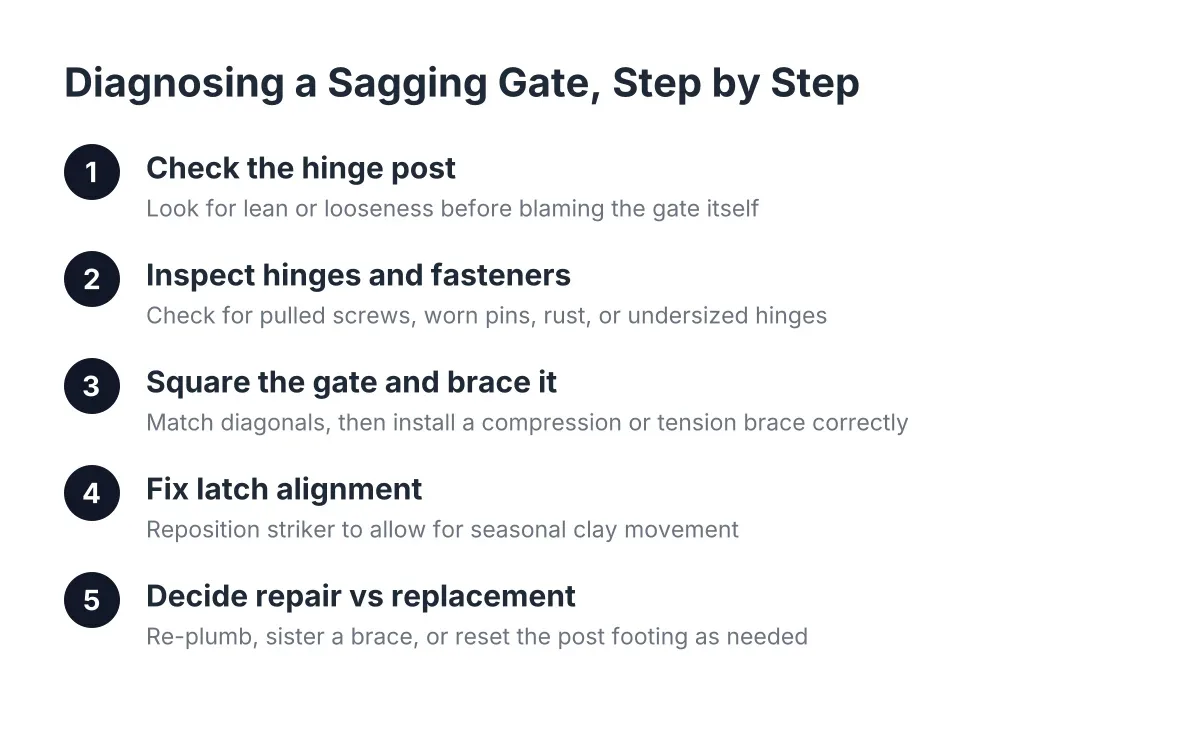
A gate post is the upright that a gate hangs from, and it does far more work than a regular fence post. If the post leans, the gate leans with it, no matter how good the hinges are. In Chattanooga, clay-heavy soil and freeze-thaw winters shift posts over time, so a leaning post is one of the most common root causes we find. Fixing the post often fixes the gate.
Sag
Sag means a gate has dropped out of square so the latch side hangs lower than the hinge side. A sagging gate drags on the ground, scrapes the latch, or stops closing at all. Causes range from loose hinges to a leaning post to a frame that has twisted. A provider should tell you which one it is, because the fix for each is different.
Latch
A latch is the mechanism that catches and holds a gate in the closed position. When a gate "won't stay shut," the latch gets blamed, but the real problem is often sag or post movement putting the latch out of line. A good tech checks alignment before swapping parts. Latch upgrades, like lockable or self-closing models, are a small line item that adds convenience and security.
Drop Rod
A drop rod is a vertical pin on one leaf of a double gate that drops into a hole in the ground to hold that side still. Without it, both halves of a double driveway gate flop in the wind. If your double gate rattles or will not latch, a missing or bent drop rod is a cheap, common culprit. It is one of the simplest items on any repair list.
Automatic Gate Terms: The Gate Repair Glossary for Powered Systems
Automatic gates add motors, sensors, and electronics to the mix, and that is where quotes get technical. This part of the gate repair glossary covers the words that show up on estimates for powered gates. For a fuller picture of that service, see automatic gate installation and repair in Chattanooga.
Gate Operator
A gate operator is the motorized unit that opens and closes an automatic gate. People call it the "motor" or "opener," and all three terms mean the same thing. Operators come in swing and slide versions, sized by gate weight and how often the gate cycles. When an operator fails, the repair question is whether a part inside can be replaced or the whole unit has reached end of life.
Swing Gate vs. Slide Gate
A swing gate pivots on hinges like a door, while a slide gate rolls sideways along a track or rail. The style matters for repairs because the parts differ: swing gates wear hinges and operator arms, slide gates wear rollers, chains, and tracks. Slide gates suit driveways on a slope or with limited swing room. Knowing which type you have helps you describe the problem accurately on a call.
Photo Eye
A photo eye is a safety sensor that shoots an invisible beam across a gate opening and stops the gate from closing on anything that breaks the beam. If your automatic gate opens fine but refuses to close, a blocked, dirty, or misaligned photo eye is the first thing to check. Spider webs and mower debris cause more photo eye "failures" than actual broken parts. A tech mentioning photo eyes is talking about safety, not upselling.
Safety Loop
A safety loop is a wire buried in the driveway that senses a vehicle sitting over it and tells the gate to stay open or to open. Loops keep the gate from closing on a car in the opening. A cut or failed loop often shows up after driveway work, like paving or trenching. Loop repair can mean cutting into the driveway surface, which adds labor to the job.
Limit Switch
A limit switch tells a gate operator where "fully open" and "fully closed" are, so the motor knows when to stop. When limits drift out of adjustment, the gate stops short, slams, or reverses for no visible reason. This is often an adjustment rather than a part replacement, which keeps the repair simple. It is a routine item on a service visit for gate repair on any automatic system.
Keypad and Remote
A keypad and remote are the access devices that signal an automatic gate to open: a code box at the driveway and a clicker in your car. When a gate "stops working," the fault is sometimes a dead remote battery or a keypad wiring issue, not the gate itself. Mention which device fails and which still works when you call. That one detail can shorten the diagnosis.
What Breaks Gates Here
Gates in the Chattanooga area fight local conditions as much as age. These terms explain why.
Frost Heave
Frost heave is the upward push of soil when the water in it freezes and expands, lifting whatever sits in that ground. Our freeze-thaw winters cycle posts and footings up and down, and clay soil makes it worse because clay holds water. A gate that worked fine in October and drags in February is a frost heave story. The fix is usually at the post or footing, not the gate panel.
Racking
Racking means a gate frame has twisted out of square, so it no longer sits flat in its opening. Wood gates rack as boards swell and shrink with humidity and seasonal rain. A racked gate binds against the latch post even when the hinges and posts are sound. Cross-bracing or a frame rebuild are the usual fixes, and your estimate should say which one you are getting.
Footing
A footing is the concrete base poured around a post to anchor it in the ground. Gate posts need bigger footings than fence posts because the gate's weight pulls sideways on them all day. A cracked or undersized footing lets the post rock, and no amount of hinge work will cure that. If a quote includes "reset post and pour new footing," expect more labor and a day or two of cure time before the gate hangs again.
Pricing and Paperwork
Service Call
A service call is the base charge for a technician to come to your property, diagnose the problem, and often handle small fixes on the spot. It covers drive time, the visit, and the diagnosis. Ask whether the service call fee folds into the repair price if you approve the work. What drives the total beyond that fee is parts, labor hours, and access; our gate repair cost guide walks through those factors.
Free Estimate
A free estimate is a no-cost visit or review where a provider looks at the job and gives you a written price before any work starts. It differs from a paid service call because nothing is diagnosed or fixed yet, just scoped and priced. A written quote lets you compare line items instead of lump sums. You should never feel locked in by asking for one.
Repair vs. Replacement
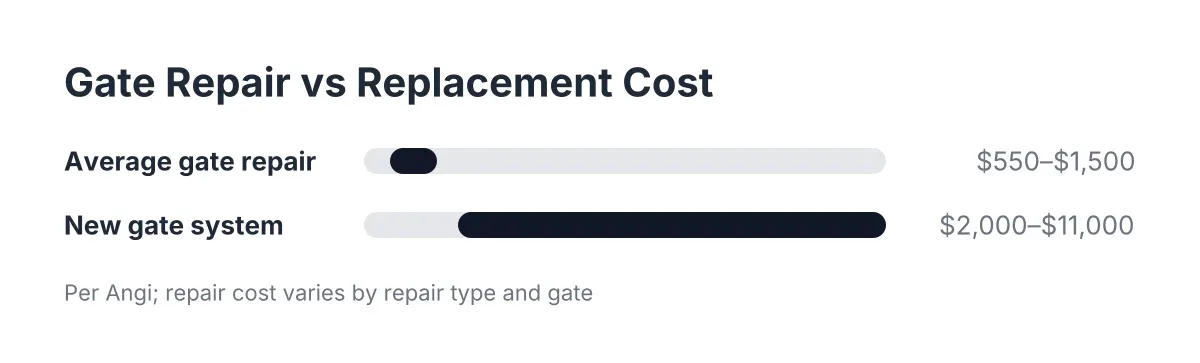
Repair vs. replacement is the judgment call between fixing the gate you have and installing a new one. Repair wins when the frame and posts are sound and the problem is hardware, alignment, or a single failed part. Replacement makes more sense when rot, rust, or a failed operator means repairs would stack up fast. A straight answer here, with reasons, is the mark of a provider worth hiring; it is the question behind most gate repair visits.
Using These Terms
What this gate repair glossary gives you is the ability to read a quote line by line and know what each item does and why it is there. You can now describe the problem in the provider's own words, which gets you a sharper answer and a tighter price. Ask what the root cause is, not just what part gets replaced, and the rest of the conversation takes care of itself.
If you need gate repair, Chattanooga Fence Builders can help.
Prefer to talk it through? Call (423) 615-8548 — a quick call is usually the fastest way to get a straight answer for your situation.