Wrought Iron Fence Maintenance in Chattanooga: Stop Rust and Add Years
A wrought iron fence can outlast every other fence on your street, but only if someone actually looks after it. Wrought iron fence maintenance in Chattanooga, TN comes down to one enemy: rust. Our humidity, seasonal rain, and freeze-thaw winters give moisture plenty of chances to find bare metal. This guide walks through iron fence rust prevention step by step, in order, so you can catch rust early, keep gates swinging, and put off a costly replacement for years.
This matters double if you own rental property. A rusted-through gate hinge or a sagging iron gate shows up at the worst time, usually during a tenant turnover inspection or right before you re-list a unit. An hour or two of upkeep per property each year is cheaper than an emergency gate repair call.
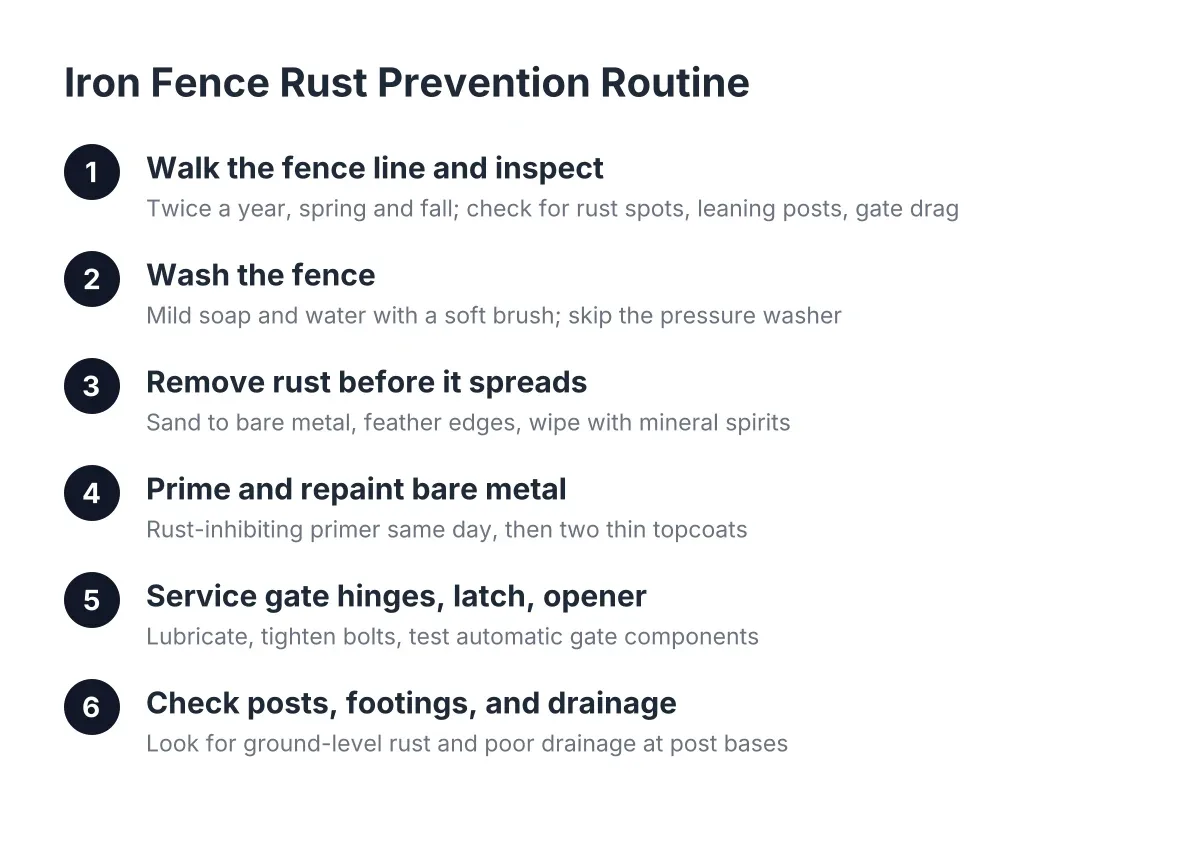
Step 1: Walk the Fence Line and Inspect Every Section
Start with a slow walk along the full fence line, twice a year. Spring and fall work well in Chattanooga, once after winter freeze-thaw cycles end and once before they start. Bring your phone and photograph anything questionable so you can compare it next time.
Look for these specific problems:
- Orange or brown spots, especially at welds, joints, and the base of pickets
- Bubbling or flaking paint, which usually means rust is forming underneath
- Posts that lean or wobble when you push on them
- Gaps where the fence meets the ground, or soil that has washed away from footings
- A gate that drags, will not latch, or has visible hinge wear
Pay extra attention to the bottom six inches of the fence. Sprinkler spray, splashing rain, and grass clippings hold moisture against the metal there. In Chattanooga's clay-heavy soil, water also pools near footings instead of draining, so post bases rust faster than the rest of the fence.
Step 2: Iron Fence Rust Prevention Through Washing
Next, clean the fence before you judge its condition. Dirt, pollen, and mildew hide early rust and trap moisture against the paint. In this region, a fence can carry a green or yellow film by late spring.
Mix warm water with a few drops of mild dish soap in a bucket. Scrub the fence with a soft brush or sponge, working top to bottom. Rinse with a garden hose on a normal spray setting.
Skip the pressure washer. High pressure strips paint and drives water into joints and hollow sections where it cannot dry out. A hose and a brush do the job without creating new problems. Let the fence dry fully before the next step; pick a dry day with low humidity if you can find one.
Step 3: Remove Rust Before It Spreads
Once the fence is clean and dry, attack every rust spot you found. Rust spreads under paint, so a spot the size of a dime can hide a patch the size of your palm. Treat this as the core of wrought iron fence maintenance; everything else supports it.
Work through each spot in this order:
- Sand the rusted area with medium-grit sandpaper or a wire brush until you reach bare, shiny metal.
- Feather the edges of the surrounding paint so the patch blends smooth.
- Wipe the area with a rag dampened in mineral spirits to remove dust and oil.
- For deep pitting, apply a rust converter product and follow the label's dry time.
However, know when to stop. If a picket flexes when you press it, if a bar has rusted through, or if a weld has separated, sanding will not save it. That section needs repair involving cutting out the bad metal and welding in new, part of the larger strategy of iron fence rust prevention and repair. A fence company that works with iron, like Chattanooga Fence Builders, can tell you in one visit whether a section is worth patching or needs replacing. Getting that call right is the difference between a modest repair bill and paying twice.
Step 4: Prime and Repaint the Bare Metal
After sanding, bare metal starts rusting again within days in Chattanooga humidity, so prime it the same day. Use a rust-inhibiting primer made for metal. Brush it over every sanded spot and slightly past the edges onto sound paint.
Once the primer cures, apply a topcoat of exterior metal paint. Two thin coats beat one thick coat; thick paint sags on vertical pickets and cracks sooner. If more than a third of the fence needed spot treatment, repaint the whole run instead. A full repaint every several years costs far less than letting the finish fail section by section.
For example, suppose a landlord with a four-unit property in East Ridge finds rust blooming along the bottom rail of an iron fence during a turnover inspection. Caught at this stage, it is an estimated weekend of sanding, priming, and painting plus a couple hundred dollars in supplies. Ignored for three or four more years, that same rail can rust through, and now the conversation is about fabricating and welding replacement sections at many times the cost.
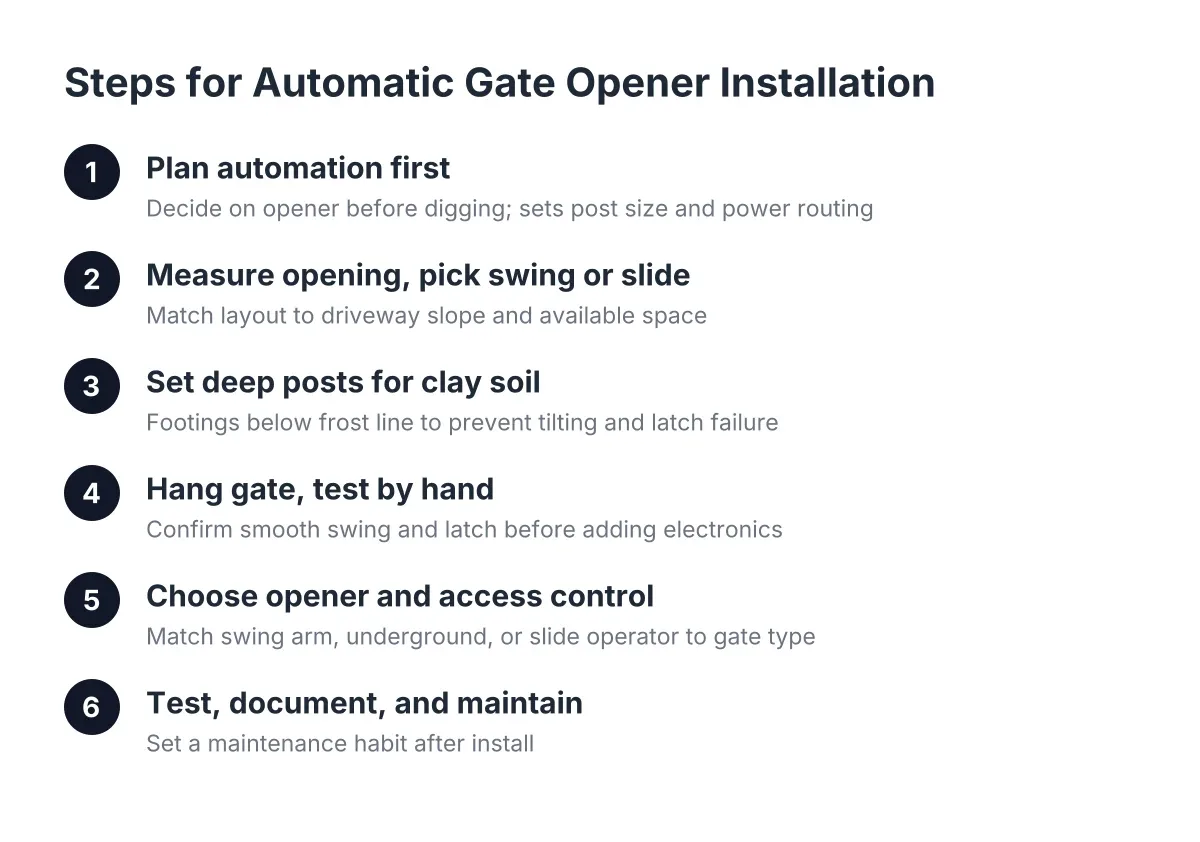
Step 5: Service the Gate Hinges, Latch, and Opener
In addition to the fence itself, the gate needs its own routine, because the gate is the part that moves and the part that fails first. Most "emergency gate repair" calls trace back to a hinge or latch that showed warning signs for months.
Twice a year, do the following:
- Apply a silicone or lithium-based lubricant to hinges, the latch mechanism, and any lock cylinder
- Tighten hinge bolts and check for elongated bolt holes, which signal a hinge near failure
- Open and close the gate and watch for dragging, sagging, or a latch that no longer lines up
- On an automatic gate, test the remote, keypad, safety sensors, and manual release, and clear leaves or mud from the track or swing path
A gate that drags on the ground strains its hinges and the post it hangs from. Fix the sag early with a hinge adjustment or an anti-sag kit. If an automatic gate opener clicks but does not move, that often points to power, sensor, or board issues rather than the iron itself, which is a different repair entirely. Searching "wrought iron gate repair near me" at that point is reasonable; opener diagnostics mix electrical work with gate hardware, and guessing wrong wastes money on parts.
For budgeting, Angi reports automatic gate repairs average $900, typically ranging from $550 to $1,500 depending on the repair type and gate material. Angi also notes that when a repair quote passes half the price of a new system, replacement is usually the better investment.
Step 6: Check Posts, Footings, and Drainage at Ground Level
Finally, look down. The paint can be perfect while the fence fails from below. Chattanooga's freeze-thaw winters shift footings, and our clay soil holds water against post bases through every wet season.
Push each post firmly in both directions. Movement means the footing has cracked, heaved, or lost soil support. Regrade soil so water drains away from footings, and keep sprinkler heads aimed away from the fence line. Trim back ivy and shrubs; vines hold moisture against the metal and hide rust until it is advanced.
There is a limit to do-it-yourself work here. A leaning post on an iron fence usually means excavation, footing work, or welding, and a wrong fix can transfer stress to neighboring sections. That is the point to bring in a fence repair professional rather than push the post back and hope.
When Does Wrought Iron Fence Maintenance Stop Being Enough?
Maintenance stops being enough when structural metal, not just surface finish, has failed. Rust-through on rails or pickets, separated welds in several places, or multiple shifting posts mean the fence needs repair or partial replacement, not another coat of paint. Paint protects sound metal; it cannot restore metal that is gone.
Use a simple rule of thumb: if the fence needs the same fix in the same spot twice within a couple of years, the underlying problem is structural. At that point get a quote for repair and a quote for replacing the affected run, and compare. Landlords managing several properties often find that replacing one bad run while the crew is already on site costs less overall than scheduling separate repair visits each year. For context, Angi puts the national average cost to install a fence at $3,277, which helps frame whether another round of repairs still makes sense.
A Realistic Annual Routine for Iron Fence Rust Prevention
Here is the whole program condensed. Say you own a home or a few rentals in Chattanooga; this schedule keeps a wrought iron fence ahead of the weather without eating your weekends.
- Spring: Walk the line, wash the fence, sand and spot-prime winter rust, and lubricate gate hardware
- Fall: Inspect again, touch up paint before cold weather, clear leaves from gate tracks, and check post stability
- After major storms: Quick walk-through for impact damage, leaning posts, and gate alignment
- Every several years: Full repaint with rust-inhibiting primer and exterior metal paint
Kept on this schedule, wrought iron fence maintenance takes a few hours a year per property. Skipped, it compounds quietly until a hinge fails on a Saturday or an inspector flags the fence before a lease signing. The fence will last as long as you let it; iron does not quit on its own, it quits when water wins.
If you need fence installation, Chattanooga Fence Builders can help.
Prefer to talk it through? Call (423) 615-8548 — a quick call is usually the fastest way to get a straight answer for your situation.